
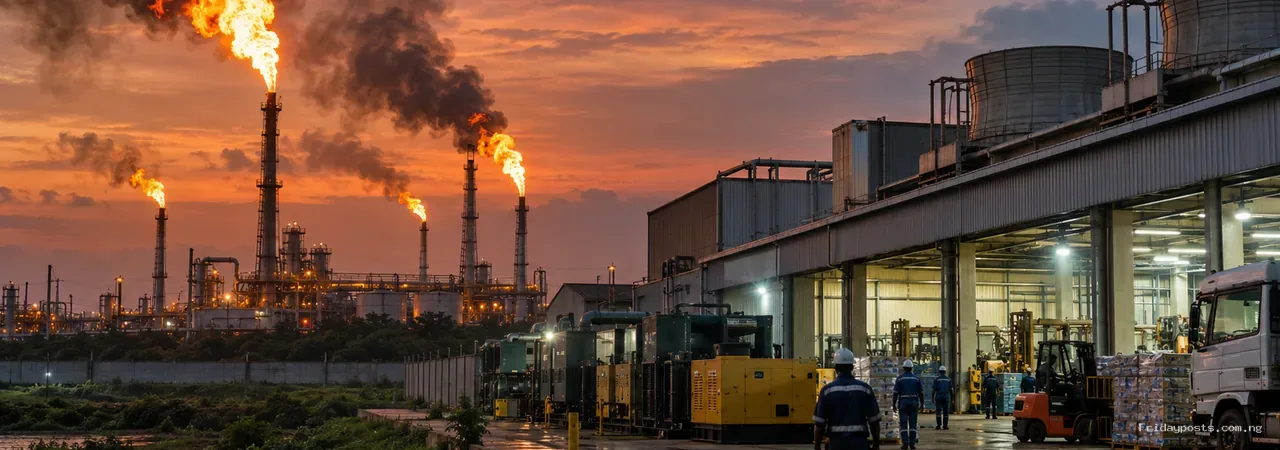
Nigeria is burning one resource while paying heavily for another
Few contradictions capture Nigeria's energy problem as clearly as this one: the country still burns associated natural gas at oil-producing sites while factories spend enormous sums trying to keep machines running when grid electricity is unreliable.
The Manufacturers Association of Nigeria says manufacturers spent about N1.34 trillion on alternative power in 2025, up roughly 21 per cent from the previous year. Separately, the World Bank's 2026 Global Gas Flaring Tracker places Nigeria among the world's largest gas-flaring countries and says Nigeria's flaring volume and oil production both rose by about 8 per cent in 2025.
It is tempting to connect those two facts with one simple instruction: stop flaring the gas and send it to factories. The underlying principle is correct. Gas that is being burned without useful economic output should, where technically and commercially feasible, be captured and used. But the engineering and market system between a flare stack and a reliable factory power supply is much more demanding than the slogan suggests.
What gas flaring actually is
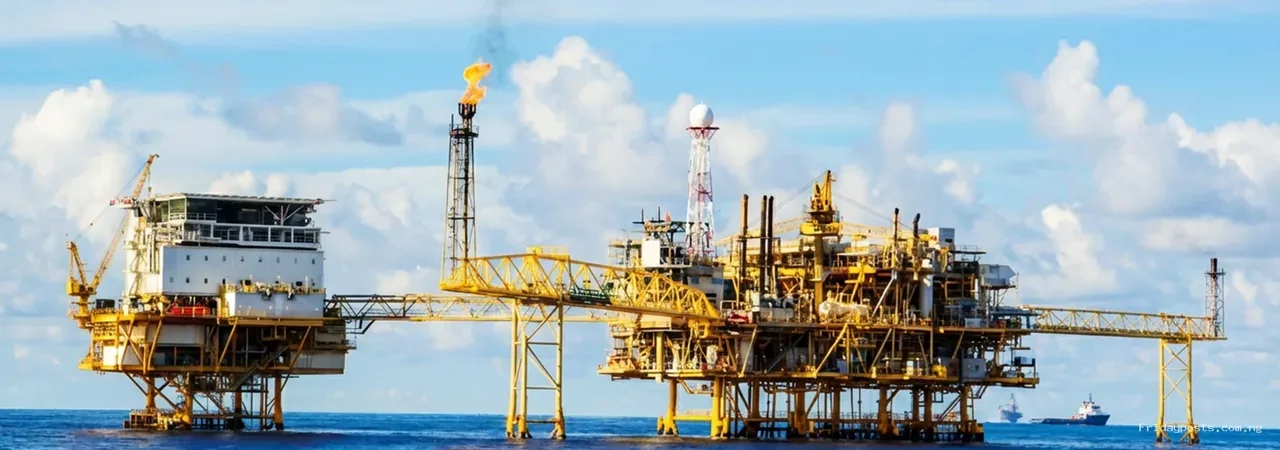
Crude oil reservoirs often contain natural gas. When oil is brought to the surface, that associated gas has to be separated and either used, reinjected, transported, processed or disposed of. Flaring is the controlled burning of that gas when an operator does not have an economic or operational route to use it.
Flaring is therefore both an environmental problem and an infrastructure signal. It shows that a hydrocarbon stream with potential value exists, but the equipment, pipelines, processing capacity, contracts or market connection required to monetise it are missing or inadequate.
The World Bank says insufficient infrastructure to move associated gas to market and ageing gas-processing plants with high downtime contribute to Nigeria's flaring levels. That is an important distinction. The flame is visible; the missing infrastructure behind it is not.
Why the gas cannot simply be piped straight into the nearest factory
Raw associated gas is not automatically ready for industrial or electricity use. Depending on its composition, it may contain liquids, water, sulphur compounds and other components that have to be treated. Pressure also has to be managed. The gas then needs gathering lines, processing facilities and a transmission or distribution route to the eventual user.
Location matters as well. A flare site in an oil-producing field may be far from the industrial customer that needs energy. Building a dedicated pipeline can be more expensive than the value of the gas if the volume is small, intermittent or expected to decline quickly.
A viable project therefore needs more than a resource. It needs dependable gas volumes, proven technology, capital, rights of way, permits and a customer willing to sign a long-term purchase agreement. Without that chain, the gas may continue to be flared even when everyone agrees that flaring is wasteful.
Nigeria's commercialisation programme is meant to close that gap
The Nigerian Gas Flare Commercialisation Programme was designed to give competent third-party investors access to flare gas and encourage projects that convert it into useful products and services. NUPRC said in September that 43 flare-gas sites were originally identified for award and 27 had been successfully awarded.
The regulator also warned that awardees that fail to make sufficient progress could lose their permits. That enforcement point matters. A flare site allocated on paper but left undeveloped has not reduced emissions or created energy value.
The programme can support several end uses. Captured gas may feed small-scale power generation, compressed or liquefied gas projects, industrial fuel, petrochemicals or other processing routes, depending on economics and location. The right question is not whether every flare should become electricity, but whether each commercially recoverable stream has a credible route to a productive market.
The industrial-power connection is still important
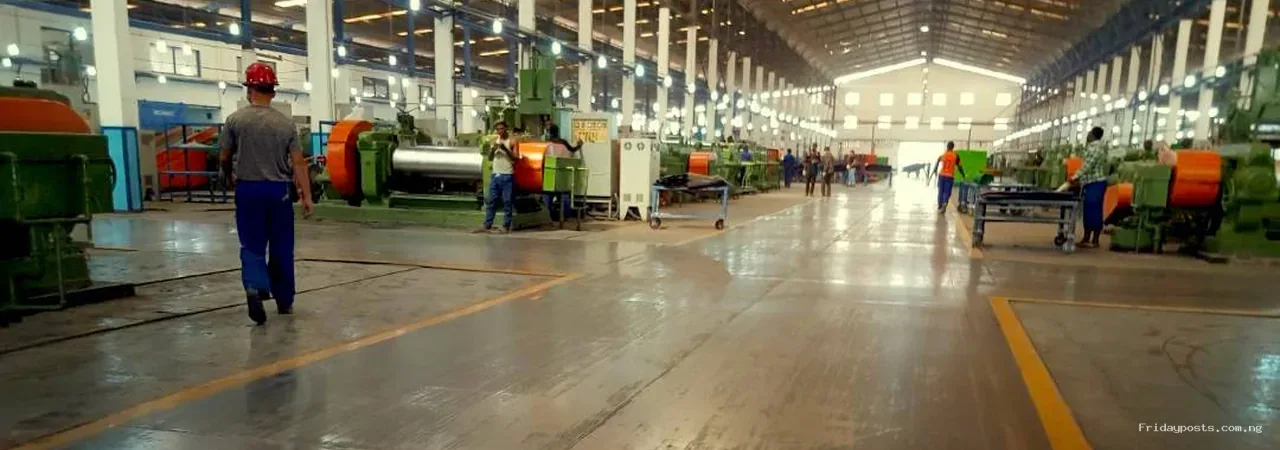
Nigeria's factories need reliable energy because power interruptions do more than increase generator bills. They disrupt production schedules, damage equipment, weaken productivity and make locally manufactured goods more expensive.
Gas already plays a major role in Nigeria's electricity system and in captive industrial generation. More dependable domestic gas supply could therefore support power plants, industrial clusters and embedded generation where infrastructure permits.
But gas-to-power projects also expose another structural weakness: supplying gas to a power plant is unattractive if the power market cannot reliably pay for the electricity produced. Energy reform has to connect fuel supply, electricity pricing, collection, transmission and industrial demand. Solving only one segment leaves the rest of the chain fragile.
The environmental and health case is separate from the power case
Even where a flare site is too small or remote to supply a major power project, routine flaring still has costs. The World Bank says flaring releases carbon dioxide, unburnt methane, black carbon and other pollutants. Communities close to oil and gas operations also carry local environmental burdens that are not captured by the market value of the gas alone.
That means Nigeria should not justify flare reduction only when a large commercial project is immediately profitable. Regulation still has a role in requiring operators to minimise waste, improve facilities and use economically reasonable alternatives.
The commercial argument and environmental argument reinforce each other, but they are not identical. Some projects will create attractive revenue. Others may need stronger regulatory pressure because the private financial return does not fully reflect the public cost of continued flaring.
What would real progress look like?
Nigeria should judge flare reduction by outcomes rather than the number of licences issued. Useful indicators include the volume of gas actually captured, the percentage of routine flaring eliminated, the number of awarded sites reaching operation, the amount of private capital deployed and the quantity of useful energy or products delivered to customers.
For industrial policy, another metric matters: how much additional dependable gas reaches power plants and manufacturing clusters at competitive prices? A successful programme should eventually appear not only in lower flare volumes but in stronger productive capacity.
This is also where state electricity markets and industrial clusters can become relevant. Gas resources, embedded generation, mini-grids and industrial demand can sometimes be planned more intelligently at regional or cluster level than through one national solution.
Nigeria's energy contradiction can be reduced, but not by slogans
Nigeria has more than enough evidence that both sides of the problem are costly. Manufacturers are paying heavily for power. Valuable gas is still being burned. Communities face pollution. The country wants greater industrialisation and more reliable electricity.
The missing link is execution across infrastructure, finance, regulation and markets. Capturing flare gas has to become easier to finance, faster to build and more reliable to sell. Awarded sites must either progress or return to the market. Gas-processing and transport infrastructure need investment. Power-sector buyers must become more commercially credible.
The flame at an oil field and the generator outside a factory are two visible symptoms of the same deeper challenge: Nigeria often possesses resources but lacks the systems required to convert them efficiently into productive capacity. Ending routine flaring will matter most when the gas that is no longer wasted begins to create power, jobs, industrial output and measurable value.

A. Joshua Adedeji
A. Joshua Adedeji is a leadership strategist, organisational development consultant, author, teacher and values-driven transformation leader. He writes on leadership, strategy, governance, organisational effectiveness, business, personal development and Nigeria’s social and economic transformation, connecting ideas and current realities to practical implications for leaders, institutions, entrepreneurs and citizens. His work is shaped by a commitment to clear thinking, responsible leadership, stronger institutions and the development of people and systems capable of producing lasting impact.








Reader conversation
0 approved comments