
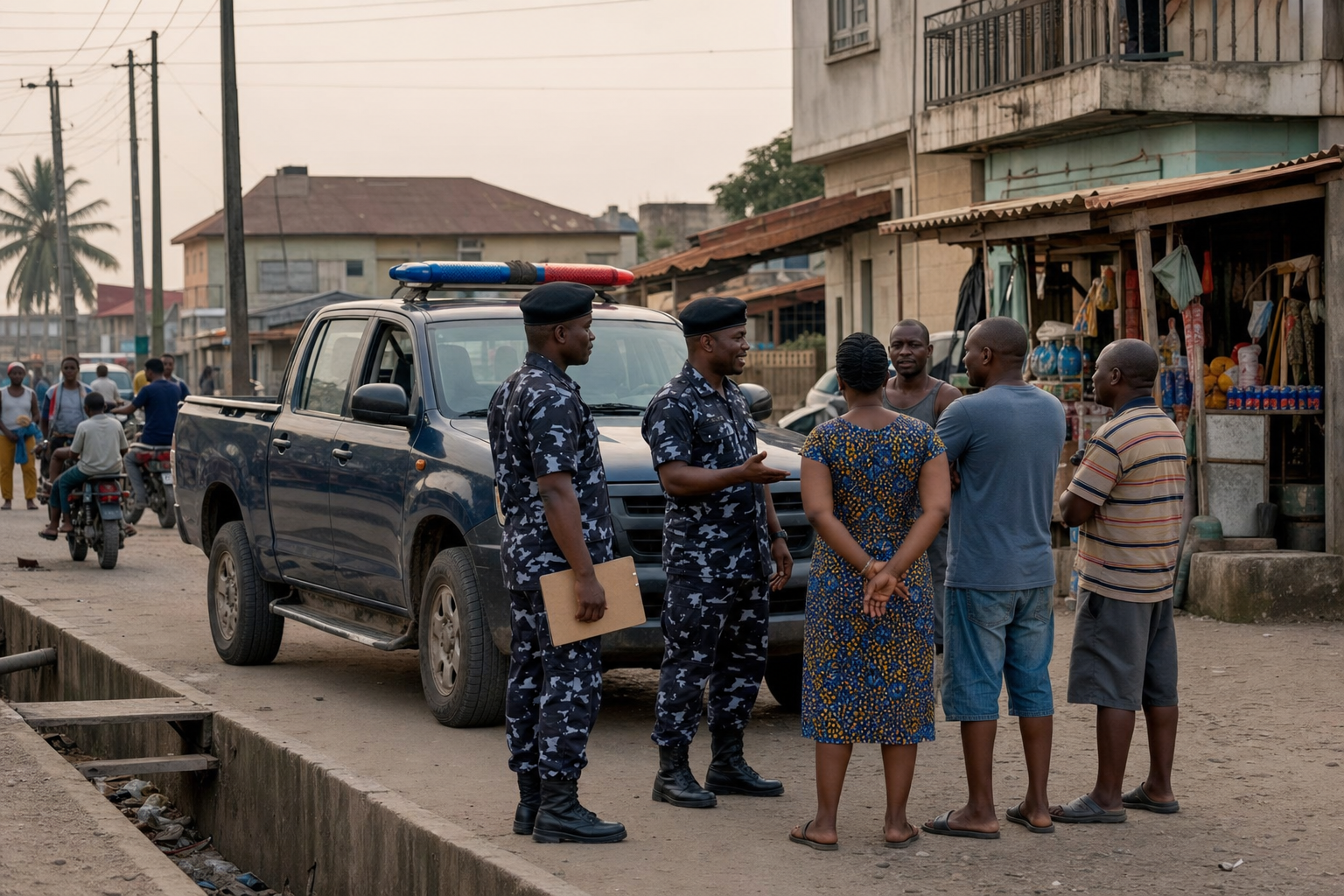
Nigeria’s state-police debate has moved from constitutional argument to institutional design. The Federal Government’s Presidential Working Group has announced a seven-week roadmap for a National Policing Bill, with the proposed framework expected to address state readiness, command, recruitment, funding, oversight, human rights and the transition to a dual-policing structure.
That is a significant change. The question is no longer simply whether state police would be good or bad for Nigeria. It is whether the proposed model can prevent local policing from becoming an extension of gubernatorial power, while still giving communities faster, more informed and more accountable security services.
The Working Group says a state must demonstrate credible arrangements for recruitment, vetting, training, pay, pensions, equipment, custody, complaints, discipline, data, firearms control, independent oversight and financial sustainability before its police service begins operating. That list is encouraging because it recognises that creating a police force is not the same as changing its name. But the credibility of the reform will depend on whether these requirements are enforceable, transparent and insulated from political pressure.
The constitutional question cannot be treated as a technicality
The current constitutional framework establishes the Nigeria Police Force and provides that no other police force shall be established for the Federation or any part of it. Sections 214 and 215 also place the national force under the command of the Inspector-General of Police, with state commissioners operating within that structure. The constitutional text is available through the National Library of Nigeria’s repository.
This means the National Policing Bill must be clear about its legal route. If the proposal creates separate state police services with independent command, personnel systems and coercive powers, legislation alone may not settle every constitutional issue. Nigerians should therefore expect the Government and National Assembly to publish a legal opinion explaining which provisions require constitutional alteration, which can be implemented through ordinary legislation and how conflicts between the two systems will be resolved.
Legal ambiguity at the beginning would create operational confusion later. Officers, prosecutors, courts and citizens would need to know who has jurisdiction over a crime crossing state boundaries, who controls intelligence databases, who authorises firearms, who investigates police misconduct and which authority can order an officer to stand down.
Command must be divided without becoming confused
The safest model is not complete isolation between federal and state forces. Nigeria needs a clear division of labour, shared standards and compulsory cooperation.
The federal police should retain responsibility for national security, terrorism, organised crime, border-related offences, inter-state investigations, critical infrastructure and offences with substantial cross-border implications. State police could focus primarily on local public safety, community patrols, traffic and neighbourhood-level investigations, subject to national rules on arrest, detention, use of force, evidence and human rights.
The Bill should establish a formal coordination council with published rules for joint operations, intelligence sharing and dispute resolution. It should also prohibit informal political directives. A governor may set broad policing priorities through a lawful, published process; the governor should not be able to order the arrest of a named opponent, dictate the outcome of an investigation or deploy officers against a protest because of partisan displeasure.
Kenya offers one useful lesson. Its Constitution gives the Inspector-General independent command and prevents political actors from directing particular investigations, enforcement actions or personnel decisions. Its County Policing Authorities can identify priorities and provide public feedback, but they are expressly barred from interfering in specific cases or police operations. Nigeria’s proposed system should adopt the same distinction between democratic priority-setting and operational interference.
Recruitment is where political capture could begin
State police will be judged first by who enters the service. If recruitment becomes a patronage exercise, the new structure could reproduce the weaknesses Nigerians already complain about while making them more locally concentrated.
Minimum safeguards should include public recruitment notices, standardised examinations, independent shortlisting, documented vetting, conflict-of-interest rules and publication of aggregate recruitment data. Candidates should be screened for criminal records, unexplained assets, links to political violence and previous disciplinary dismissals. Recruitment panels should include professional, civil-society and oversight representation rather than being controlled solely by the governor’s office.
Training should be nationally accredited and include constitutional rights, evidence handling, de-escalation, domestic violence, child protection, digital investigations, community engagement and rules governing the use of force. States should not be certified merely because they have uniforms, vehicles and a budget line.
Funding must not become a private security budget
A police service that depends entirely on annual political discretion will struggle to act independently. Yet a funding model that gives states coercive powers without strong public financial controls could create opaque security networks.
The Bill should require published state-police budgets, audited accounts, procurement disclosure and legislative reporting. Federal grants should be tied to measurable standards rather than distributed as unconditional political rewards. States should disclose spending on personnel, weapons, vehicles, communications, detention facilities and informant payments, subject only to narrowly defined security exemptions.
Funding must also cover less visible essentials: pensions, insurance, forensic capacity, custody records, legal representation and compensation systems. Underfunded police officers are more vulnerable to bribery, extortion and dependence on political patrons.
Accountability must be independent from the chain of command
Internal discipline is necessary but insufficient. A police organisation cannot be the sole judge of allegations involving torture, unlawful detention, disappearance, sexual abuse or extrajudicial killing.
Each state should have an independent complaints and investigations body with secure tenure, its own budget, powers to compel documents and witnesses, and a duty to publish periodic reports. Serious allegations should be referred automatically for independent criminal investigation and prosecution. Victims should receive complaint numbers, progress updates and protection against retaliation.
South Africa’s constitutional model is instructive because provinces can monitor police conduct and investigate complaints of inefficiency or breakdowns in police-community relations, while an independent complaints body investigates alleged misconduct or offences by police members. Nigeria need not copy South Africa’s structure, but the principle is important: political oversight, police management and misconduct investigation should not be concentrated in one office.
Citizens’ rights must be operational, not rhetorical
The National Policing Bill should contain a plain-language rights charter covering arrest, search, detention, access to counsel, notification of family, medical care, bail, protest policing and the treatment of children and vulnerable persons. Every officer should be identifiable through a unique number. Body-worn cameras and custody-area recording should be introduced in phases, with rules on storage, access and privacy.
Police stations should maintain digital custody registers and publish basic statistics on arrests, detention duration, complaints, deaths in custody, use of firearms and disciplinary outcomes. Without data, public oversight becomes speculation and reform becomes public relations.
A minimum safeguards test for the Bill
Before passage, legislators, civil-society groups and citizens should ask at least seven questions:
- Who appoints, disciplines and removes the state police commissioner?
- Can any political office-holder direct a particular arrest, investigation or deployment?
- Which body independently investigates police misconduct?
- What objective standards must a state meet before certification?
- How are federal and state police disputes resolved?
- Who controls firearms, intelligence systems and cross-border investigations?
- What budget, audit and reporting duties apply to each state service?
If the Bill cannot answer these questions in precise legal language, Nigeria is not ready for roll-out. If it can, state policing could become a meaningful federal reform rather than another layer of security administration.
The test is whether power becomes more accountable
The Government’s roadmap creates an opportunity, but speed must not replace scrutiny. The National Assembly should publish the draft, hold hearings across the geopolitical zones and allow enough time for memoranda to influence the text. The Assembly’s own public-facing legislative system promises bill tracking, committee scrutiny and citizen participation; those tools should be used visibly for this reform.
For Nigerians at home and abroad, the central issue is practical. A state police officer may be closer to a community, speak its language and understand its conflicts. The same officer may also be closer to a governor, local political machine or powerful traditional and business interests. The institutional design must make the first possibility more likely than the second.
State police should therefore be treated not as a cure-all, but as a constitutional experiment requiring strict entry conditions, independent oversight and measurable consequences for abuse. Nigeria does not merely need more police. It needs policing in which authority is clear, power is limited and citizens have a realistic path to justice.

A. Joshua Adedeji
A. Joshua Adedeji is a leadership strategist, organisational development consultant, author, teacher and values-driven transformation leader. He writes on leadership, strategy, governance, organisational effectiveness, business, personal development and Nigeria’s social and economic transformation, connecting ideas and current realities to practical implications for leaders, institutions, entrepreneurs and citizens. His work is shaped by a commitment to clear thinking, responsible leadership, stronger institutions and the development of people and systems capable of producing lasting impact.








Reader conversation
0 approved comments