

Contrary to the expectations many of us sometimes carry, development is not accidental. Neither is it spontaneous. Every meaningful form of development is the accumulated result of a process.
A child does not wake up one morning and suddenly become a disciplined professional, an irresponsible adult, a fraudulent politician, an excellent physician or a notorious criminal. Long before the outcome becomes visible, habits have been forming, choices have been repeated, standards have been accepted or ignored, relationships have been shaping behaviour, and consequences have been accumulating.
When a person takes one step, then another, and another, the person cannot remain in exactly the same place. Movement is occurring, even when it is gradual and difficult to notice.
Nations develop in much the same way.
Countries do not suddenly become prosperous because they possess natural resources. They become prosperous through decades of building institutions, educating people, investing in infrastructure, rewarding enterprise, enforcing standards, developing industries, protecting property, encouraging innovation, correcting mistakes and improving the productivity of their people.
Underdevelopment also follows a process.
A country can gradually normalise poor public services. It can repeatedly postpone infrastructure investments. It can allow schools to deteriorate. It can reward political connections more than competence. It can spend public money without measuring outcomes. It can permit corruption to become socially tolerable. It can allow productive industries to disappear while celebrating consumption. If these behaviours continue for long enough, the eventual condition of the country should not surprise anyone.
Nigeria therefore did not arrive where it is today by accident.
The economic difficulties confronting households, the weakness of many public institutions, the intense struggle for political office, the obsession with quick wealth, the distrust between citizens and government, the fragility of infrastructure, the weakness of industrial production and the persistence of poverty are not isolated events that suddenly appeared.
They are outcomes.
They are the accumulated consequences of decisions made, decisions avoided, systems tolerated, incentives created and values reinforced over many decades.
At the same time, Nigeria is not a country without progress. The economy grew by 4.43 per cent year-on-year in the second quarter of 2026, improving from 3.89 per cent in the first quarter. Headline inflation had also moderated to 15.43 per cent by July 2026, although food inflation remained considerably higher at 20.31 per cent.
These improvements should be acknowledged. But they also reveal an important distinction: economic growth is not automatically economic development.
The IMF estimated in its 2026 review of Nigeria that poverty had reached about 63 per cent using the national poverty line, while roughly 27 million Nigerians were estimated to have faced food insecurity in the latter part of 2025. The same institution projected economic growth of about 4.1 per cent for 2026.
An economy can therefore grow while millions of households remain economically insecure.
Development must mean something deeper than an increase in gross domestic product. It should eventually be visible in rising productivity, better education, reliable infrastructure, stronger institutions, competitive businesses, secure communities, expanding opportunities, improving real incomes and a growing ability of ordinary citizens to build better lives.
More than a decade after I first wrote about this subject, I still believe that many factors explain Nigeria's struggle with development. But ten remain particularly important.
1. Self-Discovery: Nigeria Must Understand What It Can Become Economically
In my original article, I used the idea of discovery as a metaphor for national self-awareness. European history books once spoke rather casually about explorers such as Mungo Park “discovering” the River Niger, even though African communities had lived, traded, travelled and built societies around the river long before European explorers documented it for European audiences.
That historical language itself contains an important lesson.
A people who do not understand, document, develop and communicate the value of what they possess may eventually find that other people understand its value better than they do.
Self-discovery for Nigeria in 2026 should therefore go beyond philosophical questions about national identity. It must include economic self-discovery.
What exactly can Nigeria do exceptionally well?
What can Kano produce competitively for West Africa? What industries should Lagos dominate beyond trade and finance? What opportunities can Nasarawa build around agriculture, mining and its proximity to Abuja? What should Bayelsa become beyond crude oil extraction? What competitive industries can emerge from Kaduna, Enugu, Ogun, Plateau, Cross River, Akwa Ibom, Borno or Kwara?
A nation of more than two hundred million people should not organise its economic imagination primarily around the extraction and distribution of crude oil revenues.
Nigeria possesses oil, gas, agricultural land, minerals, waterways, sunlight, cultural industries, telecommunications infrastructure, a large internal market, a global diaspora, entrepreneurial energy and a young population. But resources are only possibilities. Prosperity comes from converting resources into capabilities.
Cocoa is a resource. Chocolate manufacturing is an industry.
Cotton is a resource. Textiles, fashion, design, brands and export distribution constitute an industry.
Crude petroleum is a resource. Refined fuels, petrochemicals, fertilisers, plastics and industrial chemicals represent deeper value chains.
A large population is not automatically an economic advantage. A healthy, educated, technologically capable and productive population is.
Nigeria's Agenda 2050 itself acknowledges low productivity, limited economic diversification, weak external competitiveness, deindustrialisation, infrastructure deficits and high import dependence among the country's major development challenges.
That means Nigeria's self-discovery problem is no longer merely philosophical. Government itself recognises much of the diagnosis.
The more urgent question is whether we can convert diagnosis into capability.
Nigeria needs a serious national and state-level mapping of comparative advantage. Every state should understand the industries in which it has a realistic opportunity to compete, the infrastructure those industries require, the skills they need, the markets they can serve and the policy obstacles preventing them from growing.
Self-discovery is therefore the beginning of economic focus.
A nation that tries to become everything may become excellent at nothing.
Nigeria must understand its strengths deeply enough to build industries around them.
2. Sense of Nationhood: We Need a Stronger Social Contract
When I originally wrote about nationhood, I argued that Nigerians needed to see a bigger picture beyond themselves, their families and their immediate communities.
I would express the point differently today.
Nigeria does not need everybody to possess the same culture, ethnicity or religion before it can develop. Some of the world's most successful societies contain considerable diversity.
What matters is whether citizens can develop a sufficiently strong civic identity and whether the Nigerian state can create a credible social contract.
A social contract exists when citizens believe that belonging to the country carries both rights and responsibilities. People accept that they should obey reasonable laws, pay legitimate taxes, protect public property and contribute productively. In return, they expect government to provide security, administer justice, protect rights, manage public resources responsibly and create conditions in which people can pursue legitimate opportunities.
When that relationship weakens, development becomes more difficult.
A citizen who believes government is fundamentally predatory will try to avoid government whenever possible.
A business that expects regulations to change unpredictably will shorten its investment horizon.
An investor who cannot rely on contracts will demand a higher return before risking capital.
A community that believes public appointments and projects are permanently determined by ethnicity or political connections will distrust national institutions.
Trust therefore has economic value.
Nigeria does not require the elimination of Yoruba, Hausa, Igbo, Tiv, Ijaw, Fulani, Nupe, Efik, Ibibio or hundreds of other identities. Neither should Christianity or Islam disappear into some artificial national sameness.
The development challenge is to build a Nigerian civic identity strong enough to accommodate these identities while insisting that citizenship, law, dignity and opportunity should not depend entirely on them.
The true test of nationhood is not how many Nigerian flags appear on Independence Day.
It is whether a Nigerian can accept that another Nigerian from a different part of the country deserves the same protection of law, access to legitimate opportunity and dignity that he demands for himself.
Nationhood becomes economically useful when citizens begin to protect institutions because they believe those institutions belong to everyone.
3. National Sacrifice: Reform Must Be Fair Before It Can Be Sustainable
No serious nation develops without sacrifice.
Factories require capital before they produce returns. Infrastructure requires investment before it generates productivity. Education requires years of spending before a child enters the labour market. Economic reforms sometimes impose immediate costs before their long-term benefits appear.
But there is an important qualification I would add to my original argument:
Sacrifice must be credible, fairly distributed and connected to visible outcomes.
Government cannot continually ask poor and middle-income citizens to bear the burden of reform while political elites appear insulated from that burden.
This is one reason difficult reforms frequently encounter resistance.
When fuel prices rise, electricity tariffs increase, taxes expand or exchange-rate adjustments raise the cost of imported goods, policymakers may understand the macroeconomic logic. The ordinary household experiences something much more immediate: transportation becomes more expensive, food costs rise and disposable income falls.
By July 2026, Nigeria's headline inflation had moderated, but food inflation was still 20.31 per cent year-on-year. For households that devote a large proportion of income to food, such figures represent practical pressure, not merely economic statistics.
Government must therefore learn to answer a simple question:
What did the sacrifice produce?
If subsidy reforms save money, citizens should be able to see how much was saved and where it went.
If taxes increase, government should demonstrate which services improved.
If electricity tariffs rise, consumers should see measurable improvements in reliability.
If public debt increases, Nigerians should know what productive assets or social outcomes were financed.
Nigeria needs something similar to a public Reform Dividend Ledger: a clear account of the estimated cost of a reform, the fiscal savings or revenue generated, how those resources were used and what measurable results followed.
National sacrifice cannot mean endless suffering without accountability.
Government itself must also demonstrate restraint.
Sacrifice becomes believable when leaders who demand it are seen participating in it.
4. Social Structure: Poverty Must Not Become a Permanent Inheritance
Development is not simply about how much wealth exists in a society. It is also about whether people can move.
Can a child born into a poor family realistically become a doctor, engineer, entrepreneur, researcher, teacher, designer or skilled technician?
Can talent rise without political connections?
Can a small business become a large business?
Can somebody born in a rural community receive enough education, healthcare and infrastructure to compete with somebody born into privilege?
These questions concern social mobility.
A society becomes economically dangerous when poverty reproduces itself too easily from one generation to the next.
The problem begins early.
UNICEF's 2025 annual reporting estimated that 54 per cent of Nigerian children were multidimensionally poor and that about 10.2 million children were out of school. It also highlighted severe inequalities between rural and urban children.
These are not simply statistics about unfortunate children.
They are statistics about Nigeria's future labour force.
A malnourished child may experience developmental disadvantages that affect later productivity.
A child who reaches adolescence without foundational literacy will struggle to acquire advanced technical skills.
A teenager outside school is likely to enter adulthood with fewer economic options.
A talented young Nigerian without electricity, digital access, quality education or finance begins the economic race several metres behind someone with those advantages.
Social policy is therefore not merely charity.
It is investment in productive capacity.
Nigeria must treat maternal health, early childhood development, nutrition, primary healthcare, foundational literacy, numeracy, teacher quality, vocational education, sanitation and access to technology as economic policy.
The structure of society also concerns what we celebrate.
When a society treats wealth as evidence of success without caring about how the wealth was created, it gradually weakens the relationship between contribution and reward.
When public office appears to be one of the fastest routes to extraordinary personal wealth, talented young people receive a message about where opportunity supposedly lies.
Nigeria needs a social structure in which upward mobility comes increasingly through learning, productive work, enterprise, innovation and service rather than political proximity.
5. Influence: Leadership Must Build Institutions, Not Personal Followership
My original discussion of influence focused heavily on leaders and the kind of example they provide.
I still believe leadership matters enormously.
But I now believe the most important form of national leadership is institution-building.
Nigeria has often placed excessive hope in personalities.
We search for the right president, the right governor, the right minister, the right central bank governor, the right inspector-general, the right vice-chancellor or the right chief executive.
A competent person can make a significant difference.
But a developed society cannot depend permanently on exceptional personalities.
A strong country creates systems in which ordinary competent people can produce good results because institutions support them.
A great governor can transform a state temporarily.
A great institution continues functioning after that governor leaves office.
A great minister may implement a reform.
A great administrative system preserves the reform when the minister is gone.
The World Justice Project's 2025 Rule of Law Index ranked Nigeria 120th out of 143 countries, even though the country's score improved slightly from the previous year.
Transparency International's 2025 Corruption Perceptions Index gave Nigeria a score of 26 out of 100 and ranked the country 142nd out of 182 countries. The CPI measures perceptions of public-sector corruption rather than a literal count of corrupt acts, but the result still points to a serious institutional credibility problem.
Leadership must therefore move beyond speeches about patriotism and transformation.
Nigeria needs professional civil services, merit-based recruitment, transparent procurement, digital records, reliable government data, effective legislative oversight, stronger auditing, faster courts, institutional memory and serious monitoring of public programmes.
Leaders should increasingly ask:
What system can I build that will continue to work when I am no longer here?
That is one of the highest tests of leadership.
The greatest leader is not merely the person whose presence produces results.
It is the person whose work creates an institution capable of producing results in his absence.
6. Scarcity: Nigeria Must Move From Scrambling for Wealth to Creating Wealth
In my 2014 article, I described what I called a scarcity mentality.
I argued that people who believe opportunities are scarce often feel compelled to grab as much as possible whenever they gain access to something valuable.
I still believe this insight is useful, but economics gives us a more precise concept: rent-seeking.
Rent-seeking occurs when people devote substantial energy to capturing existing wealth, privileges or government-created advantages rather than creating new economic value.
Entrepreneurship asks:
“What can I create that people will willingly pay for?”
Rent-seeking asks:
“Who controls the opportunity I need, and how can I gain access?”
This difference has enormous consequences.
If productive enterprise offers the greatest economic rewards, ambitious people build companies.
If professional excellence offers the greatest rewards, people develop expertise.
If research and innovation are commercially rewarded, people solve problems.
But if political connections provide extraordinary economic returns, ambitious people pursue connections.
If government licences, contracts, waivers, allocations or monopolies are the fastest paths to wealth, people organise themselves around access to government.
Scarcity then becomes self-reinforcing.
Everybody struggles for a limited number of opportunities because the economy has failed to create enough new opportunities.
Nigeria must move from a distribution economy towards a production economy.
The central national conversation should gradually move from “Who gets what?” to “What can we create?”
That means expanding access to finance, improving property rights, simplifying regulations, modernising land administration, making public procurement competitive, supporting export development, strengthening competition and ensuring that businesses can grow without relying permanently on political patrons.
Development is not primarily about dividing the national cake more cleverly.
It is about continuously enlarging the productive capacity of the country.
7. Shallowness: Nigeria Cannot Become Excellent Through Mediocrity
When I originally used the word “shallowness”, I did not mean that Nigerians were unintelligent.
Quite the opposite.
Nigeria has produced remarkable scholars, entrepreneurs, writers, scientists, artists, professionals, athletes and innovators.
My concern was with the cultural temptation to accept “just enough”.
The modern economic expression of this problem is low productivity.
Productivity asks a straightforward question:
How much value can one worker, one machine, one hectare of farmland, one business, one classroom, one hospital or one hour of effort produce?
Rich countries do not become rich simply because their citizens work harder or longer.
They become richer because each unit of labour and capital becomes increasingly productive.
Technology increases productivity.
Education increases productivity.
Reliable electricity increases productivity.
Better roads increase productivity.
Management competence increases productivity.
Research increases productivity.
Specialisation increases productivity.
Capital increases productivity.
Strong institutions increase productivity.
Nigeria therefore does not merely need jobs. It needs more productive jobs.
A graduate sitting in an office manually processing files that could be handled digitally may be employed, but the system is not highly productive.
A farmer producing one tonne per hectare where improved techniques could produce three tonnes is working, but productivity remains low.
A factory spending a substantial portion of revenue generating electricity is producing, but at a competitive disadvantage.
A university graduating thousands of students without producing significant research, intellectual property or industry solutions is educationally active but may remain economically shallow.
Shallowness also appears when certificates matter more than competence.
Education policy must move beyond asking how many children entered school or how many graduates received degrees.
We must ask whether they can read, calculate, reason, communicate, solve problems, use technology and perform useful work.
Excellence is depth.
Nigeria needs deeper knowledge, deeper research, deeper industrial capabilities, deeper technical competence, deeper management systems and deeper professional standards.
A country cannot repeatedly celebrate shortcuts and still expect world-class outcomes.
8. National Vision: Nigeria's Greater Problem Is Not Vision but Execution
In 2014, I argued that Nigeria lacked a sufficiently shared national vision.
I would modify that argument today.
Nigeria does not actually lack development plans.
Nigeria Agenda 2050 already identifies many of the country's major challenges and sets out long-term ambitions across economic growth, industrialisation, infrastructure, education, healthcare, employment, poverty reduction, digital transformation and institutional development. The Federal Government has also been developing the Medium-Term National Development Plan 2026–2030 as an implementation framework towards longer-term national objectives.
The problem is therefore not simply a shortage of vision documents.
Nigeria has had many.
Our deeper problem is execution continuity.
We often develop plans that are not sufficiently connected to budgets.
Governments change and priorities change with them.
Projects are started and abandoned.
Programmes continue even when evidence of effectiveness is weak.
Successful initiatives sometimes disappear because a new administration wants its own signature programme.
Targets are announced without clear consequences when they are missed.
Nigeria therefore needs to turn national planning into a management system.
Every important development objective should have a baseline, measurable target, responsible institution, budget, timeline and periodic public performance report.
If Nigeria wants to become a $1 trillion economy, citizens should be able to ask what productivity growth, investment, exports, electricity, infrastructure and industrial expansion would be required.
If government promises millions of jobs, we should know what kind of jobs, in which industries, at what level of productivity and by what date.
If a state announces an agricultural revolution, citizens should eventually see changes in yield per hectare, processing capacity, farmer income, storage losses and exports.
Vision without execution becomes rhetoric.
Execution without measurement becomes activity.
Nigeria needs vision, execution, measurement and accountability working together.
9. Role Models: What Nigerians See Shapes What Nigerians Aspire To Become
It is often said that people do what they see.
Human beings learn not only through formal instruction but through observation.
Children observe adults.
Employees observe leaders.
Citizens observe politicians.
Young entrepreneurs observe successful businesspeople.
Professionals observe those who rise within their professions.
Society therefore teaches constantly, even when nobody is standing in a classroom.
This makes role models economically important.
The issue is not that Nigeria lacks admirable people. The country has thousands of honest teachers, doctors, civil servants, entrepreneurs, engineers, researchers, military officers, farmers, community leaders and professionals whose work rarely receives national attention.
The problem is visibility.
Sometimes people who accumulate wealth rapidly receive far more attention than those who build valuable institutions patiently.
Popularity can be mistaken for contribution.
Luxury can be mistaken for achievement.
Visibility can be mistaken for competence.
Young people then receive a distorted picture of success.
Nigeria needs more visible examples of people who built businesses over decades, created jobs, conducted important research, served honourably in government, transformed communities, developed technologies, raised excellent families, built professional institutions and solved difficult problems.
This is not merely a moral argument.
Role models influence economic behaviour.
When young people repeatedly see legitimate entrepreneurship produce dignity and prosperity, more will consider entrepreneurship.
When scientists are celebrated, science becomes aspirational.
When teachers who transform learning outcomes receive national recognition, teaching acquires greater honour.
When public servants who improve institutions are recognised, service becomes meaningful.
Nigeria's media institutions, universities, professional associations, businesses, religious organisations, schools and governments all participate in creating role models.
We should therefore ask ourselves:
Whose lives are we amplifying, and what behaviours are we teaching the next generation to desire?
10. Reward System: Society Eventually Produces More of What It Rewards
The final issue may be the most powerful because it connects many of the others.
People respond to incentives.
Children do.
Employees do.
Politicians do.
Businesses do.
Investors do.
Civil servants do.
Universities do.
Institutions do.
If a behaviour repeatedly produces status, wealth, promotion, access or political power, more people will consider adopting that behaviour.
Every reward system therefore contains a hidden curriculum.
It teaches society what works.
Imagine two young people watching their country.
One spends years developing expertise, works honestly, pays taxes and builds a small company patiently.
Another acquires wealth rapidly through questionable relationships, receives public honours, sits at the front of major events, becomes a political donor and is treated socially as a great success.
What lesson is society teaching?
This is why corruption cannot be defeated only through sermons about integrity.
The incentive structure must change.
Wrongdoing must become costly.
Competence must become valuable.
Government procurement must increasingly reward capability rather than connections.
Public appointments should increasingly reward merit.
Civil servants should experience a real relationship between performance and career progression.
Whistleblowers should receive credible protection.
Professional bodies should sanction serious misconduct.
Businesses that innovate and export should have a realistic environment in which they can grow.
National honours should mean something.
Awards should reinforce contribution rather than merely proximity to power.
Nigeria's reward system should make a clear statement:
If you create value, solve problems, serve competently, behave honourably and build something useful, the country will recognise and protect your contribution.
And equally:
If you abuse public trust, there will be consequences regardless of your status.
This is how cultures change.
Not merely through what leaders tell people to do, but through what institutions repeatedly reward and punish.
These Ten Problems Are Connected
These ten issues are not independent.
They reinforce one another.
Weak national self-discovery produces unfocused economic policies. Weak nationhood reduces trust. Low trust makes sacrifice difficult. Unequal social structures limit opportunity. Weak institutions encourage rent-seeking. Rent-seeking reduces productive investment. Low productivity suppresses income. Weak execution frustrates national vision. Poor role models distort aspiration. Bad reward systems reproduce the same behaviours.
This produces a negative development cycle.
But the opposite is also possible.
Better education increases productivity.
Higher productivity raises incomes.
Growing businesses create employment.
More employment expands the tax base.
Higher public revenue can finance infrastructure.
Better infrastructure reduces business costs.
Lower business costs improve competitiveness.
More competitive firms can export.
Exports generate foreign exchange.
Growing productive sectors create more opportunities than political patronage can provide.
Strong institutions then become easier to finance and harder to capture.
Development therefore compounds.
So does underdevelopment.
The objective of national policy should be to create enough positive cycles that they eventually become stronger than the negative ones.
Nigeria Must Stop Measuring Activity and Start Measuring Development
One practical shift would transform Nigerian policymaking: government must distinguish between inputs, activities and outcomes.
Money allocated is not development.
A road commissioned is not automatically development.
A school constructed is not automatically educational progress.
An agricultural programme launched is not automatically agricultural transformation.
A government portal created is not automatically digital transformation.
The question should always be: What changed?
If ₦100 billion is spent on roads, did transport times fall?
If money is spent on agriculture, did productivity per hectare rise?
If additional teachers are recruited, are children learning more?
If government digitises a service, did processing time, cost or corruption decline?
If electricity investment increases, are homes and businesses receiving more reliable power?
If youth programmes train one million people, how many subsequently obtain productive employment or create sustainable businesses?
Nigeria's development conversation must become much more outcome-oriented.
Governments frequently receive political credit for announcements because citizens and the media do not always wait long enough to evaluate results.
A mature development culture would require every major programme to answer five questions:
What problem are we solving?
What measurable result are we pursuing?
Who is responsible?
How much will it cost?
What evidence will show whether it worked?
That discipline would improve governance more than another thousand political slogans.
Government Has Responsibilities Citizens Cannot Perform
There is also a danger in discussions like this.
It is easy to place responsibility entirely on citizens and conclude that Nigeria's problem is simply that Nigerians must become more patriotic, disciplined or hardworking.
That is incomplete.
Citizens cannot privately construct a national transmission grid.
They cannot individually secure Nigeria's borders.
They cannot individually reform customs administration.
They cannot individually guarantee monetary stability.
They cannot individually create an efficient national judicial system.
They cannot individually develop highways connecting the country's major economic corridors.
They cannot individually establish predictable national regulation.
Government exists because there are tasks that require collective authority and resources.
The state therefore has responsibilities that cannot be transferred to individuals.
At the same time, government does not exist independently of society.
Politicians come from families.
Civil servants come from communities.
Businesspeople influence government.
Citizens vote.
Consumers reward companies.
Parents shape children.
Teachers shape students.
Media organisations influence aspiration.
Religious and traditional leaders shape values.
Professional bodies establish norms.
National development therefore requires both better institutions and better citizenship.
Neither should become an excuse for the failure of the other.
What Should Nigerian Policymakers Prioritise?
Nigeria does not need another catalogue containing hundreds of aspirations without clear priorities.
A country with limited fiscal and administrative capacity must choose carefully.
Over the next decade, a serious development agenda should concentrate relentlessly on a limited number of outcomes.
Nigeria must ensure that every child can acquire foundational literacy, numeracy and useful skills. It must make electricity substantially more reliable. It must lower the cost of moving goods and people. It must strengthen security and the rule of law. It must create conditions in which productive businesses can grow. It must expand non-oil exports. It must strengthen public institutions. It must make government expenditure more transparent. It must improve healthcare and nutrition. It must make state governments engines of economic competition rather than primarily administrative distributors of federal allocations.
Nigeria's own Agenda 2050 already recognises low productivity, weak diversification, infrastructure shortages, governance challenges, unemployment, poverty and inequality among the country's central problems.
The real challenge is therefore less about discovering problems and more about building the political and administrative discipline required to solve them consistently.
Nigeria Is Not Condemned to Underdevelopment
It is important to end this discussion without falling into either pessimism or empty optimism.
Nigeria is not destined to remain poor.
There is nothing inevitable about underdevelopment.
Countries can change direction.
Institutions can improve.
Industries can be built.
Cultures can change.
Governments can learn.
Productivity can increase.
A generation can decide that practices tolerated by the previous generation are no longer acceptable.
Nigeria already possesses many of the raw materials required for progress: a huge domestic market, substantial natural resources, energetic entrepreneurs, a global diaspora, cultural influence, young people willing to experiment, a growing technology ecosystem and a strategic position within Africa.
But potential is not development.
Potential must be organised.
Resources must be processed.
Talent must be trained.
Institutions must be strengthened.
Infrastructure must be built and maintained.
Businesses must become competitive.
Plans must be executed.
Wrong incentives must be corrected.
Competence must be rewarded.
This brings me back to the argument I made in 2014.
Development is not accidental.
A nation becomes what it repeatedly practises.
If corruption is repeatedly tolerated, corruption deepens.
If mediocrity is repeatedly rewarded, mediocrity spreads.
If public institutions are repeatedly weakened, institutional failure compounds.
But if children are educated properly, industries are built, businesses become more productive, infrastructure improves, laws become more predictable, public officials become more accountable and citizens increasingly see legitimate avenues for advancement, another process begins.
Development begins to compound.
A child learns to read.
A farmer increases yield.
A young Nigerian acquires a valuable skill.
A small company becomes a larger company.
A manufacturer begins exporting.
A researcher solves an industrial problem.
A public institution becomes easier to use.
A court enforces a contract.
A state discovers an industry in which it can compete.
A public project survives beyond the administration that started it.
An honest professional discovers that integrity does not have to mean poverty.
A young person sees that competence can produce dignity, influence and prosperity.
One improvement strengthens another.
One productive generation prepares the next.
That is how nations develop.
Nigeria does not need to wait for development to happen to us.
We must build it deliberately.
We must organise for it.
We must reward it.
We must measure it.
And we must repeat the right actions long enough for their consequences to become impossible to ignore.
Development is a process. Underdevelopment is also a process. The future Nigeria becomes will ultimately reveal which process we chose to strengthen.
This article is a 2026 revision and expansion of “The Top 10 Reasons for Nigeria's Undeveloped Economy”, originally written and published by A. Joshua Adedeji in 2014.
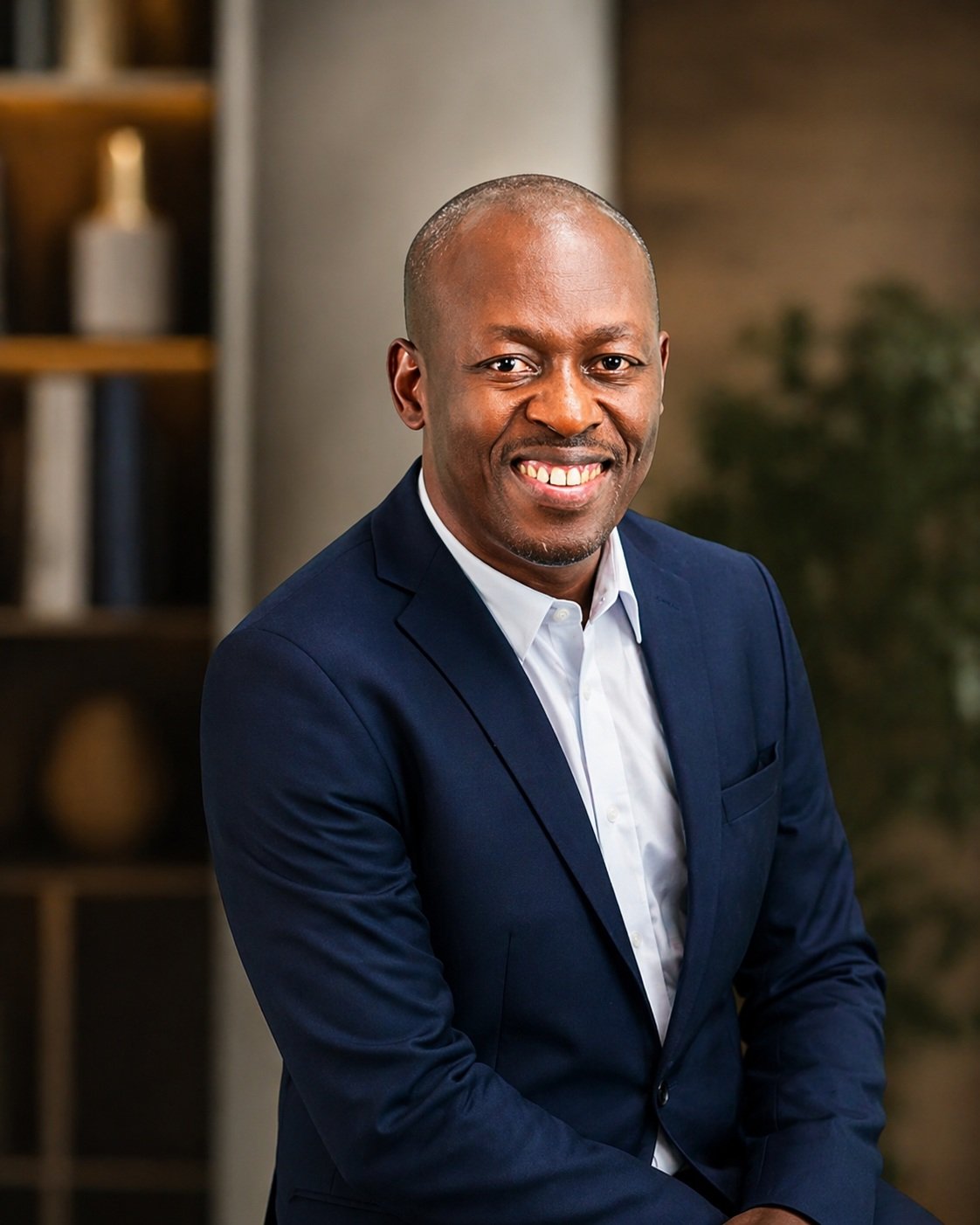
A. Joshua Adedeji
A. Joshua Adedeji is a leadership strategist, organisational development consultant, author, teacher and values-driven transformation leader. He writes on leadership, strategy, governance, organisational effectiveness, business, personal development and Nigeria’s social and economic transformation, connecting ideas and current realities to practical implications for leaders, institutions, entrepreneurs and citizens. His work is shaped by a commitment to clear thinking, responsible leadership, stronger institutions and the development of people and systems capable of producing lasting impact.








Reader conversation
0 approved comments