
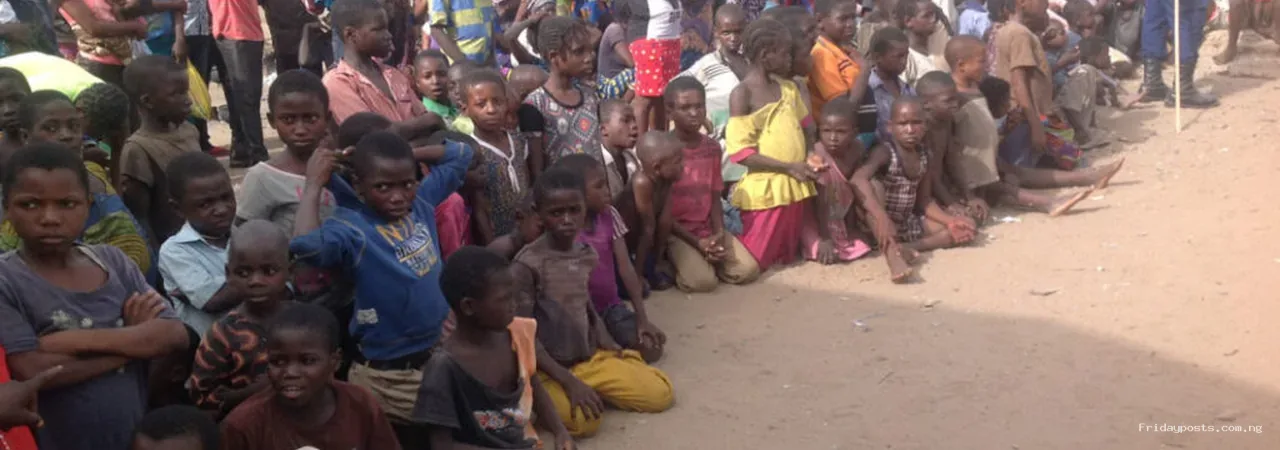
Nigeria’s education crisis does not begin when a child fails an examination in secondary school. It does not begin when a university graduate struggles to write a clear application letter. It does not even begin in Primary One.
For millions of children, the disadvantage begins before formal primary education starts.
The Universal Basic Education Commission says about 10 million Nigerian children are outside early childhood care, development and education. UBEC also says only 35.6 per cent of children aged 36 to 59 months attend any form of early childhood education, while roughly 70 per cent of Nigerian 10-year-olds are unable to read and understand a simple text.
Those figures describe different stages of the education system, but they belong in the same conversation. A country that fails to build language, attention, social, emotional and cognitive foundations in the early years should not be surprised when many children struggle to learn later.
The problem is not that preschool automatically guarantees success. It does not. The point is that the years from birth to age five are a period in which children develop capabilities that make later learning easier or harder.
Early childhood education is not babysitting
In many Nigerian conversations, nursery and pre-primary education are treated as optional preparation for “real school”. That understates their purpose.
Good early childhood education helps children develop vocabulary, listening, early numeracy, curiosity, motor skills, emotional regulation, social interaction and familiarity with books and structured learning. It also helps identify developmental or health challenges early.
The best programmes are not miniature versions of secondary school. Young children do not need to spend the day copying long notes from a board. They need play, language, stories, movement, interaction, guided exploration and consistent adult attention.
The quality of the experience matters as much as attendance.
A child sitting in an overcrowded room with an untrained caregiver is technically enrolled but may not be receiving the kind of stimulation that early education is supposed to provide.
The 35.6 per cent attendance figure should worry policymakers
UNICEF has also reported that only 35.6 per cent of Nigerian children aged 36 to 59 months receive early childhood education.
That means the majority enter primary school without the benefit of organised early learning.
This gap is not evenly distributed. Children from wealthier urban families are more likely to attend private nursery schools. Children in poorer households, rural communities, insecure areas or displaced families are more likely to miss out.
The result is that inequality begins before children sit in the same primary classroom.
Two six-year-olds may arrive on the first day of school with very different starting points. One may already recognise letters, understand classroom routines, hold a pencil confidently and have heard hundreds of stories. Another may be encountering structured learning for the first time.
A single national curriculum does not erase that difference.
Learning poverty is partly an early-years problem
The phrase “learning poverty” generally refers to a child’s inability to read and understand a simple age-appropriate text by around age ten.
It is easy to treat that as a primary-school problem alone. But literacy is cumulative.
A child learns to read more easily when oral language is strong, vocabulary is broad, attention can be sustained and the child is comfortable with books and symbols. Those foundations begin developing before primary school.
This is why UBEC’s early-education figure and the reported inability of many 10-year-olds to read with understanding should be analysed together.
Nigeria cannot wait until Primary Four to discover that a child has been falling behind since age four.
The home is part of the education system whether policy recognises it or not
One of the most important findings in the World Bank’s 2026 human-capital work on Nigeria is that caregiver behaviour matters greatly.
The Bank reported that when Nigerian caregivers engage in interactive learning such as reading, storytelling and play, a child’s development readiness can more than double, moving from about 20 per cent to above 50 per cent in the evidence it reviewed.
That has a practical implication. Early childhood policy cannot be limited to building classrooms.
Parents and caregivers need simple tools for learning at home. A household does not need expensive toys to talk, sing, count objects, tell stories, name colours, ask questions or let a child practise drawing.
Public education campaigns could make these behaviours as familiar as vaccination messages.
Nigeria has used radio, television, religious institutions, community leaders and health workers for national campaigns before. The same networks can carry practical early-learning messages.
Nutrition and learning cannot be separated
The brain developing in the early years is also affected by nutrition and health.
A child who is chronically undernourished, frequently ill or exposed to severe stress may arrive at school already carrying disadvantages that a teacher alone cannot correct.
This is why early childhood development is broader than education. It includes maternal health, nutrition, immunisation, responsive caregiving, protection and early learning.
The World Bank’s April 2026 Nigeria Development Update made this connection central, arguing that Nigeria’s next stage of human-capital progress should begin from pregnancy to age five.
Policy silos make this harder. Health ministries think about immunisation. Education ministries think about preschool. Social-protection agencies think about poor households. Yet the child experiences all these conditions at the same time.
Nigeria is paying for weak foundations later
When early learning is weak, costs appear throughout the system.
Teachers spend more time remediating basic skills. Children repeat classes or progress without mastery. Secondary schools receive students who cannot read complex material. Universities and employers complain about basic competencies. Families pay for lessons and private schools to compensate for gaps.
The economy eventually carries the cost through lower productivity.
The World Bank’s 2026 HCI+ findings for Nigeria put the education pillar well below the median for lower-middle-income countries. It also estimated that raising effective schooling to 12 years could increase long-term labour earnings substantially.
But “effective schooling” is the key phrase. Years spent sitting in a classroom are not the same as years of actual learning.
Early childhood development improves the odds that later school years will produce more learning.
Public preschool cannot simply copy expensive private models
Expanding access will require realism about cost.
Nigeria cannot build a high-fee urban nursery school for every child. Nor should it try.
Community-based early childhood centres, attached pre-primary classes in public schools, trained local caregivers, low-cost learning materials and parent programmes can reach more children if quality standards are enforced.
The challenge is to avoid creating a two-tier system in which wealthy children receive rich play-based learning while poor children are placed in bare rooms and described as “covered”.
Access without quality can reproduce inequality under a different name.
Government therefore needs minimum standards that are simple enough to implement and strong enough to protect children.
The workforce is the centre of the quality problem
Early-years education depends heavily on adults.
A well-designed curriculum will fail if caregivers are undertrained, poorly paid, frequently absent or responsible for too many children.
Nigeria needs a deliberate early-childhood workforce strategy. That includes training pathways, certification, coaching, supervision and career progression.
The country also needs to recognise that early-years teaching requires specialised skill. It is not automatically the easiest level because the learners are small.
Adults working with young children need to understand language development, play, child protection, behaviour, disability inclusion and how to observe developmental progress without turning preschool into an examination factory.
States need to use the money already available
Basic education in Nigeria is a shared federal-state responsibility, and access to intervention funds often depends on states meeting conditions and providing counterpart funding.
UBEC’s warning about early-childhood funding should therefore be read as a governance issue as much as an education issue.
If money intended for children remains unused because state systems fail to meet administrative requirements, the loss is not abstract. It appears as missing classrooms, untrained teachers, inadequate materials and children entering school unprepared.
The public should be able to see, state by state, how much early-childhood funding is available, accessed and spent.
Transparency would also allow citizens to compare outcomes across states.
A national early-years strategy should start with the poorest children
Universal access should remain the goal, but scarce public resources should first close the largest gaps.
That means prioritising poor rural communities, informal settlements, conflict-affected areas, children with disabilities, displaced families and places where girls or other groups face specific barriers.
The reason is not only fairness. Early investment often produces the greatest return when it reaches children who would otherwise receive the least support.
If government spends the same amount subsidising families who could already afford private preschool, it may increase enrolment statistics without reducing inequality.
Targeting matters.
Nigeria needs to measure readiness, not only enrolment
Counting how many children are registered in early childhood programmes is necessary but insufficient.
The country should also measure whether children are developing age-appropriate language, numeracy, motor and socio-emotional skills.
These assessments should not become high-stakes examinations for four-year-olds. They should be simple developmental measures used to improve programmes and identify where support is needed.
Nigeria also needs better data on attendance, teacher qualifications, class size, facilities and transitions into primary school.
A system cannot improve what it barely measures.
The private sector and media have roles beyond philanthropy
Nigeria’s private sector already influences the early years through food, healthcare, media, technology and education.
Employers can support childcare and parental leave. Media companies can create high-quality local-language children’s content. Technology companies can distribute early-learning tools that work on low-cost phones. Food companies can improve nutrition standards. Foundations can finance evidence-based programmes rather than one-off donations.
The creative industries may be particularly powerful. Children learn through stories, songs and characters. Nigeria has one of Africa’s strongest entertainment sectors, yet much of its commercial creative energy targets older audiences.
A serious early-years agenda could create a market for educational entertainment rooted in Nigerian languages and cultures.
Parents should not be made to feel guilty for a structural problem
It is easy for policy debates about early childhood to become lectures directed at parents.
Many caregivers already know they should spend more time with children. The barrier may be long work hours, poverty, crowded housing, insecurity, lack of books or the pressure of caring for several children with little support.
Policy should make good caregiving easier, not merely blame families for circumstances they did not create.
That means affordable childcare, accessible health services, parental information, social protection and safer communities.
The child’s development is shaped by the environment around the family.
What Nigeria should aim to achieve by 2030
A credible national target would combine access and quality.
Nigeria should aim for a large majority of children aged three to five to participate in quality early learning, while every primary school should be able to identify and support children entering without foundational skills.
States should publish annual early-childhood access and quality scorecards. Teacher-training institutions should expand specialised programmes. Primary healthcare workers should include early-stimulation messages in routine contacts with families. Local-language learning materials should become widely available.
Most importantly, early childhood development should be treated as economic infrastructure.
Nigeria spends heavily trying to repair problems after they become visible. Early-years investment is the opposite approach. It tries to prevent some of those problems from becoming entrenched.
The education crisis starts before the school gate
The image of Nigeria’s education problem is often a child sitting outside a locked classroom or a teenager who has dropped out of school.
There is another child who is less visible: the four-year-old who never enters an early-learning environment, receives little stimulation at home, arrives in Primary One already behind and spends the next decade trying to catch up.
That child may never appear in the statistics as “out of school” once enrolled. Yet the learning disadvantage remains.
If roughly 10 million children are missing early education, Nigeria is not dealing with a marginal preschool issue. It is allowing a major share of its future workforce to start the race from behind.
The country’s education reform should therefore begin where learning begins: in the first years of life.
Sources and further reading
- Vanguard, 29 September 2026: 10m Nigerian children shut out of early education — UBEC (https://www.vanguardngr.com/2026/09/10m-nigerian-children-shut-out-of-early-education-ubec/)
- UNICEF Nigeria: Education (https://www.unicef.org/nigeria/education)
- World Bank, April 2026 Nigeria Development Update: The Case for Early Childhood Development (https://www.worldbank.org/en/country/nigeria/publication/nigeria-development-update-ndu)
- World Bank, February 2026: Nigeria human-capital findings (https://www.worldbank.org/en/news/press-release/2026/02/12/nigeria-human-capital-nutrition-learning-skills-deficits-reduce-future-earnings)

A. Joshua Adedeji
A. Joshua Adedeji is a leadership strategist, organisational development consultant, author, teacher and values-driven transformation leader. He writes on leadership, strategy, governance, organisational effectiveness, business, personal development and Nigeria’s social and economic transformation, connecting ideas and current realities to practical implications for leaders, institutions, entrepreneurs and citizens. His work is shaped by a commitment to clear thinking, responsible leadership, stronger institutions and the development of people and systems capable of producing lasting impact.







Reader conversation
0 approved comments