

Independence anniversaries often produce two unsatisfactory stories about Nigeria. One says the country has achieved nothing. The other lists every project as proof of national greatness.
Neither is useful.
Nigeria’s 66 years contain war, military rule, corruption, poverty and missed opportunities. They also contain real achievements in democracy, business, medicine, technology, literature, sport, culture and infrastructure. A mature country should be able to acknowledge both at the same time.
The 50 items below are not a ranking of governments or political leaders. The numbering is for navigation. The test is simple: did the achievement create a meaningful institutional, economic, scientific, cultural or social milestone that changed Nigeria or expanded its influence?
50 achievements worth remembering
1. Independence in 1960
Nigeria became an independent state on 1 October 1960. Independence did not solve the country’s problems, but it transferred constitutional responsibility for national choices to Nigerians and established the platform on which every later institution, reform and achievement has been built.
2. The Federal Republic in 1963
Nigeria became a republic in 1963, replacing the British monarch as head of state with a Nigerian presidency. The constitutional order later changed repeatedly, but republican sovereignty remains central to the country’s political identity.
3. The University of Nigeria opens
The University of Nigeria, Nsukka, formally opened in 1960 as the first full-fledged indigenous and autonomous university in the country. Its growth helped expand a university system that now trains millions of Nigerians across public and private institutions.
4. Nigeria’s first Olympic medal
Nojim Maiyegun won bronze in boxing at the 1964 Tokyo Olympics, giving independent Nigeria its first Olympic medal. That breakthrough began a sporting record that would later include Olympic champions in athletics, football, weightlifting and para-sports.
5. Dick Tiger’s world boxing titles
Richard Ihetu, known globally as Dick Tiger, became world middleweight champion and later world light-heavyweight champion. His success placed a Nigerian athlete among the leading professional boxers of the 1960s.
6. Creation of a national television network
Nigeria developed one of Africa’s earliest television traditions, building from regional broadcasting into a national network. Television later became a foundation for news, drama, sport and the professional skills that fed the modern film industry.
7. The Nigerian civil service survives national crisis
The civil war between 1967 and 1970 was catastrophic. One institutional achievement afterwards was the ability of the federal state to restore nationwide administration and rebuild common systems of currency, transport, education and public service rather than allow permanent fragmentation.
8. Post-war reconstruction and reintegration
The post-1970 policy of reconstruction, rehabilitation and reconciliation did not resolve every grievance, but Nigeria avoided the formal partition that many countries emerging from civil war have suffered. National reintegration remains unfinished, yet the territorial state endured.
9. The National Youth Service Corps
Established in 1973, NYSC has sent generations of graduates to serve outside their states of origin. It is often criticised, but few Nigerian institutions have exposed so many young adults to regions, languages and communities they might otherwise never have encountered.
10. Nigeria helps establish ECOWAS
Nigeria was a driving force in the creation of the Economic Community of West African States in 1975. ECOWAS later became one of Africa’s most consequential regional institutions in trade, free movement, diplomacy, peacekeeping and democratic mediation.
11. FESTAC ’77
The Second World Black and African Festival of Arts and Culture brought artists and delegations from across Africa and the diaspora to Lagos in 1977. FESTAC remains one of the largest cultural gatherings ever organised on the continent.
12. African diplomatic influence
Nigeria used its size and oil-era diplomatic weight to support anti-colonial and anti-apartheid struggles across Africa. Its financial and diplomatic support helped strengthen liberation movements and gave the country influence far beyond West Africa.
13. AFCON champions in 1980
Nigeria won its first Africa Cup of Nations title in Lagos in 1980. The victory established the national football team as a major continental force and created a sporting memory shared across generations.
14. Wole Soyinka’s Nobel Prize
In 1986, Wole Soyinka became the first African laureate of the Nobel Prize in Literature. The award recognised an individual writer, but it also strengthened global attention to Nigeria’s deep literary tradition.
15. Ben Okri wins the Booker Prize
Ben Okri’s The Famished Road won the Booker Prize in 1991. Together with the global influence of writers such as Chinua Achebe, the achievement helped confirm Nigerian literature as a major part of world letters.
16. Abuja becomes the federal capital
The official transfer of the federal capital from Lagos to Abuja in 1991 created a purpose-built administrative centre closer to the geographic centre of the country. Abuja has since become one of Africa’s major diplomatic and conference cities.
17. Nigeria wins AFCON again in 1994
The Super Eagles won the 1994 Africa Cup of Nations and qualified for their first FIFA World Cup the same year. The team’s performance introduced a generation of Nigerian footballers to a truly global audience.
18. Nigeria’s first FIFA World Cup appearance
At USA 1994, Nigeria reached the round of 16 in its first senior World Cup. The team’s attacking football and player quality established Nigeria as one of Africa’s most recognised football nations.
19. Chioma Ajunwa’s Olympic gold
Chioma Ajunwa won the women’s long jump at the 1996 Atlanta Olympics, becoming Nigeria’s first individual Olympic gold medallist. Her victory remains one of the country’s defining athletics achievements.
20. The Dream Team wins Olympic football gold
Nigeria defeated Brazil and Argentina on the way to men’s football gold at Atlanta 1996. The achievement was historically important for African football and remains one of Nigeria’s most celebrated international sporting moments.
21. Return to civilian rule in 1999
The restoration of elected civilian government in 1999 began Nigeria’s longest uninterrupted democratic period. The quality of governance remains contested, but constitutional civilian rule has endured for more than a quarter century.
22. Universal Basic Education reform
The launch of Universal Basic Education in 1999, later strengthened by legislation, created a national framework for expanding compulsory basic education. Implementation gaps remain large, but the policy established education access as a national obligation.
23. Nigeria LNG begins exports
Nigeria LNG shipped its first cargo in 1999. The project turned associated gas and large reserves into a major export business, helping Nigeria diversify energy exports beyond crude oil and build significant gas-industry expertise.
24. The GSM revolution
The liberalisation of mobile telecommunications from 2001 transformed daily life. Active subscriptions later grew into the hundreds of millions, enabling mobile banking, digital commerce, media distribution and a new generation of technology companies.
25. Banking-sector consolidation
The 2004–2005 banking consolidation forced banks to raise their capital base and triggered mergers and acquisitions. The policy had costs and controversies, but it helped create larger Nigerian banks capable of expanding across Africa.
26. Nollywood becomes a global film industry
From its video-film roots, Nollywood developed into one of the world’s most prolific film industries. Streaming, cinema expansion and diaspora demand have since widened its international reach and created a recognisable Nigerian storytelling brand.
27. Five FIFA U-17 World Cup titles
Nigeria has won the FIFA U-17 World Cup a record five times. The victories demonstrate the depth of youth football talent, even though converting that youth success into a consistent senior development pathway remains a challenge.
28. The Super Falcons dominate African women’s football
Nigeria’s women’s national team became the most successful side in the Women’s Africa Cup of Nations. Their record helped make women’s football a visible part of Nigerian sport and inspired generations of girls.
29. NigeriaSat-1 enters space
Nigeria launched NigeriaSat-1 in 2003, becoming part of the global community using earth-observation satellites for mapping, agriculture, disaster monitoring and environmental management. Later satellite projects expanded the country’s space-technology experience.
30. National communications satellite capability
The launch of NigComSat-1 and later NigComSat-1R gave Nigeria experience in communications-satellite operations. The programme has faced commercial questions, but it built specialised engineering and orbital-management capability.
31. The Nigerian film and music diaspora expands
By the 2000s and 2010s, Nigerian entertainment had become a powerful cultural export across Africa and the diaspora. This created commercial opportunities for labels, studios, event promoters, streaming platforms and consumer brands.
32. The banking verification number
The Bank Verification Number system introduced a common biometric identity across bank accounts. It improved customer identification, reduced some forms of account fraud and became an important layer of Nigeria’s digital financial infrastructure.
33. Cashless and instant-payment infrastructure
Nigeria built one of Africa’s largest real-time electronic payment ecosystems. NIBSS Instant Payment and the growth of bank transfers changed how households and businesses move money and created the infrastructure on which fintech innovation could grow.
34. Paystack’s global acquisition
Stripe’s acquisition of Nigerian-founded Paystack in 2020 became a landmark transaction for African technology entrepreneurship. It demonstrated that a company built in Nigeria could create technology valuable to a major global payments group.
35. Fintech companies scale across Africa
Nigerian-founded fintechs including Flutterwave and others expanded payment services across multiple countries. Their growth showed that software and financial infrastructure could become another form of Nigerian regional export.
36. Africa is certified free of wild poliovirus
In 2020 the WHO African Region was certified free of wild poliovirus, and Nigeria’s success was essential because it had been the continent’s last reservoir. The achievement followed years of vaccination, surveillance and community engagement.
37. Nigeria contains the 2014 Ebola outbreak
After an infected traveller arrived in Lagos in 2014, Nigerian health teams traced contacts and contained Ebola without the widespread transmission seen elsewhere in West Africa. International health bodies widely recognised the speed of the response.
38. The Nigerian Content Act deepens local participation
The 2010 Nigerian Oil and Gas Industry Content Development Act increased requirements for Nigerian participation in the petroleum value chain. It helped expand indigenous service companies, fabrication capacity and professional expertise.
39. A new generation of indigenous energy companies
Nigerian-owned oil and gas companies expanded significantly as international firms sold onshore assets and local operators raised technical capacity. This increased domestic ownership of upstream and service businesses, even as governance and environmental responsibilities grew.
40. The Lekki Deep Sea Port opens
Lekki Deep Sea Port began commercial operations in 2023, giving Nigeria a modern deep-water container facility capable of handling larger vessels. Its long-term value depends on road, rail, customs and logistics performance around the port.
41. Modern rail corridors return
The Abuja–Kaduna standard-gauge railway and later Lagos–Ibadan line restored modern passenger rail to important corridors. Security and operational challenges remain, but the projects revived rail as a serious part of national transport planning.
42. The Second Niger Bridge opens
The Second Niger Bridge provided a major new crossing between the South-East and the rest of southern Nigeria, reducing dependence on the older bridge at Onitsha and adding strategic transport capacity to a heavily used corridor.
43. The Dangote Refinery begins production
The privately built Dangote Petroleum Refinery became one of the world’s largest single-train refineries. Its start-up changed Nigeria’s petroleum trade by adding large domestic refining capacity to a country that had long exported crude and imported much of its fuel.
44. Afrobeats becomes a global commercial genre
Nigerian music moved from regional popularity to global streaming, arena tours and international collaborations. Afrobeats is not owned by one country alone, but Nigerian artists and producers have been central to its worldwide commercial rise.
45. Nigerian artists fill global arenas
Nigerian musicians have sold out major venues in Europe and North America, demonstrating that the country can export live entertainment as well as recordings. Touring has become an important source of revenue and soft power.
46. Nigerian literature remains globally influential
From Chinua Achebe and Buchi Emecheta to Chimamanda Ngozi Adichie, Helon Habila and newer writers, Nigerian literature has continued to shape global conversations about identity, history, migration and African modernity.
47. Nigerian fashion earns international recognition
Designers working from Lagos and the diaspora have brought Nigerian textiles, tailoring and contemporary design to global fashion weeks, magazines and celebrity wardrobes. The next challenge is converting recognition into larger-scale manufacturing and exports.
48. Paralympic excellence
Nigerian para-athletes, especially powerlifters, have won repeated Paralympic and world titles. Their success is one of the strongest parts of Nigeria’s international sporting record and deserves far greater domestic visibility and investment.
49. Women’s basketball reaches continental dominance
Nigeria’s D’Tigress built a sustained period of success in African women’s basketball, winning multiple consecutive continental titles and competing at the Olympics and World Cup. Their run shows what continuity and a stable core can produce.
50. A growing tradition of peaceful constitutional transfers
The 2015 presidential election produced the first defeat of a sitting Nigerian president at the ballot box, followed by a peaceful transfer of power. The event strengthened an important democratic norm: incumbency does not have to make electoral defeat impossible.
51. A continental cultural and entrepreneurial influence
By 2026, Nigerian banks, music, films, fintechs, fashion, writers and professional services are visible across Africa. No single statistic captures this achievement, but the combined effect is a form of economic and cultural influence that did not exist at independence.
What this list does not prove
A catalogue of achievements is not evidence that Nigeria has developed as fast as it should have. The country still faces severe poverty, insecurity, weak public services, low productivity, infrastructure deficits and institutional distrust. Some achievements listed here also remain incomplete or have been weakened by poor maintenance.
The purpose of remembering progress is not to hide failure. It is to understand capability.
If Nigeria could build a continental banking network, eradicate wild poliovirus, contain Ebola, scale mobile communications, produce world-class culture and sustain civilian rule, then the country has evidence that large systems can improve when policy, institutions, investment and human capability align.
The next 50 achievements should be more ordinary
The most important future milestones may be less dramatic than Olympic gold or a Nobel Prize. They may be the year every child can read by age ten, the year electricity becomes reliable for most businesses, the year maternal mortality falls sharply, or the year a Nigerian train timetable becomes so dependable that nobody treats it as news.
Development is ultimately the process of turning exceptional success into ordinary national experience.
At 66, Nigeria should celebrate what is real, study how it was achieved and become more demanding about the systems that still fail.
Sources and further reading
- World Bank, Nigeria country data: https://data.worldbank.org/country/nigeria
- Olympics, Nigeria athlete and medal records: https://olympics.com/
- FIFA, Nigeria competition records: https://www.fifa.com/
- Nobel Prize, Wole Soyinka: https://www.nobelprize.org/prizes/literature/1986/soyinka/facts/
- WHO Africa, wild poliovirus certification: https://www.afro.who.int/health-topics/polio
- Nigerian Communications Commission, industry statistics: https://ncc.gov.ng/market-data-reports/industry-statistics
- ECOWAS: https://www.ecowas.int/
- NASRDA: https://nasrda.gov.ng/
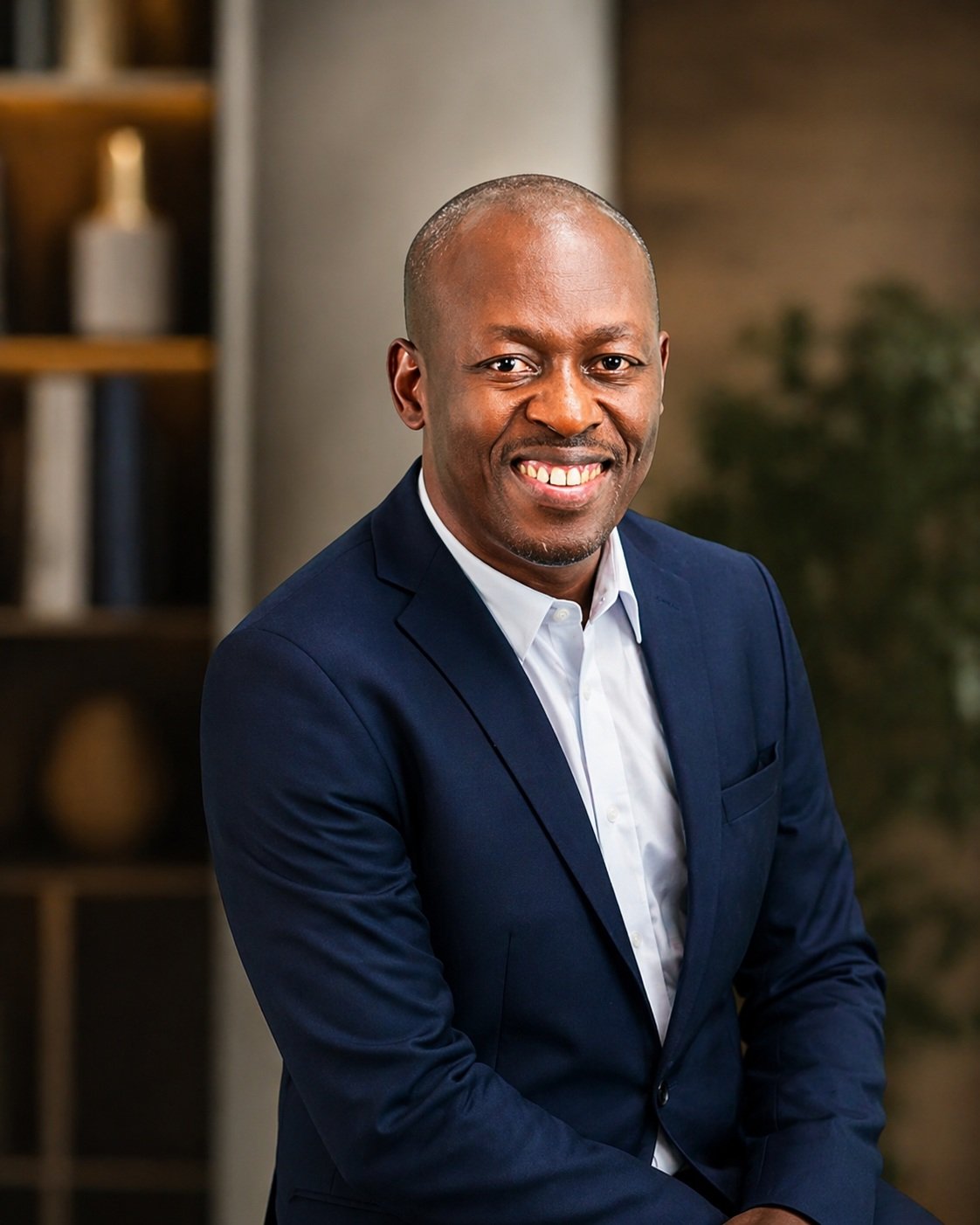
A. Joshua Adedeji
A. Joshua Adedeji is a leadership strategist, organisational development consultant, author, teacher and values-driven transformation leader. He writes on leadership, strategy, governance, organisational effectiveness, business, personal development and Nigeria’s social and economic transformation, connecting ideas and current realities to practical implications for leaders, institutions, entrepreneurs and citizens. His work is shaped by a commitment to clear thinking, responsible leadership, stronger institutions and the development of people and systems capable of producing lasting impact.








Reader conversation
0 approved comments