
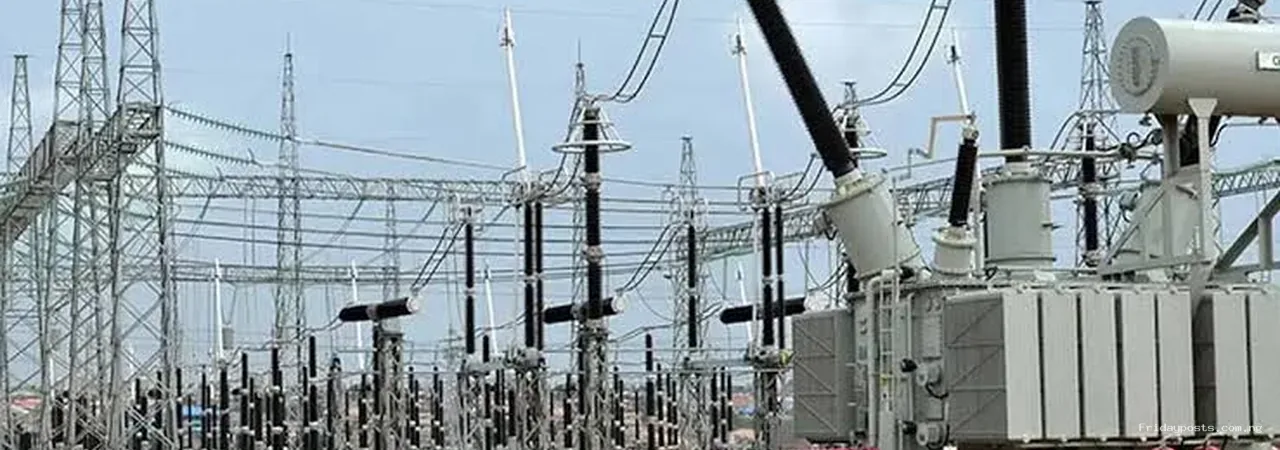
Nigeria’s electricity debate is usually reduced to one question: when will the light improve?
That is understandable. Households experience the power sector through outages, voltage fluctuations, damaged appliances, generator noise and the cost of keeping businesses alive when the grid fails. But the financial side of the electricity market is changing too, and the latest numbers deserve closer attention.
According to the Nigerian Electricity Regulatory Commission’s second-quarter 2026 figures, electricity distribution companies collected about ₦603.64 billion from customers during the quarter. At the same time, average energy offtake by the DisCos at their trading points fell by about 3.4 per cent from the first quarter.
At first glance, the story sounds simple: DisCos collected more money while taking less electricity.
But electricity economics is rarely that simple. The amount generated is not the same as the amount available to a DisCo. The amount allocated is not always the amount actually taken. The amount taken is not the same as the amount delivered to paying customers. And even after power reaches customers, not every unit is metered, billed or collected.
The more useful question is therefore not whether ₦603.64 billion is “too much”. It is whether the financial improvement taking place in the distribution segment is translating into more reliable, fairly priced electricity for households and businesses.
Five different numbers are often mixed together
Nigeria’s electricity conversation becomes confusing because different stages of the value chain are treated as if they mean the same thing.
The first number is generation. This is the electricity produced by generating companies at power plants.
The second is allocation or contracted capacity. This is the amount available or scheduled for distribution companies to take.
The third is offtake. This is the electricity the DisCos actually receive at the relevant trading points.
The fourth is delivery and billing. Technical losses, network constraints, theft and poor metering can mean the amount that reaches customers and is billed is lower than the energy taken from the market.
The fifth is collection. Even after bills are issued, not every customer pays in full or on time.
The NERC figures show that DisCos received 6,982.32 gigawatt-hours of electricity in the quarter but billed customers for 5,812.31GWh. The commission put overall energy accounting efficiency at 83.24 per cent. It also reported that the value of energy billed to customers was about ₦744.67 billion, while the amount actually collected was ₦603.64 billion.
This means the headline collection figure should not be read as the price of every unit of power Nigerians consumed. It is the outcome of several interacting factors.
Better collection does not automatically mean better service
Collection efficiency improved during the quarter.
NERC reported that DisCos recovered 81.06 per cent of the amount billed to customers, up from 78.95 per cent in the previous quarter. That is good for the electricity market because a system that cannot collect revenue cannot maintain networks, pay upstream suppliers or attract investment.
Nigeria needs financially healthier utilities.
But consumers are right to ask for reciprocity.
If customers are paying more reliably, they expect the network to become more reliable too. They expect faults to be resolved faster. They expect meters rather than estimated billing. They expect transformers to be replaced without endless community contributions. They expect tariff increases to have a visible relationship with service quality.
The legitimacy of electricity reform depends on that connection.
Tariff reforms have changed what one unit of electricity can earn
Part of the reason electricity revenue can rise without a proportional increase in energy volume is price.
Tariffs have changed significantly, particularly for customers classified under higher-service bands. Band A customers are expected to receive a higher minimum number of supply hours and pay a higher tariff than lower-band customers.
This changes the revenue mathematics.
If more energy is sold to higher-tariff customers, total collections can rise even if overall energy offtake does not increase. Improved metering, better recovery from previously underpaying customers and stricter enforcement can have the same effect.
That is why a simple “more money, less power” headline can be misleading.
The fair question is whether customers paying premium tariffs are consistently receiving the service level attached to those tariffs.
If they are, higher revenue may reflect a healthier pricing system. If they are not, the financial improvement becomes much harder to defend.
Metering remains central to trust
Nothing weakens trust in electricity billing faster than a customer receiving a bill that appears disconnected from actual consumption.
Nigeria has spent years trying to close its metering gap. Progress has been made, but many households and small businesses still depend on estimated billing or shared infrastructure.
A functioning market needs measurement.
When customers have meters, they can see how much electricity they use. DisCos can bill more accurately. Disputes reduce. Energy conservation becomes easier. Utilities gain better data about demand.
Without adequate metering, tariff reform feels arbitrary to the customer.
The best collection system is not one that simply extracts more money. It is one in which customers know what they consumed, what rate applied and why the final bill is what it is.
The 36 per cent ATC&C loss remains a warning sign
NERC reported weighted average Aggregate Technical, Commercial and Collection losses of 36.23 per cent across the 11 DisCos in the second quarter.
That is still very high.
ATC&C losses combine several problems. Technical losses occur because electricity is lost as it moves through weak or overloaded infrastructure. Commercial losses include theft, bypassed meters, inaccurate customer records and unbilled consumption. Collection losses arise when customers do not pay what they owe.
The regulator said the 36.23 per cent outcome was far above the 2026 Multi-Year Tariff Order target of 16.92 per cent.
That gap matters because losses do not disappear. Someone bears them.
If the system loses too much electricity and revenue, investment suffers, tariffs come under pressure and financially responsible customers may feel as though they are subsidising inefficiency elsewhere.
Reducing losses may therefore be as important as building new generation.
Nigerians often pay for electricity twice
For many households and businesses, the grid is only one part of the power budget.
A household pays the DisCo and still buys petrol, diesel, solar panels, batteries or inverter equipment.
A factory pays an electricity bill while maintaining generators or captive gas power.
A supermarket may depend on multiple layers of backup to protect refrigeration.
This is why the electricity burden cannot be measured only by tariff.
The economic cost of unreliable supply includes the money customers spend to insure themselves against outages.
If grid reliability improves, a higher formal electricity bill could still leave some businesses better off if it allows them to reduce generator use. The correct comparison is total energy cost, not grid tariff alone.
That should become a central measure of electricity reform.
The sector still struggles to pay the full chain
NERC’s report also shows that the DisCos had substantial obligations to upstream market participants.
The cumulative upstream invoice payable in the quarter was about ₦410.38 billion. DisCos remitted about ₦385.44 billion, leaving an outstanding balance.
That gap matters because electricity is a chain.
Generating companies need payment to maintain plants and buy fuel. Transmission infrastructure needs maintenance and expansion. DisCos need money to improve networks and install meters.
If one part of the chain is chronically underfunded, the weakness eventually appears elsewhere.
Consumers sometimes see only the DisCo because that is the company sending the bill. But the electricity market is more complicated than the retailer-customer relationship.
More revenue should create a measurable service compact
Nigeria needs to make the connection between financial reform and service improvement more visible.
Each DisCo should publish a simple quarterly consumer scorecard.
It should show average supply hours by service band, number of new meters installed, number of transformers replaced or upgraded, fault-resolution time, complaint-resolution rate, energy received, energy billed, money collected and technical-commercial losses.
The data should be displayed by franchise area, not only as a national total.
A customer in Ibadan does not need to know only that the national system improved. He needs to know whether service in his area improved.
This level of transparency would change the debate from arguments about impressions to discussions about measurable performance.
Band classification must be credible
The service-band system is only defensible if customers are placed in bands that reflect actual supply.
A household paying a Band A tariff but repeatedly receiving far less than the promised level of electricity will naturally feel cheated.
This is not only a customer-service problem. It is a regulatory problem.
NERC and the state electricity regulators emerging under Nigeria’s decentralised electricity framework need reliable monitoring of feeder performance. Automatic data from substations and smart meters should increasingly replace estimates.
Customers should also be able to see the service history of their feeder.
If a feeder falls consistently below the required threshold, the tariff classification should be reviewed quickly rather than after months of complaints.
State electricity markets could create useful competition
Nigeria’s electricity sector is changing under the Electricity Act, with states gaining greater authority over intrastate electricity markets.
This creates an important opportunity.
States with industrial clusters, strong commercial demand or willing investors can experiment with embedded generation, mini-grids, independent distribution networks and new regulatory arrangements.
The danger is fragmentation without capacity. Weak state regulators could reproduce the same problems at a smaller scale.
The opportunity is competition in ideas.
If one state shows that manufacturers can receive more reliable power through a commercially viable model, other states can learn from it.
Nigeria’s electricity problem is too large for one solution. A combination of grid reform, state markets, distributed energy and private investment will probably be necessary.
The customer should be treated as an investor in the reform
Every naira collected from electricity customers supports the financial sustainability of the system.
That means customers are not merely bill recipients. They are financing the reform through tariffs and payment discipline.
They deserve to see what that money is producing.
The power sector often asks Nigerians to be patient because infrastructure takes time. That is reasonable to a point. Transformers, substations, transmission lines and power plants cannot be built overnight.
But patience becomes difficult when communication is poor and performance data are hidden inside technical reports.
The reform needs a clearer public contract: better payment in exchange for better measurement, better infrastructure and more reliable supply.
What households should watch, not just the monthly bill
The next time electricity-sector numbers are published, consumers should look beyond the total revenue.
Ask five questions.
Did the average energy available to the DisCo rise or fall?
Did technical and commercial losses improve?
Did the number of metered customers increase?
Did customers in higher tariff bands receive the promised hours?
Did total backup-energy spending by businesses and households begin to fall?
Those measures tell us more about real improvement than collections alone.
Financial health and consumer value must rise together
It is possible for electricity-sector finances to improve before supply improves visibly. Utilities may first need better revenue to fund investment.
But that cannot become a permanent explanation.
The long-term objective is not a power sector that collects more money. It is a power sector that converts money into reliable electricity.
Nigeria should welcome higher collection efficiency if it reduces debt, supports investment and makes the market more bankable. At the same time, regulators should insist that better collections translate into measurable service.
The ₦603.64 billion collected in the second quarter is therefore neither a scandal by itself nor a victory by itself.
It is a test.
If higher collections are followed by more metering, fewer outages, lower losses, stronger networks and less dependence on generators, Nigerians may eventually see the logic of the reform.
If the money rises and the darkness remains, the political and economic case for higher tariffs will become increasingly difficult to defend.
Sources and further reading

A. Joshua Adedeji
A. Joshua Adedeji is a leadership strategist, organisational development consultant, author, teacher and values-driven transformation leader. He writes on leadership, strategy, governance, organisational effectiveness, business, personal development and Nigeria’s social and economic transformation, connecting ideas and current realities to practical implications for leaders, institutions, entrepreneurs and citizens. His work is shaped by a commitment to clear thinking, responsible leadership, stronger institutions and the development of people and systems capable of producing lasting impact.









Reader conversation
0 approved comments