

Nigeria entered the final 100 days to the first ballot of the 2027 general election with an unusual amount of operational detail already in the public domain.
The Independent National Electoral Commission says it has moved from planning to execution. Its chairman, Professor Joash Amupitan, told stakeholders on 6 October that nine of the 14 critical milestones in the revised election timetable had been completed. The voter register has risen to more than 103 million. INEC says it has acquired 57,000 new Bimodal Voter Accreditation System devices, strengthened existing BVAS software and batteries, begun production of materials and activated a nationwide logistics plan.
Those are important signals of progress.
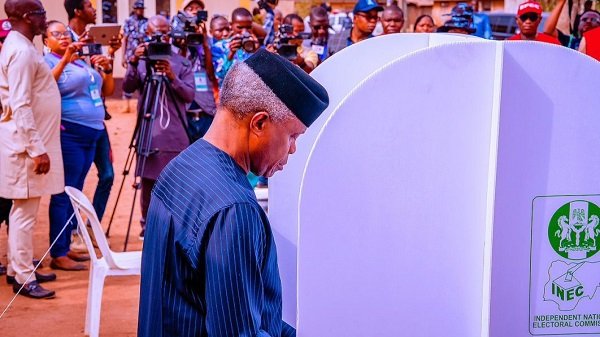
But elections are not judged by the number of activities completed inside a timetable. They are judged by what happens at thousands of polling units under pressure, often in places where roads are difficult, security is uncertain, mobile connectivity is weak and political actors have incentives to challenge the process.
The right question at 100 days is therefore not whether INEC has been busy. It is whether the entire election system is ready enough that voters can arrive, be accredited, vote, see results recorded accurately and trust that those results will survive the journey from polling unit to final declaration.
The voter register is bigger, but size is not the main test
INEC says the national register now contains more than 103 million voters after a three-phase Continuous Voter Registration exercise added about 10.7 million new registrants.
That is a significant administrative achievement.
The more important issue is integrity.
A voter register has to do several things at once. It must include eligible citizens, exclude duplicate or invalid registrations, reflect transfers and deaths as accurately as possible and remain accessible enough that citizens can confirm their records before election day.
INEC says it has used Automated Biometric Identification System checks and is displaying the register for claims and objections.
This is the correct sequence.
But FridayPosts would rate the voter register as **Work in Progress**, not because there is evidence that the register is defective, but because the final confidence test comes from public scrutiny, successful PVC access and the actual match between registered voters and polling-unit records.
The public should watch three indicators over the next few weeks: the number of valid objections resolved, the proportion of new cards collected and whether voters experience widespread problems locating their polling units.
PVC access looks improved, but the last mile matters
INEC has announced nationwide PVC collection and has also discussed printable-card technology intended to reduce delays for replacements.
This is a practical improvement if it works at scale.
Nigeria has repeatedly seen situations in which people are legally registered but struggle to obtain the physical credential needed to vote. The burden is often highest for people who cannot afford repeated journeys to local government offices.
A credible election should minimise this friction.
The commission should publish collection rates by state and local government rather than only national totals. That would reveal where the problem is concentrated early enough for corrective action.
For this component, the status is **Work in Progress**.
BVAS is more mature than it was in 2023, but technology is only as strong as deployment
INEC says it has acquired 57,000 new BVAS devices and upgraded existing machines through software hardening, battery optimisation and biometric calibration.
This matters because BVAS sits at the centre of voter accreditation.
The technology is supposed to make it harder for one person to vote as another and harder for polling officials to bypass the register.
By 2027, BVAS itself is no longer a new concept. That is an advantage.
Election technology becomes more reliable when officials and voters have used it repeatedly, weaknesses have been observed and technical teams have had time to improve the system.
But hardware procurement is not the same as operational readiness.
Every device has to be configured correctly, matched to the correct polling unit, fully charged, transported securely and supported when faults occur.
Nigeria also needs enough backup devices and technical response capacity for failure points.
FridayPosts would rate BVAS as **Work in Progress, with improving readiness**.
The next useful information from INEC should be the ratio of functional devices to polling units, the backup ratio and the outcome of nationwide stress tests.
IReV and the new eEC8A system face the trust test
INEC says it is strengthening electronic result management through an enhanced eEC8A form that can digitise and cryptographically authenticate polling-unit results before upload to the INEC Result Viewing portal.
This may become one of the most important changes in the 2027 process.
The controversy around electronic result transmission in previous elections showed that the technology itself is only one part of the issue. The larger question is public expectation.
If the commission tells citizens that polling-unit results will be visible quickly, delays or unexplained outages become politically explosive even when paper results remain legally valid.
INEC therefore needs to define clearly what IReV does, what it does not do and what happens when connectivity fails.
The result-management chain should be explained in ordinary language before election day.
How is the form created?
Who signs it?
What happens if an upload fails?
When can the public see it?
How is a scanned result compared with collation figures?
Clarity can reduce misinformation.
For IReV and eEC8A, the status is **Major Public-Trust Test**.
Logistics is still Nigeria's most underrated election risk
INEC says its operational plan covers headquarters, 36 state offices, the FCT and all 774 local government areas. Reports from the 100-day briefing also indicate plans involving very large numbers of vehicles and boats.
This is where election management becomes physical.
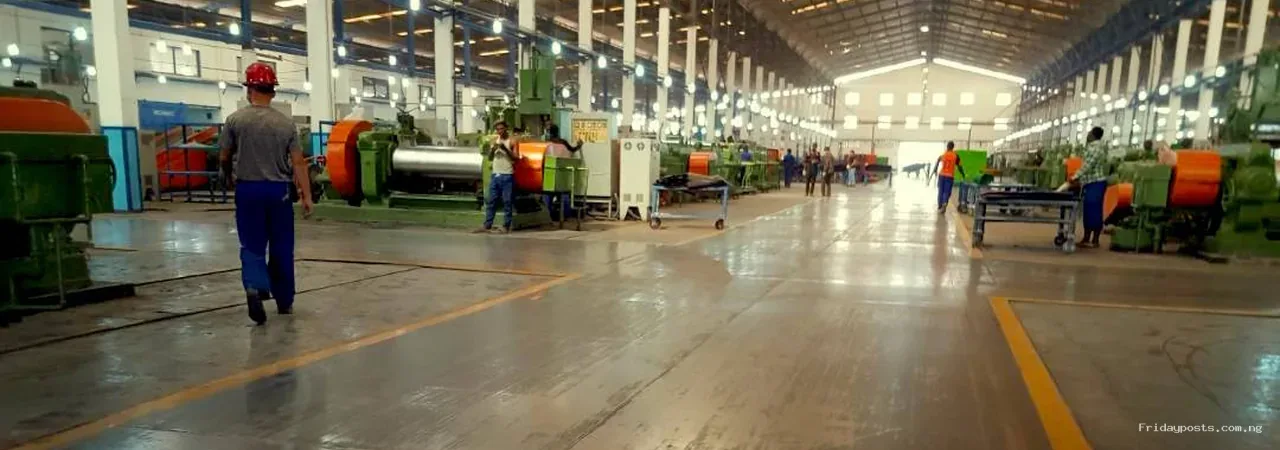
Ballot papers, result sheets, devices, staff and security personnel must arrive in the right place at the right time.
Nigeria has riverine communities, difficult rural roads, congested cities, insecure corridors and areas where fuel availability itself can disrupt movement.
One late vehicle can delay a polling unit. Thousands of late movements can alter turnout and undermine trust.
INEC has experimented with earlier deployment of sensitive materials and staff in recent off-cycle elections. That is sensible.
The commission should now publish a logistics readiness scorecard by state, showing transport contracts, route mapping, contingency plans and identified hard-to-reach areas.
At 100 days, logistics remains **Major Risk** until full deployment rehearsals prove otherwise.
Ad hoc staff can make or break the technology
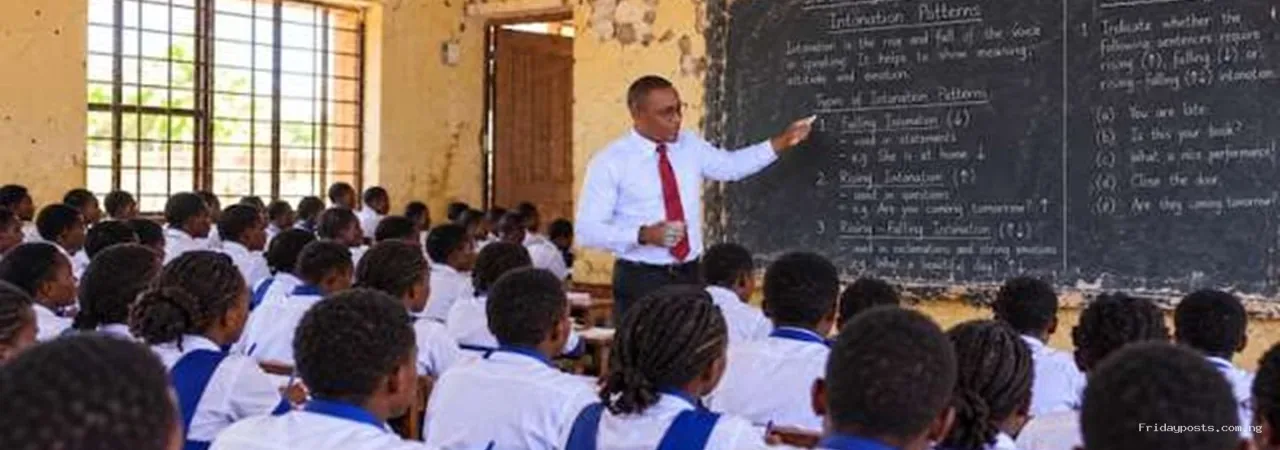
Nigeria's election system depends heavily on temporary personnel, including corps members and other ad hoc staff.
The commission can buy perfect technology and still fail if people are poorly trained.
Training therefore needs to be practical.
Officials should simulate actual election-day problems: failed fingerprints, unclear facial verification, voters at the wrong unit, attempted disruption, missing materials, rejected ballots, disagreement over result sheets and delayed network access.
A short lecture is not enough.
INEC should also reduce the gap between training and deployment. People forget procedures when training happens too early or when manuals are difficult to use under pressure.
Ad hoc staffing is **Work in Progress**.
The key question is whether training will be standardised nationally while still reflecting local conditions.
Security is not an INEC-only problem
An election can be technically well prepared and still be damaged by violence.
Nigeria's security map is uneven. Some communities face insurgency, banditry, kidnapping, communal violence or political thuggery. Others are calmer but vulnerable to local intimidation.
INEC works through the Inter-Agency Consultative Committee on Election Security, but operational control rests across multiple security agencies.
The challenge is not simply placing officers at polling units.
Security must protect voters without intimidating them. It must protect election workers and materials. It must respond to violence quickly. It must avoid appearing partisan.
The commission has said it is using early-warning systems and that political violence will attract sanctions and prosecution.
That is necessary, but Nigeria's experience shows that deterrence depends on enforcement, not warnings.
Security remains **Major Risk** because the threat is partly outside INEC's control.
Disinformation is now part of election infrastructure
The 2027 election will take place in a media environment shaped by generative AI, deepfakes, manipulated audio, coordinated propaganda and instant social distribution.
INEC has warned about these risks and says it is introducing anomaly-detection systems to protect its digital infrastructure.
Cybersecurity is one side of the problem.
Information integrity is the other.
A fake video can spread faster than an official correction. A false claim that BVAS has failed nationwide can discourage voters even when the problem is local. A fake result sheet can circulate while collation is still underway.
INEC needs a rapid-verification architecture that journalists, civil society organisations and citizens know how to use.
This should include a public incident dashboard and verified channels with fast response times.
The status is **Major Risk, with mitigation underway**.
Campaign finance and vote buying are still weak points
INEC says it is working with the EFCC, ICPC and NFIU to monitor campaign spending and suspicious financial activity.
This is welcome.
Nigeria's elections are not only about technology and logistics. They are also about incentives.
A credible process can still be distorted if voters are openly paid, state resources are abused or campaign-finance limits exist only on paper.
Enforcement is difficult because transactions can be fragmented and informal.
The best deterrent is visible consequence.
If major violations occur and nothing happens, warnings will lose credibility.
FridayPosts would rate campaign-finance enforcement as **Major Risk**.
Election litigation needs preparation too
Every major Nigerian election generates legal disputes.
Parties challenge nominations. Candidates litigate internal primaries. Results are contested. Courts interpret electoral law.
INEC cannot stop litigation, but it can reduce avoidable disputes through accurate documentation and consistent application of rules.
The 2026 Electoral Act has changed parts of the legal environment, which means parties, lawyers, officials and courts will all be working with newer provisions.
Election readiness should therefore include legal readiness.
Every operational decision that may later be challenged should have a clear record.
This component is **Work in Progress**.
Public trust is the final readiness indicator
INEC can complete every procurement and still struggle if citizens believe the institution is biased.
Trust is not created by public relations alone.
It comes from consistency.
The commission must apply rules to governing and opposition parties alike. It must correct errors openly. It must communicate delays quickly. It must avoid promising what technology cannot guarantee.
Trust also depends on political actors.
Parties often attack the commission when decisions go against them and defend it when decisions go in their favour.
Citizens should evaluate evidence, not partisan convenience.
At 100 days, public trust is **Fragile but Recoverable**.
The FridayPosts readiness dashboard
If FridayPosts reduces the election to ten measurable components, the picture is mixed.
The voter register: Work in Progress.
PVC access: Work in Progress.
BVAS: Work in Progress with improving readiness.
IReV and result management: Major Public-Trust Test.
Logistics: Major Risk.
Ad hoc staffing: Work in Progress.
Security: Major Risk.
Disinformation and cybersecurity: Major Risk with mitigation underway.
Campaign-finance enforcement: Major Risk.
Public trust: Fragile but Recoverable.
This is not a prediction of failure.
It is a reminder that elections are systems. Strong performance in one area cannot compensate fully for collapse in another.
What should happen over the next 30 days
INEC should now publish more operational data rather than more assurances.
Voters need PVC collection rates.
Civil society needs access to procurement and deployment information.
Political parties need clear technology protocols.
Journalists need a rapid fact-checking channel.
Security agencies need local threat maps.
The commission should also conduct public stress tests of result-management systems and disclose what it learned from them.
The purpose is not to expose sensitive security information.
It is to build confidence that weaknesses are being discovered before election day rather than during it.
Ready enough is not the same as perfect
No election commission enters a national vote with zero risk.
Nigeria's scale makes that impossible.
The reasonable standard is whether INEC has identified its major risks, allocated resources against them, tested its systems and created credible contingencies.
The 100-day briefing shows progress.
The commission has a larger voter register, more BVAS devices, an upgraded results architecture and a detailed operational plan.
But the most difficult work lies in the last mile: movement, people, security, connectivity and trust.
That is where Nigerian elections have historically become vulnerable.
The next 100 days should therefore not be treated as a countdown to a ceremony.
They are a national implementation sprint.
If INEC gets the last mile right, 2027 can strengthen confidence in Nigeria's democracy.
If it does not, impressive preparation statistics will matter very little after the polls.
Sources and further reading
- INEC, election calendar and official voter-service pages
- PUNCH, 7 October 2026: INEC says register exceeds 103 million and nine of 14 milestones are complete
- Premium Times, 5 October 2026: 103 million voters, upgraded BVAS and eEC8A







Reader conversation
0 approved comments