

Nigeria has received a piece of economic news that deserves neither celebration nor dismissal.
The country rose four places, from 12th to eighth, in Bloomberg Economics' 2026 Investment Risk-O-Meter covering 19 African economies. It was the largest upward movement in the latest ranking, overtaking Rwanda, Tanzania, Kenya and Namibia.
Bloomberg's assessment credited improvement in three of five broad areas: economic strength, fiscal strength and external vulnerability.
For a country that has spent the past few years dealing with currency instability, high inflation, subsidy reform, public anger and difficult investor sentiment, moving upward in a comparative risk ranking matters.
But a ranking is not a factory.
It is not a new pharmaceutical plant in Ogun. It is not a data centre in Lagos. It is not a new agro-processing line in Kano. It is not a foreign investor wiring long-term equity capital into a Nigerian company.
The harder question is whether investors are actually bringing money that stays long enough to expand productive capacity.
Investment perception and investment reality are different
Risk rankings are useful because investors compare countries.
A fund manager deciding between Nigeria, Kenya, Egypt or Morocco wants to know which market offers the best balance of return and risk.
A manufacturer deciding where to build a plant wants confidence that energy, foreign exchange, taxation and regulation will not become unpredictable after capital is committed.
Improving in a comparative ranking can therefore lower the psychological barrier around Nigeria.
But perception is an intermediate outcome.
The final outcome is capital formation.
Did a company build something?
Did it employ people?
Did it import machinery?
Did it expand production?
Did it create exports?
That is the difference between investability and investment.
Nigeria's recent capital inflows are large, but mostly short term
This is where the story becomes more complicated.
Capital importation into Nigeria has risen sharply in 2026.
NBS data for the first quarter showed about $10.37 billion in total capital importation, up strongly from the same period a year earlier.
That sounds like a major vote of confidence.
But roughly 95 per cent of the Q1 inflow came through portfolio investment, much of it into money-market instruments and bonds.
Central Bank data covering the first five months of the year also point to a similar pattern: portfolio flows dominate, while foreign direct investment is a much smaller share and showed weaker momentum in that period.
This distinction matters.
Portfolio capital is not bad capital.
It can deepen financial markets, help government and companies raise money and strengthen foreign-exchange liquidity.
But it can move quickly.
A portfolio investor can sell a security and exit.
A company that builds a factory cannot move the building to another country next week.
FDI therefore tells us more about long-term productive confidence.
Nigeria did attract stronger FDI in 2025
The Nigerian Investment Promotion Commission says Nigeria attracted about $4.01 billion in foreign direct investment in 2025, its highest annual inflow since 2014.
That is encouraging.
It suggests the reform period is not producing only short-term financial flows.
But one good year does not prove that Nigeria has solved its investment problem.
The country is coming from a low base relative to its population and economic potential.
The correct benchmark is not whether FDI rose from the previous year.
It is whether Nigeria can sustain several years of large, diversified investment in productive sectors.
Why the ranking improved
Bloomberg's framework looks beyond one variable.
Nigeria improved in economic strength, fiscal strength and external vulnerability.
That is consistent with several recent developments.
The foreign-exchange market is more transparent than it was under the old multiple-rate system.
External reserves have improved.
Oil production has recovered relative to earlier lows.
The fiscal structure has changed after the removal of the old petrol subsidy model and broader tax reforms.
Economic growth has also strengthened, with real GDP expanding 4.43 per cent year-on-year in the second quarter of 2026.
These changes can make a country look more investable.
Investors value direction.
A difficult economy that is becoming more predictable can attract more interest than a comfortable economy becoming less stable.
Inflation is still a major investment tax
Nigeria's reforms have not eliminated inflation.
For investors, inflation creates several problems.
It makes wages and operating costs harder to plan.
It raises interest rates.
It weakens consumer purchasing power.
It can force frequent price changes that damage demand.
A consumer-goods investor may be impressed by Nigeria's population but worry that households cannot afford the product at a profitable price.
This is why market size and market quality are different.
Nigeria has a huge population.
The investable consumer market depends on income.
Electricity remains one of the biggest gaps between perception and reality
A risk ranking can improve while a manufacturer still runs diesel generators.
That is the Nigerian contradiction.
Industrial investors care about electricity because it directly affects unit cost.
A company can manage occasional outages.
It struggles when unreliable supply becomes a permanent operating model.
Nigeria's power-sector reforms, state electricity markets and distributed-energy investments may improve the situation over time.
But investors make decisions using current cost structures.
If a factory in Nigeria must build its own power system while a competing factory in Morocco or Egypt receives reliable grid power, Nigeria begins the race with a disadvantage.
Infrastructure is one of the categories in which Bloomberg's framework still leaves room for improvement.
Expensive credit affects domestic investors too
Foreign investors are only one part of the story.
Nigeria needs Nigerian companies to invest.
A local manufacturer deciding whether to expand faces borrowing rates, energy costs and weak household demand just as a foreign company does.
If the investment climate improves only enough to attract foreign portfolio money while domestic businesses cannot finance new production, the reform is incomplete.
This is why monetary stability must eventually produce cheaper long-term credit.
Investment is not only about the ability to enter a country.
It is about the cost of staying and expanding.
Security changes the geography of investment
Nigeria does not have one security environment.
An investor may view Lagos differently from parts of the North-West.
A mining project in one state may face risks that a software company in Abuja does not.
This matters because national rankings can hide subnational differences.
Investors increasingly assess cities, states and corridors rather than countries alone.
Nigeria therefore needs state-level investment competitiveness.
A governor who improves land administration, security coordination, industrial power and permit processing can attract capital even while national weaknesses remain.
Investor confidence should be measured through projects, not announcements
Nigeria frequently announces investment commitments.
Some become real.
Some do not.
A foreign company may sign a memorandum of understanding worth hundreds of millions of dollars without spending that amount.
Government therefore needs a better pipeline-tracking system.
Investment announcements should move through stages: announced, legally committed, financing closed, construction started, operating.
NIPC is well placed to publish this.
The public should be able to distinguish a proposed investment from one that has actually deployed capital.
This would improve credibility.
What type of investment does Nigeria need most?
Not all capital has the same developmental effect.
A portfolio inflow into short-term securities can help foreign-exchange liquidity.
A private-equity investment can help a local company scale.
A factory can create employment and supplier demand.
A data centre can support digital services.
A new power plant can reduce operating costs across multiple sectors.
Nigeria should therefore care about the composition of investment.
The strongest inflows are those that create capability.
That means infrastructure, manufacturing, agro-processing, health, technology, logistics and energy.
The diaspora could become a larger source of patient capital
Nigeria receives enormous remittance flows from citizens abroad.
Most remittances support household consumption.
That is important.
But there is also an opportunity to create credible vehicles for diaspora investment into productive assets.
The challenge is trust.
Investors need transparent structures, clear exit rules and professional management.
Diaspora capital is not patriotic charity.
It expects return and governance.
If Nigeria can provide both, the diaspora could become a bridge between remittances and investment.
Better ranking performance should reduce the government's burden of persuasion
When a country has a poor reputation, officials spend time convincing investors that conditions are improving.
A respected external ranking can support that message.
But government should be careful not to oversell it.
Investors will discover the reality quickly.
If the customs process is slow, they will know.
If electricity fails, they will know.
If a regulator changes the rules unexpectedly, they will know.
The best investment promotion is a functioning business environment.
Nigeria should set a productive-investment target
The country has targets for GDP, oil production and other indicators.
It should also publish a clear medium-term target for productive investment.
For example, what level of annual FDI would Nigeria like to sustain by 2030?
How much should go into manufacturing?
How much into power and infrastructure?
How many projects should move from announcement to operation each year?
Targets do not guarantee achievement, but they force measurement.
The biggest opportunity is reform credibility
Investors can tolerate difficulty better than unpredictability.
Nigeria's reforms have been painful partly because they changed long-standing arrangements quickly.
The next stage must prove that the new rules are stable.
Foreign-exchange reform should not reverse because of political pressure.
Tax rules should not change without transition.
Contract enforcement should improve.
Investors need confidence that today's business plan will still make sense in three years.
Credibility compounds.
Nigeria is more investable than it was, but the job is unfinished
The Bloomberg improvement is good news.
It signals that external observers see movement in areas that matter to investors.
It should not be dismissed because households still feel economic pressure.
Both realities can exist at once.
At the same time, government should resist the temptation to turn eighth place into a victory parade.
Nigeria is eighth among 19 economies in one comparative risk framework, not first in Africa and not free of structural weaknesses.
The next test is harder.
Can improved sentiment become factories, jobs, infrastructure and exports?
Can the share of long-term FDI rise relative to short-term portfolio flows?
Can domestic firms invest alongside foreign companies?
Can infrastructure and institutional quality catch up with economic reform?
If the answers become yes over the next few years, the ranking will look like an early signal of genuine transformation.
If not, Nigeria may become a country investors like to trade without becoming a country in which they are willing to build.
Sources and further reading
- TheCable, 6 October 2026: Nigeria records biggest improvement in Bloomberg Africa investment-risk ranking
- NIPC: Nigeria investment overview and 2025 FDI figure
- The Guardian, 4 June 2026: Q1 capital importation reached $10.37bn, led by portfolio investment
- Reuters, 31 August 2026: Nigeria Q2 GDP growth of 4.43%
A. Joshua Adedeji
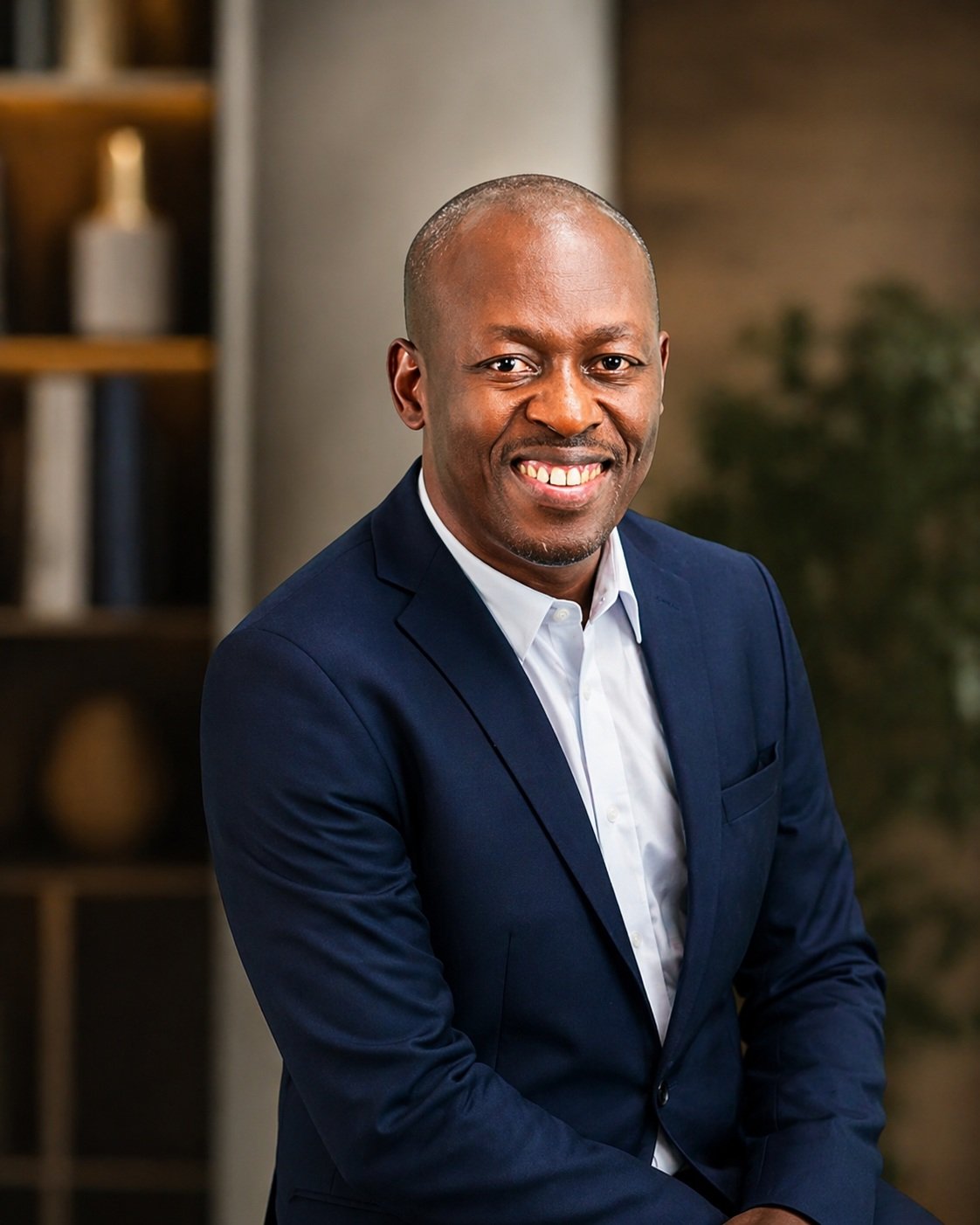
A. Joshua Adedeji is a leadership strategist, organisational development consultant, author, teacher and values-driven transformation leader. He writes on leadership, strategy, governance, organisational effectiveness, business, personal development and Nigeria’s social and economic transformation, connecting ideas and current realities to practical implications for leaders, institutions, entrepreneurs and citizens. His work is shaped by a commitment to clear thinking, responsible leadership, stronger institutions and the development of people and systems capable of producing lasting impact.










Reader conversation
0 approved comments