
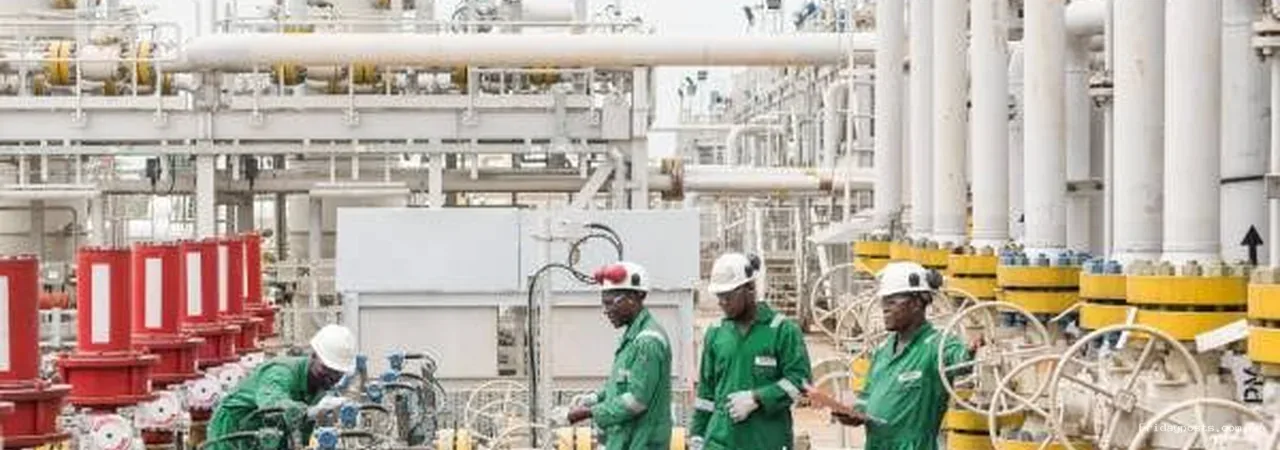
Nigeria’s gas story is changing.
For years, the country spoke about having one of Africa’s largest gas resources while power plants, factories and households still struggled to obtain reliable energy.
That contradiction remains, but there are signs of movement.
The Federal Government says domestic gas supply has surpassed 2 billion cubic feet per day. The Midstream and Downstream Gas Infrastructure Fund says it has catalysed about ₦1.6 trillion in gas infrastructure investment. NNPC’s reporting also shows substantial commitments to projects including the Ajaokuta-Kaduna-Kano pipeline, the Nigeria-Morocco Gas Pipeline and gas-processing investments.
These are large numbers.
But industrial policy should not stop at large numbers.
The real question is whether more gas can reduce the cost of making cement, glass, ceramics, fertiliser, steel, food products, chemicals and other manufactured goods in Nigeria.
That is where gas becomes an economic-development tool rather than only an energy-sector achievement.
Nigeria has gas, but factories need access, not geology
A resource buried underground has no industrial value until it reaches a user.
Nigeria’s gas reserves are often cited as a national advantage.
The challenge is infrastructure.
Gas has to be produced, processed, transported and delivered under commercially workable contracts.
A factory in Ogun, Kaduna, Kano or Aba cannot run a furnace with a reserve estimate.
It needs a pipeline connection or another reliable delivery system.
It needs pressure that is consistent.
It needs predictable pricing.
It needs supply that does not disappear when upstream problems occur.
Industrialisation depends on this last-mile reality.
Energy cost is one of Nigeria’s manufacturing disadvantages
Manufacturers repeatedly identify energy as a major cost.
Many companies are connected to the grid and still invest in backup generation.
Diesel can be extremely expensive for continuous industrial use.
Gas can be cheaper for some applications, particularly where direct heat or large-scale captive generation is required.
This is why gas is attractive to sectors such as ceramics, glass, cement, fertiliser and food processing.
But gas is not automatically cheap.
The final cost depends on processing, transportation, contracts, financing and exchange-rate exposure.
Nigeria’s industrial advantage will therefore depend on delivered gas cost, not simply domestic gas production.
The AKK pipeline matters because geography matters
A major part of Nigeria’s industrial activity is concentrated in the south, especially around Lagos and Ogun.
Northern industrial centres such as Kano and Kaduna have significant market and labour advantages but face energy constraints.
The Ajaokuta-Kaduna-Kano pipeline is intended to improve gas availability in the north.
If completed and commercially utilised, it could change industrial location decisions.
A manufacturer that can access reliable gas in Kaduna or Kano may no longer need to be as close to the coastal industrial corridor.
That can support more balanced regional development.
But infrastructure creates value only when users connect.
Industrial estates, distribution networks and customer contracts must follow the main pipeline.
A large pipeline with few paying industrial customers becomes an underused asset.
Fertiliser shows the industrial potential of gas
Nigeria’s fertiliser industry offers one of the clearest examples of gas as industrial feedstock.
Natural gas is not only burned for energy.
It is also a raw material for producing ammonia and urea.
Large fertiliser plants have demonstrated that Nigeria can convert gas into higher-value industrial output.
This has implications beyond fertiliser.
The broader lesson is that energy resources create more value when they support downstream manufacturing.
Exporting raw gas can generate revenue.
Using gas to manufacture fertiliser, chemicals, plastics or other products can create jobs, technical skills and supply chains.
Nigeria needs both export earnings and domestic industrial use.
The policy challenge is balancing them.
Cement has already shown the value of local scale
Nigeria’s cement industry is another example.
Large local producers have built significant capacity and reduced dependence on imported cement.
Energy is a critical input.
Gas and other fuels help determine production cost.
The sector shows what can happen when local demand, capital, industrial capability and energy access combine.
But cement is not enough.
Nigeria needs similar depth in other industries.
The objective should be to use gas to unlock manufacturing categories where energy cost has prevented scale.
Ceramics and glass are obvious candidates
Ceramics and glass require high-temperature heat.
This makes energy central to competitiveness.
Nigeria has local demand for floor tiles, sanitary ware, bottles, containers and construction glass.
It also has some of the mineral inputs needed.
Reliable gas can improve the economics.
Industrial clusters with pipeline access can attract companies that would otherwise depend on expensive alternative fuels.
This is where government should be specific.
Instead of saying “gas will drive industrialisation,” it should identify target corridors and sectors.
Which industrial estates will receive gas?
At what price?
Under what contract structure?
By what date?
Policy becomes credible when broad ambition becomes a location and a timetable.
Steel needs energy, but gas alone will not solve steel
Nigeria’s steel ambitions are often connected to gas and infrastructure.
Gas can support some processes and power requirements.
But the steel problem includes much more: raw materials, technology, scale, logistics, financing, management and market demand.
This distinction is important.
Energy is a necessary condition for industrial competitiveness, not a complete industrial strategy.
A factory with cheap gas can still fail because of poor management or weak markets.
Nigeria should therefore avoid treating gas infrastructure as a substitute for broader reform.
The strongest industrial corridors will combine energy, transport, finance, skills and predictable regulation.
Food processing could gain from distributed gas solutions
Not every factory needs a major transmission pipeline.
Food processors may use gas for boilers, drying, steam and captive power.
Smaller-scale solutions such as compressed natural gas, liquefied natural gas or virtual pipelines can serve industrial users beyond the main network.
This is particularly important for agro-processing zones.
Nigeria loses large amounts of agricultural value because crops are not processed close enough to production areas.
If reliable energy can reach processors outside major cities, more value can remain near farms.
That reduces transport of bulky raw produce and creates rural industrial jobs.
Gas pricing must reward both producers and users
Industrialists want low prices.
Gas producers need enough revenue to invest.
Government must balance the two.
If prices are forced too low, supply may stagnate because producers cannot justify new investment.
If prices are too high, factories cannot compete.
The solution is a transparent market with efficient infrastructure.
Long-term contracts can provide predictability.
Large industrial customers may accept take-or-pay structures if supply is reliable.
Government can reduce costs by supporting pipeline infrastructure, improving security and reducing regulatory uncertainty.
Artificially low prices are not the only route to competitiveness.
Lower infrastructure and financing costs matter too.
Pipeline vandalism can destroy the economics
Energy infrastructure is only useful when it is secure.
Nigeria’s oil and gas networks have suffered vandalism, theft and community disputes.
Every disruption raises cost.
Companies build backup systems.
Insurers increase premiums.
Maintenance becomes harder.
Investors demand higher returns.
A serious gas-industrialisation strategy therefore includes security and community engagement.
Communities hosting pipelines and facilities need legitimate benefits and clear grievance channels.
Security cannot depend only on armed protection.
Stable relationships around infrastructure matter.
Factories need contracts they can plan around
Manufacturing investment is long term.
A company may spend billions on equipment that will operate for decades.
That decision requires confidence.
How much will energy cost?
Can the supplier deliver the contracted volume?
What happens if supply fails?
Can the price formula change suddenly?
These questions are as important as the headline gas volume.
Nigeria should encourage standardised, bankable gas-supply agreements.
If lenders understand the contract, they are more willing to finance factories.
Reliable energy contracts can therefore improve access to industrial finance.
Gas-to-power can reduce generator dependence
Some factories may not use gas directly in production.
They may use gas to generate electricity.
Captive power plants can provide stable supply to industrial estates or large facilities.
This can reduce diesel dependence and improve production planning.
But captive power also raises a policy question.
If the strongest commercial customers leave the public grid, distribution companies lose valuable demand.
Nigeria needs a system in which industrial self-generation complements rather than weakens broader electricity reform.
Embedded generation, bilateral contracts and state electricity markets may help balance these interests.
The environmental question cannot be ignored
Gas is cleaner than coal and often cleaner than diesel in local air-pollution terms, but it is still a fossil fuel.
Methane leakage can significantly reduce the climate advantage.
Nigeria should therefore treat gas as part of an industrial transition, not a licence to ignore efficiency.
New infrastructure should minimise leakage.
Factories should use modern equipment.
Renewable electricity can complement gas.
Energy-intensive industries should improve efficiency.
The goal is lower-cost industrial energy with lower emissions than the diesel-heavy system it replaces.
Gas infrastructure should be judged by factory outcomes
Nigeria needs better metrics.
Instead of celebrating only pipeline kilometres or cubic feet supplied, government should publish industrial outcomes.
How many factories connected to new gas infrastructure?
What was their average energy cost before and after connection?
How many jobs were created?
Did output rise?
Did imports fall?
Did exports increase?
Did generator use decline?
These are the numbers that show whether gas policy is changing the real economy.
Industrial corridors should become the unit of planning
One practical approach is to identify priority manufacturing corridors.
Lagos-Ogun is an obvious one.
Aba-Port Harcourt is another.
Kano-Kaduna can become stronger if the AKK pipeline delivers.
Onitsha-Nnewi has manufacturing and market depth.
Industrial areas in Edo, Delta and Akwa Ibom also have energy and logistics potential.
For each corridor, government can map gas, electricity, roads, rail, water and industrial land.
This is more useful than treating every state as though it has the same industrial opportunity.
The private sector should carry much of the investment
Government cannot build every pipeline and factory.
The role of public policy is to make viable projects investable.
The MDGIF model attempts to use public capital to catalyse larger private investment.
That is sensible if projects are commercially disciplined.
The test is whether public participation attracts additional private money rather than replacing it.
Every funded project should disclose expected capacity, private co-investment and delivery milestones.
Transparency is especially important because infrastructure funds can become vulnerable to political allocation.
Industrial gas must not become another subsidy system
Nigeria should avoid repeating the weaknesses of fuel subsidy policy in a new sector.
Factories need competitive energy.
But giving politically connected companies artificially cheap gas without performance conditions would create another distortion.
Support should be transparent and linked to measurable industrial outcomes.
If government provides infrastructure or guarantees, beneficiaries should demonstrate investment, jobs, output and compliance.
Industrial policy works best when incentives have conditions.
The final test is the price of a Nigerian product
The success of Nigeria’s gas strategy will not be measured at a press conference.
It will appear in the cost of making a bag of cement, a bottle, a tile, a fertiliser product, a food item or a steel component.
If gas infrastructure lowers unit production cost, Nigerian goods become more competitive.
Factories can expand.
Exports become easier.
Consumers may eventually benefit from lower prices.
If gas production rises while industrial energy remains expensive and unreliable, the national advantage has not been converted.
Nigeria has spent years saying gas is the fuel of industrialisation.
The next phase should prove it.
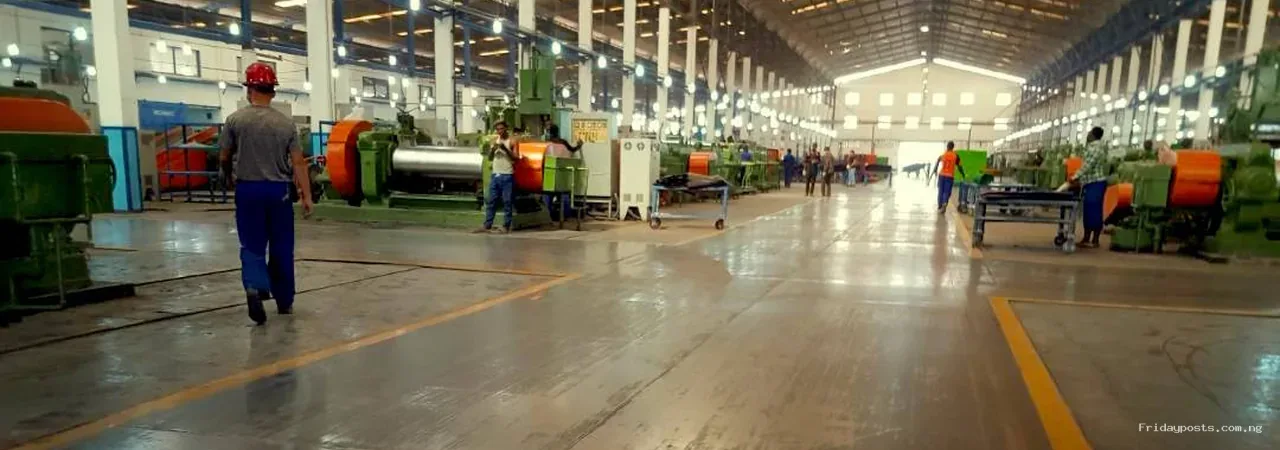
The country now needs to move from gas as a resource story to gas as a factory-floor story.
Sources and further reading
- Reuters, 2 October 2026: domestic gas supply surpasses 2bcf/d
- The Whistler, 5 October 2026: MDGIF catalyses ₦1.6tn gas infrastructure investment
- PUNCH, 5 October 2026: NNPC commits ₦473.8bn to gas infrastructure










Reader conversation
0 approved comments