
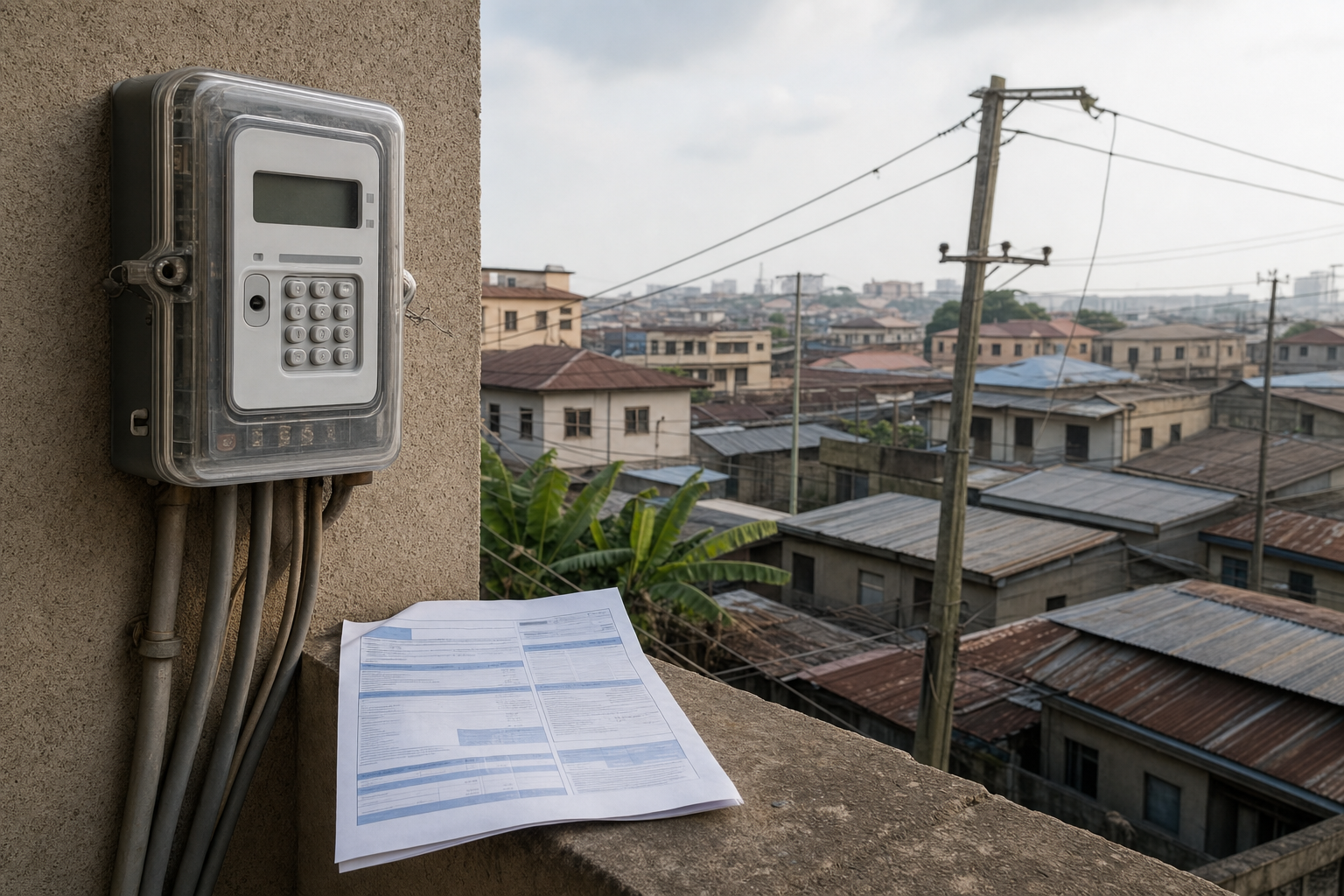
There is probably no infrastructure promise Nigerians have heard more often than better electricity.
So when government begins discussing 24-hour power, scepticism is understandable.
The Minister of Power, Joseph Tegbe, has held discussions with selected electricity distribution companies around proposed 24/7 Energy Zones in some of the country’s highest-demand corridors, including the Lagos axis, Abuja-Kaduna-Kano and Enugu-Port Harcourt.
The idea is important because it is more specific than promising immediate round-the-clock electricity for every Nigerian. It focuses first on areas where demand, industrial activity and commercial viability may support more reliable supply.
But even that narrower ambition will require much more than telling power plants to generate more.
Electricity is a chain. Gas or water turns turbines. Power plants generate. Transmission moves electricity at high voltage. Distribution companies take energy into local networks. Transformers reduce voltage. Meters measure consumption. Customers pay. Revenue flows back through the market so equipment can be maintained and new investment financed.
If any major part fails, the light goes off.
Start with the uncomfortable number: roughly 4,100 MW was being used on average in August
NERC reported that grid-connected plants had average available capacity of 4,758 megawatts in August 2026. About 4,102 MW of that capacity was utilised on average, giving an 86 per cent load factor on the available capacity.
The first important word is “available”.
Nigeria has much more installed generation capacity on paper. In April, NERC reported about 13,625 MW of installed grid-connected capacity but only around 4,286 MW available for dispatch on average.
That gap explains why simply announcing new power plants does not solve electricity shortages.
A plant may be installed but unavailable because of gas shortages, maintenance, technical faults, water conditions, contractual problems or other constraints.
The first step toward reliable power is therefore increasing the amount of existing capacity that can actually operate.
Gas is part of the electricity problem
A significant share of Nigeria’s grid electricity is generated by gas-fired plants.
Nigeria has large gas reserves, yet power plants have repeatedly experienced fuel constraints.
The problem includes production, pipelines, payment, contractual arrangements and the commercial incentive to supply gas to power generators.
A 24-hour electricity zone requires a power source that can run continuously. If a gas plant does not have reliable fuel, no amount of distribution reform can create electricity that was never generated.
This is why gas infrastructure should be treated as electricity infrastructure.
The power sector cannot be repaired entirely inside the Ministry of Power.
Generation must become dependable, not merely larger
A reliable electricity system needs reserve capacity.
If demand in a zone is 1,000 MW, the system cannot safely depend on exactly 1,000 MW of generation. Plants require maintenance. Equipment fails. Weather changes. Demand fluctuates.
There must be enough spare capacity and alternative supply to absorb shocks.
Nigeria’s high utilisation of the capacity that is currently available can therefore be read in two ways.
It shows that plants able to generate are being used substantially.
It also shows that the system needs more available capacity because there is limited room when demand rises or a major unit fails.
The objective should be to bring more of installed capacity into dependable service while adding new efficient generation where economics justify it.
Transmission has to move the power safely
Electricity generated in one part of Nigeria is not useful to a customer if the transmission network cannot carry it to the right place.
Transmission constraints can force generators to reduce output even when they are technically capable of producing more.
A 24/7 Energy Zone therefore requires enough transmission capacity into that zone, including redundancy.
If a single transmission line is the only route supplying a major industrial corridor, one fault can defeat the 24-hour promise.
The network needs alternative paths, modern protection systems, substations and maintenance.
Transmission expansion must also anticipate demand rather than arrive years after industrial growth.
Distribution may now be the most underestimated bottleneck
The Power Minister’s reported comments are significant because they acknowledge that the constraint does not end at generation and transmission.
A distribution company can receive electricity and still fail to deliver all of it effectively to customers.
Local networks may have overloaded transformers, inadequate feeders, weak protection, illegal connections or poor maintenance.
In some areas, a DisCo may also be reluctant to take additional power if it cannot bill and collect enough revenue from customers to pay for it.
That creates an unusual situation: a country can have unmet demand and still have electricity that the commercial system struggles to deliver profitably.
The Energy Zone concept appears designed partly to close that gap in areas where customer demand and payment capacity are high.
Electricity that is not billed becomes a financial problem
NERC’s July 2026 commercial data illustrate the challenge.
Distribution companies received electricity valued at about ₦333.94 billion. They billed customers about ₦250.79 billion, giving a billing efficiency of roughly 75.1 per cent.
Of the amount billed, about ₦205.53 billion was collected.
This means value leaked at multiple stages.
Some energy was not converted into bills. Some billed revenue was not collected.
An electricity market cannot invest sustainably when a significant share of the value supplied does not return as cash.
This does not mean all losses are caused by customers refusing to pay. Technical losses, estimated billing disputes, metering gaps, commercial processes and collection weaknesses all matter.
The solution must address the whole system.
Metering is central to trust
NERC reported a national metering rate of about 61.5 per cent by the end of June 2026.
That represents progress, but it also means a large share of customers remained unmetered.
Estimated billing damages trust.
Customers who do not believe their bills reflect actual consumption are less willing to pay. DisCos then face weaker collections. The sector becomes harder to finance.
A 24-hour zone should therefore aim for near-universal metering.
If customers are going to receive more electricity, they should know exactly what they used and what they owe.
Smart metering can also help utilities understand demand patterns, detect losses and design time-based pricing.
Reliable power and reliable measurement should develop together.
Tariffs have to pay for the service, but service has to justify the tariff
Electricity pricing is politically difficult.
Customers want lower bills. Investors want cost recovery. Government wants wider access. DisCos need enough revenue to maintain networks and purchase energy.
There is no permanently sustainable system in which electricity costs more to produce and deliver than customers collectively pay, unless government transparently funds the difference.
At the same time, customers are justified in resisting high tariffs for unreliable service.
The social contract should be straightforward: better service must accompany higher payment expectations.
Energy Zones could help test this principle.
Customers in areas receiving demonstrably reliable electricity may be more willing to pay cost-reflective tariffs because generators and businesses become less necessary.
The relevant comparison is not only the grid tariff. It is the grid tariff versus the total cost of grid electricity plus diesel, petrol, inverters and lost productivity.
24-hour power should reduce the generator economy
Nigeria has built an enormous private backup-power economy.
Households buy small generators. Businesses install diesel sets. Factories build gas plants. Offices buy batteries and inverters. Solar installers fill gaps.
These investments are rational responses to unreliable supply.
But they also show what the formal electricity system has failed to capture.
When a company spends hundreds of millions of naira generating its own electricity, that is evidence of willingness to pay for reliability.
A better grid should convert part of that private spending into formal electricity demand.
That could strengthen sector revenue while reducing fuel costs, noise and local pollution.
Energy Zones should not become permanent electricity islands for the wealthy
There is a legitimate concern with starting 24-hour power in high-demand commercial corridors.
Nigeria could create premium islands where affluent customers and industries receive excellent electricity while poorer communities remain with weak supply.
That would be politically and socially difficult.
The better interpretation is to use commercially viable zones as demonstration markets that strengthen the sector, then expand what works.
Industrial and commercial customers can provide stable demand and revenue. Their payments can help finance infrastructure. But government must maintain a national access strategy for rural and low-income communities through grid extension, mini-grids and targeted support.
Reliable electricity should ultimately become normal, not a luxury product.
States now have a larger role
The Electricity Act 2023 opened more space for state electricity markets.
This could accelerate 24-hour supply if states use the opportunity well.
A state can identify industrial clusters, housing corridors and commercial centres where embedded generation and local distribution investment make sense.
It can also coordinate land, permits, right-of-way and local infrastructure more quickly than a distant central system.
But decentralisation is not automatically success.
States need competent regulators, credible rules and technical capacity. Poorly designed state markets could create new confusion.
Nigeria is moving from one electricity architecture toward a more layered system. Coordination between NERC and state regulators will be essential.
Renewable energy and storage can support reliability
A 24-hour zone does not have to depend on one source.
Solar can provide cheap daytime electricity. Gas can supply firm power. Hydropower can contribute grid support. Batteries can manage short-term fluctuations and provide backup.
The economics differ by location.
The important principle is diversification.
A zone with several power sources is more resilient than one dependent on a single plant or transmission line.
As battery costs continue to change, storage may become increasingly useful for commercial districts and industrial clusters.
Nigeria should avoid treating renewable and conventional power as ideological opponents. Reliability may require both.
Maintenance is the unglamorous part of 24-hour power
Political systems prefer commissioning new infrastructure.
Electricity systems depend just as heavily on maintaining old infrastructure.
Transformers need servicing. Vegetation must be cleared around lines. protection equipment must be tested. gas turbines need scheduled maintenance. cables fail. meters require replacement.
A system that invests in construction but underfunds maintenance will repeatedly return to crisis.
The Energy Zone model should therefore include ring-fenced maintenance budgets and performance contracts.
Twenty-four-hour power is not achieved on the day infrastructure is commissioned. It is maintained every day afterwards.
What should count as success?
Government should define 24-hour electricity precisely.
Does it mean zero outages throughout the year? No power system can guarantee that.
A credible target would combine supply hours, outage frequency, outage duration, voltage quality and customer satisfaction.
For each Energy Zone, NERC or the relevant regulator should publish monthly performance.
How many hours of supply did customers receive? How many interruptions occurred? How quickly were faults restored? How much energy was billed and collected? What percentage of customers were metered?
If the zones work, Nigerians should be able to see the evidence.
The sequence matters
Nigeria’s power problem is so large that trying to solve everything simultaneously often produces another large plan.
A disciplined sequence may work better.
First, identify high-demand zones where reliable electricity has clear economic value.
Second, measure actual demand.
Third, secure generation and fuel.
Fourth, reinforce transmission and local distribution.
Fifth, meter customers.
Sixth, agree tariffs and service standards.
Seventh, create transparent performance monitoring.
Eighth, expand the model where results justify it.
This is less dramatic than declaring 24-hour electricity nationwide. It is also more credible.
The real promise is predictability
For a household, 24-hour electricity means comfort and convenience.
For an economy, the bigger value is predictability.
A factory can schedule production. A hospital can operate equipment without constant generator switching. A technology company can reduce backup infrastructure. A cold-chain business can protect inventory. A small salon can work without buying petrol. A student can study without planning around outages.
Reliable electricity reduces the number of decisions Nigerians make simply to work around infrastructure failure.
That is productivity.
Nigeria has spent decades proving that its citizens and businesses can adapt to unreliable power.
The next achievement should not be another adaptation.
It should be an electricity system reliable enough that adaptation is no longer the main strategy.
Sources and further reading
- Business Times Nigeria, 30 September 2026: proposed 24/7 Energy Zones (https://businesstimes.com.ng/2026/09/24-hour-power-supply-details-of-closed-door-meeting-between-power-minister-discos-emerge/)
- NERC, August 2026 Operational Performance Factsheet (https://nerc.gov.ng/resources/operational-performance-factsheet-august-2026/)
- NERC, July 2026 Commercial Performance Factsheet (https://nerc.gov.ng/resources/commercial-performance-factsheet-july-2026/)
- NERC, 2026 metering and performance factsheets (https://nerc.gov.ng/resource-category/factsheets/)
- NERC, April 2026 Operational Performance Factsheet (https://nerc.gov.ng/resources/operational-performance-factsheet-april-2026/)

A. Joshua Adedeji
A. Joshua Adedeji is a leadership strategist, organisational development consultant, author, teacher and values-driven transformation leader. He writes on leadership, strategy, governance, organisational effectiveness, business, personal development and Nigeria’s social and economic transformation, connecting ideas and current realities to practical implications for leaders, institutions, entrepreneurs and citizens. His work is shaped by a commitment to clear thinking, responsible leadership, stronger institutions and the development of people and systems capable of producing lasting impact.







Reader conversation
0 approved comments