
Nigeria is discussed every day, yet many Nigerians know the country mainly through the part they personally experience: their state, profession, language, religion, social class or political interest.
A useful national reference should do something different. It should put the basic structure of the country in one place: geography, constitutional government, history, economy, public institutions, culture, health, education and global achievements.
The 100 items below are not trivia for its own sake. They are a compact civic and development guide. Some facts are constitutional; some are historical; others explain how the economy and institutions actually work. Where numbers change frequently, the article avoids pretending that one temporary figure is permanent.
The list is designed to be updated as Nigeria changes.
100 things every Nigerian should know
1. Identity
Nigeria’s official name is the Federal Republic of Nigeria.
2. Independence
Nigeria became independent from Britain on 1 October 1960.
3. Republic
Nigeria became a republic on 1 October 1963.
4. Capital
Abuja is the federal capital. The seat of government formally moved from Lagos to Abuja in 1991.
5. Largest city
Lagos is Nigeria’s largest metropolitan economy and its principal commercial centre, although it is no longer the political capital.
6. Federation
Nigeria is a federation of 36 states and the Federal Capital Territory.
7. Local government structure
The Constitution lists 768 local government areas in the states and six area councils in the FCT, giving the familiar national total of 774 local government-level units.
8. Population
Nigeria has more than 230 million people by recent international estimates, making it Africa’s most populous country.
9. Location
Nigeria lies on the Gulf of Guinea in West Africa.
10. Neighbours
Nigeria shares land borders with Benin, Niger, Chad and Cameroon.
11. Niger and Benue
The Niger and Benue are Nigeria’s two great rivers; they meet at Lokoja before the Niger flows south towards the Atlantic.
12. Name
The name Nigeria is derived from the River Niger and was popularised during the colonial era.
13. Climate
Nigeria spans multiple ecological zones, from Sahel and savannah in the north to rainforest, mangrove and coastal environments in the south.
14. Constitution
The 1999 Constitution, as amended, is the supreme law of the federation.
15. Three arms
Federal power is divided among the executive, legislature and judiciary.
16. President
Nigeria operates a presidential system in which the President is both head of state and head of government.
17. National Assembly
The federal legislature is bicameral: the Senate and House of Representatives.
18. Senate
The Senate has three elected senators from each state plus one from the FCT, for 109 seats.
19. House of Representatives
The House of Representatives has 360 constituencies.
20. Supreme Court
The Supreme Court is Nigeria’s highest court.
21. Federal character
The Constitution promotes federal character as a principle intended to reflect Nigeria’s diversity in public institutions.
22. Fundamental rights
Chapter IV of the Constitution contains enforceable fundamental rights including life, dignity, personal liberty, fair hearing, privacy, expression, assembly and movement, subject to lawful limitations.
23. Directive principles
Chapter II contains Fundamental Objectives and Directive Principles of State Policy. These guide governance but are generally not enforced in the same way as Chapter IV rights.
24. Elections
INEC conducts federal and state elections, while separate state institutions handle local-government elections under the current constitutional structure.
25. Voting age
Nigerians become eligible to register to vote at age 18, subject to electoral law requirements.
26. Civilian rule
Nigeria returned to elected civilian government in 1999 and has remained under civilian constitutional rule since then.
27. Federalism is practical
Many public services involve shared or overlapping responsibilities among federal, state and local authorities; understanding which tier controls an issue is essential to holding the right institution accountable.
28. Pre-colonial societies
The territory now called Nigeria contained many sophisticated political systems before colonial rule, including the Sokoto Caliphate, Oyo Empire, Benin Kingdom, Kanem-Borno, Igbo republican communities and many others.
29. Amalgamation
The Northern and Southern Protectorates were amalgamated by British colonial authorities in 1914.
30. Nationalist movement
Independence emerged from decades of organising by journalists, unions, political parties, traditional authorities, professionals and nationalist leaders across different regions.
31. First Republic
The First Republic lasted from 1963 until the military coup of January 1966.
32. Civil war
Nigeria’s civil war lasted from 1967 to 1970 and caused enormous human suffering, especially in the Eastern Region and Biafra.
33. Military rule
Nigeria spent long periods under military governments between 1966 and 1999, interrupted by the Second Republic from 1979 to 1983 and a short transitional civilian arrangement.
34. State creation
Nigeria’s internal map changed repeatedly as regions were divided into states, moving from 12 states in 1967 to 36 states by 1996.
35. NYSC
The National Youth Service Corps was created in 1973 partly to encourage national integration after the civil war.
36. ECOWAS
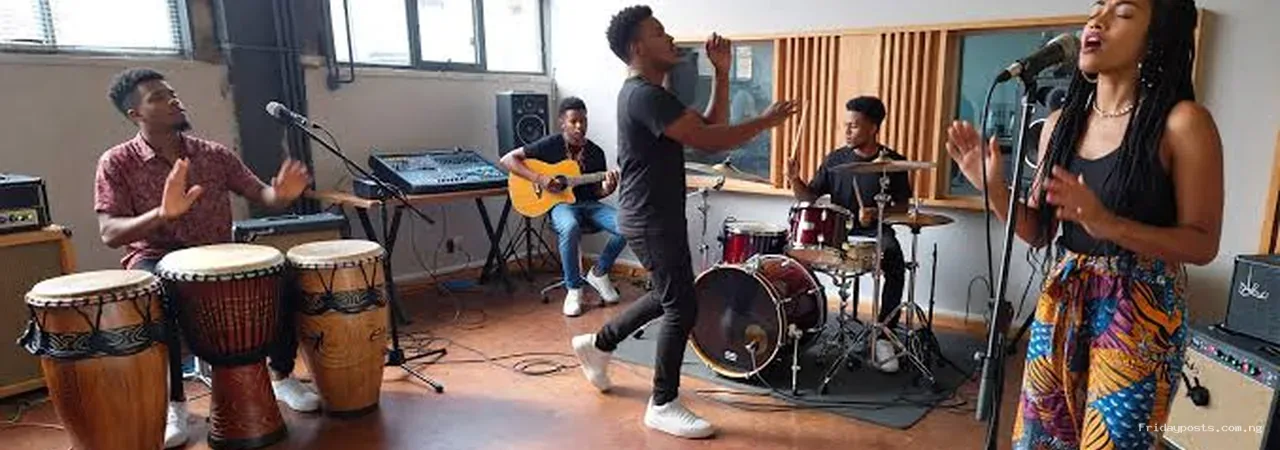
Nigeria was a founding member of ECOWAS in 1975 and remains one of the organisation’s largest political and economic actors.
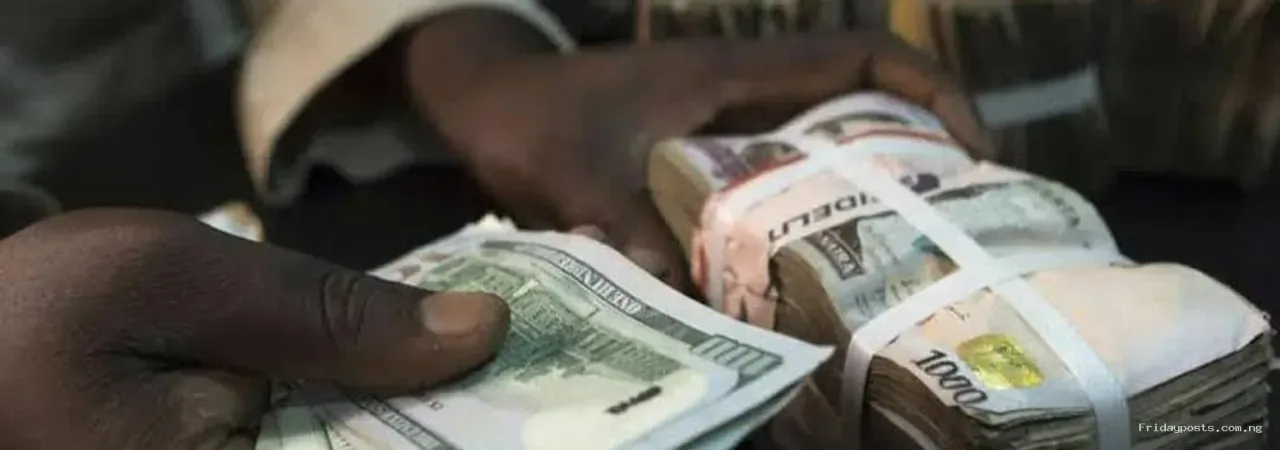
37. Naira
The naira is Nigeria’s legal tender and is issued by the Central Bank of Nigeria.
38. Central bank
The Central Bank of Nigeria manages monetary policy, currency issuance, financial-system regulation and foreign-exchange policy within its statutory mandate.
39. Oil
Crude oil remains a major source of export earnings even though oil and gas are a smaller share of total domestic GDP than many Nigerians assume.
40. Gas
Nigeria holds large natural-gas reserves and has built major LNG export capacity through Nigeria LNG.
41. Agriculture
Agriculture remains a major employer and source of food and raw materials, with important crops including cassava, yam, maize, rice, cocoa, sesame and many others.
42. Services
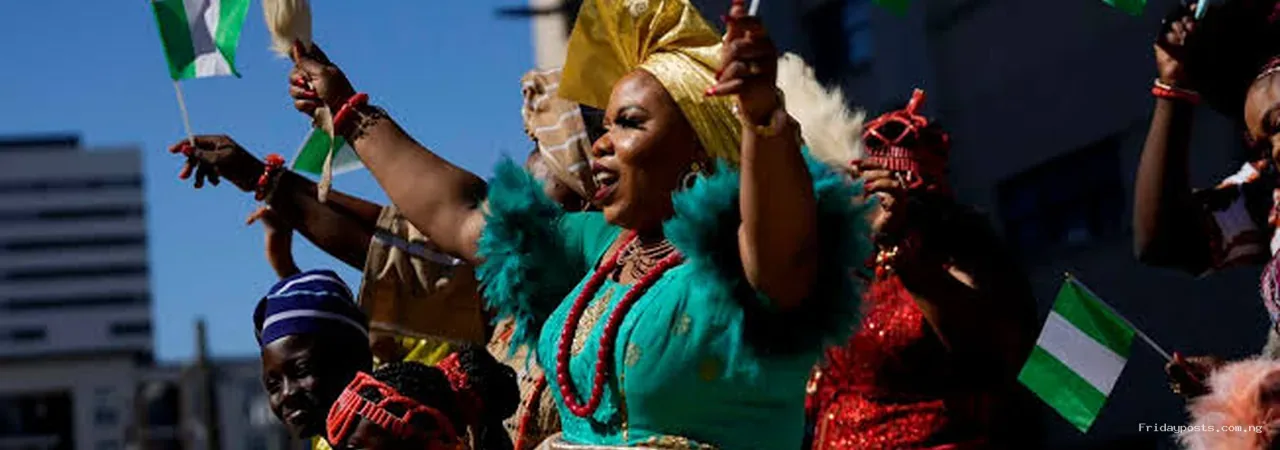
Services such as trade, telecommunications, finance, real estate, professional work and entertainment make a large contribution to Nigeria’s economy.
43. Informal economy
A very large share of Nigerian economic activity occurs in informal businesses that may not have complete tax, employment or accounting records.
44. SMEs
Small and medium-sized enterprises are central to employment, but they face recurring constraints including finance, electricity, logistics, taxation and market access.
45. Road dependence
Most domestic freight and passenger movement still depends on roads, which is why road quality has such a large effect on business costs.
46. Power
Nigeria has substantial installed electricity-generation capacity but far less dependable power available to the grid at any given time.
47. Self-generation
Households and businesses commonly supplement grid electricity with generators, solar, inverters and captive power, adding a private cost to weak public infrastructure.
48. Telecom revolution
Mobile telecommunications expanded rapidly after liberalisation in 2001 and now forms the backbone of Nigeria’s digital economy.
49. Mobile internet
Most Nigerians who use the internet connect through mobile networks rather than fixed broadband.
50. Fintech
Nigeria has become one of Africa’s best-known fintech markets, supported by a large banking population, instant-payment infrastructure and mobile connectivity.
51. Fiscal federalism
Oil and other federally collected revenues are shared among federal, state and local governments through statutory allocation arrangements.
52. Internally generated revenue
States also raise their own revenue, and the gap between high- and low-revenue states affects their ability to fund services.
53. Debt
Government borrowing can finance useful infrastructure, but debt sustainability depends on revenue, interest costs and whether borrowed funds create future economic value.
54. Inflation
Inflation is not simply a statistic; it measures how rapidly the general price level changes and directly affects the real purchasing power of wages and savings.
55. Exchange rate
The naira’s exchange rate affects import costs, export competitiveness, foreign debt service, fuel economics and the value of foreign investment.
56. Population can be an asset
A large population creates market scale and labour potential, but only when education, health and jobs allow people to become productive.
57. Education structure
Formal education typically runs through basic education, senior secondary education and tertiary institutions, alongside technical, vocational, religious and non-formal pathways.
58. Universal Basic Education
Nigeria’s basic-education framework seeks to provide compulsory foundational schooling, but enrolment, retention and learning quality vary greatly by state and community.
59. Learning poverty
A child can be enrolled in school and still fail to acquire basic literacy. Nigeria’s education challenge is therefore about learning as well as access.
60. Universities
Nigeria has federal, state and private universities, as well as polytechnics, colleges of education and specialised institutions.
61. Health system
Healthcare is delivered through public and private providers across primary, secondary and tertiary levels.
62. Primary healthcare
Primary healthcare centres are intended to provide the first level of care, including maternal and child services, immunisation and treatment of common conditions.
63. Teaching hospitals
Federal and state teaching hospitals provide specialist care and train doctors and other health professionals.
64. Polio
Nigeria’s elimination of wild poliovirus transmission was essential to the 2020 certification of the WHO African Region as wild-polio-free.
65. Ebola
Nigeria contained the 2014 Ebola outbreak through rapid contact tracing, isolation and coordinated public-health action.
66. Malaria
Malaria remains a major health burden, making prevention, testing and effective treatment continuing public-health priorities.
67. Languages
Nigeria is one of the world’s most linguistically diverse countries, with hundreds of languages.
68. English
English is the official language and serves as a major language of government, education, business and inter-regional communication.
69. Hausa, Yoruba and Igbo
Hausa, Yoruba and Igbo are among the largest indigenous languages, but Nigeria also has many other languages with millions or hundreds of thousands of speakers.
70. Pidgin
Nigerian Pidgin is widely used across regions and has become increasingly visible in broadcasting, music and digital media.
71. Religion
Nigeria contains large Muslim and Christian populations as well as adherents of traditional beliefs and other faiths. Religious composition varies substantially by region.
72. Food diversity
There is no single Nigerian cuisine. Jollof rice, soups, swallows, grilled foods, rice dishes, beans, tubers and regional specialities reflect the country’s ecological and cultural diversity.
73. Literature
Nigeria has produced internationally influential writers including Chinua Achebe, Wole Soyinka, Buchi Emecheta, Ben Okri, Chimamanda Ngozi Adichie and many others.
74. Nobel Prize
Wole Soyinka became the first African Nobel laureate in Literature in 1986.
75. Nollywood
Nigeria’s film industry grew from television and video-film traditions into a large commercial ecosystem spanning cinema, streaming and digital platforms.
76. Afrobeats
Nigerian artists and producers have been central to the global rise of contemporary Afrobeats, although the genre draws on wider West African musical traditions.
77. Fashion
Nigerian designers combine indigenous textiles, tailoring traditions and contemporary global styles, creating a visible fashion industry with export potential.
78. Sport
Football is the country’s most popular sport, but Nigeria also has major international achievements in athletics, boxing, basketball, weightlifting, table tennis and para-sports.
79. AFCON
Nigeria’s senior men’s football team has won the Africa Cup of Nations multiple times.
80. Olympic football
Nigeria won men’s Olympic football gold at Atlanta 1996.
81. First individual Olympic gold
Chioma Ajunwa won Nigeria’s first individual Olympic gold medal in the long jump at Atlanta 1996.
82. Women’s football
The Super Falcons are the most successful national team in the history of the Women’s Africa Cup of Nations.
83. Para-sport
Nigerian para-athletes, particularly powerlifters, have won numerous Paralympic and world titles.
84. Diaspora
Millions of people of Nigerian birth or heritage live abroad and contribute through remittances, investment, professional networks, culture and political engagement.
85. Remittances
Money sent home by Nigerians abroad is an important source of foreign exchange and household income, although flows vary from year to year.
86. Soft power
Music, film, literature, football, fashion and digital culture give Nigeria cultural influence beyond what conventional economic statistics capture.
87. National Archives and libraries
Nigeria’s history is preserved not only in textbooks but in archives, museums, libraries, oral traditions, court records, newspapers and family histories.
88. National symbols
The green-white-green flag symbolises the country; the coat of arms includes a black shield, white wavy bands, horses and an eagle.
89. Motto
The constitutional national motto is 'Unity and Faith, Peace and Progress'.
90. Citizenship
Nigerian citizenship can arise by birth, registration or naturalisation under constitutional and statutory rules.
91. National identity is layered
A Nigerian can simultaneously belong to an ethnic group, language community, religion, state, profession and global diaspora. National identity does not require those other identities to disappear.
92. Development is not the same as GDP
A country develops when improvements in income are accompanied by better health, education, infrastructure, institutions, security and opportunity.
93. Federal data matters
Many Nigerian arguments can be improved simply by consulting the original source: NBS for official statistics, CBN for monetary data, INEC for election administration, NCC for telecoms and sector regulators for industry data.
94. Nigeria is not one market
Prices, incomes, languages, transport systems and consumer behaviour vary sharply by state and city. A business strategy that works in Lagos may need redesign in Kano, Aba, Port Harcourt or a rural market.
95. Nigeria is not only its problems
Security, poverty and weak institutions are real, but so are entrepreneurship, cultural production, professional talent and institutional achievements. Serious analysis should hold both realities together.
96. Nigeria is not only its potential
Potential becomes development only when institutions convert people, resources and ideas into sustained outcomes. The phrase 'Nigeria has potential' is therefore a beginning, not an achievement.
97. Citizenship includes responsibility
Constitutional rights matter, but national progress also depends on everyday behaviour: paying legitimate taxes, obeying fair rules, protecting public property, demanding accountability and participating in community life.
98. Public institutions belong to citizens
A ministry, school, court, road or hospital is not a gift from the office-holder who manages it. It is a public institution financed and authorised on behalf of citizens.
99. Evidence improves patriotism
Loving Nigeria does not require pretending everything works. Evidence-based criticism and recognition of genuine progress are both forms of serious citizenship.
100. The country is still being built
At 66 years of independence, Nigeria is old enough to be accountable for repeated failures and young enough for institutions to change dramatically within one generation.
Knowing Nigeria should change how we argue about Nigeria
Facts do not remove political disagreement. They improve it.
A citizen who knows which tier of government controls a service can direct accountability to the right institution. A business owner who understands the exchange rate, inflation and infrastructure system can plan more intelligently. A young person who knows the history of Nigerian literature, sport, science and enterprise can see national capability alongside national failure.
The purpose of civic knowledge is not memorisation. It is judgement.
Nigeria’s future will be shaped by citizens and leaders who can distinguish evidence from rumour, constitutional responsibility from political rhetoric, and national potential from actual performance.
A country this large will always contain many stories. The task is to know enough of them to avoid mistaking one experience for the whole nation.
Sources and further reading
- Constitution of the Federal Republic of Nigeria, 1999 as amended: https://www.constituteproject.org/constitution/Nigeria_2023
- National Bureau of Statistics: https://www.nigerianstat.gov.ng/
- World Bank Nigeria data: https://data.worldbank.org/country/nigeria
- Central Bank of Nigeria: https://www.cbn.gov.ng/
- Independent National Electoral Commission: https://inecnigeria.org/
- Nigerian Communications Commission: https://ncc.gov.ng/market-data-reports/industry-statistics
- National Library of Nigeria repository, 1963 '100 Facts About Nigeria': https://nigeriareposit.nln.gov.ng/items/1a2aaf30-1ffe-4767-8b77-fd8dfefb31ef/full
- ECOWAS: https://www.ecowas.int/





Reader conversation
0 approved comments