
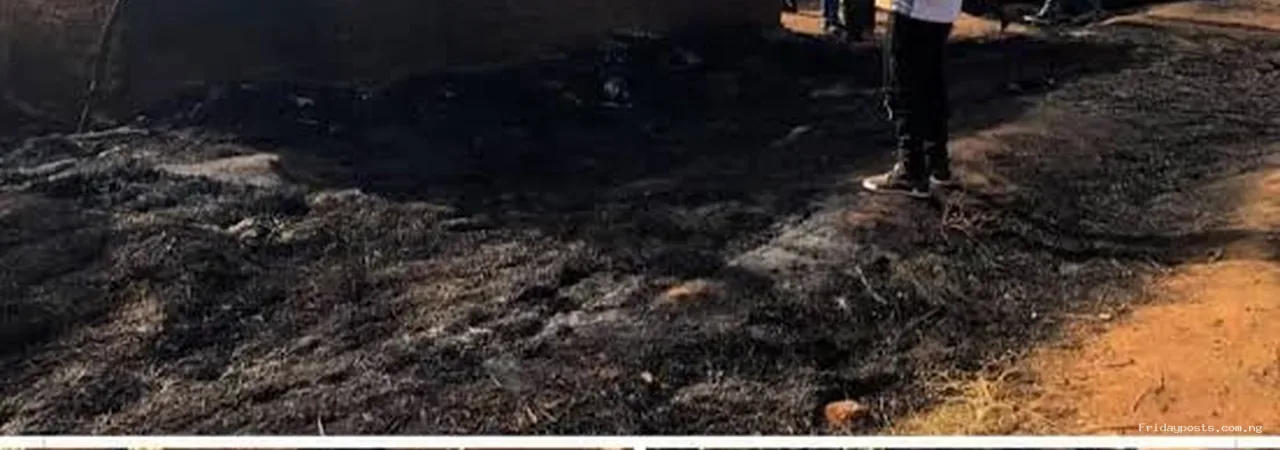
The attack on Binnari village in Taraba State is another reminder of a security problem Nigeria has discussed for years without solving at the level that matters most: the vulnerable community waiting for help.
Reuters reported that gunmen attacked the village on Friday, 23 October 2026, opening fire and looting food from shops. Police initially confirmed ten deaths. Amnesty International later said at least 40 people had been killed as more bodies were recovered.
Until the final casualty count is independently reconciled, the higher figure should remain attributed to Amnesty International rather than presented as an uncontested official total. The identity and motives of the attackers also remain under investigation. That distinction matters. Nigeria has several overlapping forms of armed violence, and assigning every attack immediately to terrorists, bandits, communal militias or another organisation can mislead the public and interfere with accountability.
But uncertainty about the attackers does not make the underlying policy problem uncertain.
A rural community was attacked. People were killed. Food was reportedly looted. Security arrived after lives had already been lost. Once again, the national conversation is taking place after the incident rather than before it.
The real question is why communities remain so exposed to sudden violence despite years of security spending, military deployments, police operations, intelligence agencies and repeated promises to improve protection.
Rural security is a last-mile problem
Nigeria's security architecture is large at the national level.
There are armed forces, police commands, intelligence agencies, civil-defence formations, state security structures, vigilante groups and local information networks.
Yet the resident of a remote village experiences security differently.
For that person, security is not the number of agencies in Abuja. It is whether somebody notices unusual armed movement before an attack, whether there is a functioning communication channel, whether responders can reach the community quickly and whether criminals believe they will be pursued after the attack.
This is the last mile of national security.
Nigeria can improve strategy at headquarters and still fail at the last mile if villages are difficult to reach, police posts are understaffed, mobile coverage is weak, roads are poor and early warnings are not converted into action.
Response time is often the difference between deterrence and tragedy
Armed attacks on rural settlements can unfold quickly.
The first ten or twenty minutes may matter more than an eventual deployment hours later.
This is why response time should become a public security metric.
How long did it take from the first distress call to the first armed response?
Which agency received the alert?
Was the nearest formation equipped to respond?
Did difficult roads slow deployment?
Were security personnel already aware of heightened risk in the area?
Without answers to these questions, the country learns little from repeated attacks.
A statement that personnel have been deployed after an incident may reassure the public temporarily, but it does not explain why the deployment was not preventive.
Intelligence has value only when it reaches the person who can act
Nigeria has repeatedly expanded intelligence gathering.
Communities themselves often possess the earliest information. Farmers see unusual movements. Traders hear rumours. Local leaders notice strangers. Transport workers observe changes on roads. Vigilantes may know which routes armed groups use.
The challenge is turning fragmented information into actionable warning.
An effective rural-security system needs a reliable chain from local observation to analysis to operational response.
If residents report suspicious activity to a local official who has no direct channel to security commanders, the warning can die inside bureaucracy.
If intelligence reaches an agency but there are no vehicles or personnel close enough to act, the information produces no protection.
If people have previously reported threats and seen no response, they may stop reporting.
Trust therefore becomes part of intelligence capability.
Nigeria needs a community-risk map, not only an incident map
Security agencies understandably track attacks.
They also need to track vulnerability.
Which communities are close to forest routes?
Which locations have only one access road?
Which villages are far from security posts?
Which areas have experienced food raids, livestock theft, kidnapping or armed movement even when nobody was killed?
Which communities have poor mobile coverage?
Which markets concentrate cash on particular days?
A risk map allows prevention to focus on places where the next attack is more likely to succeed.
The objective is not to militarise every village.
It is to identify where a relatively small intervention - a patrol base, communication tower, better road, intelligence liaison officer or rapid-response unit - could dramatically reduce vulnerability.
Looting food is economically significant
Reports that attackers looted food should not be treated as a minor detail.
Food theft can reveal the economic dimension of armed violence.
Rural attacks can destroy livelihoods in several ways at once.
People die or are injured.
Farmers avoid fields.
Traders reduce travel.
Shops lose stock.
Transporters charge more for risky routes.
Families relocate.
Local food supply falls.
The cost then reaches consumers far away through higher prices.
Security is therefore an agricultural and inflation issue as well as a policing issue.
When repeated violence makes productive communities unsafe, national food policy suffers.
The police cannot protect rural Nigeria alone
The Nigeria Police Force remains the primary civil-security institution, but its personnel and logistics are stretched across a huge population and territory.
The military has increasingly taken on internal-security roles because threats exceed ordinary policing capacity in several regions.
That arrangement may be necessary in emergencies, but it cannot become the permanent design for community security.
Nigeria needs stronger local policing capacity under clear constitutional and accountability rules.
The debate over state police is relevant because response distance matters. But decentralisation by itself does not guarantee safety.
A poorly governed local police system could reproduce abuse, political interference or uneven funding.
The goal should be proximity plus accountability.
Vigilantes can help, but they need rules
Many rural communities already rely on hunters, vigilantes and community defence groups.
They know the terrain and can notice unusual movement faster than distant agencies.
But informal security also creates risks.
Who recruits them?
Who trains them?
Who controls weapons?
What happens if they abuse citizens?
How do they communicate with police and military units?
Community protection should not mean creating uncontrolled armed groups.
Nigeria needs a framework that recognises legitimate local intelligence and defensive support while keeping coercive power under accountable authority.
Security posts need mobility, not only buildings
Governments often respond to insecurity by announcing new police stations or military formations.
A building is useful only if the people inside it can move.
Rural security needs vehicles that work, fuel that is available, communication equipment, protective equipment and officers trained for the terrain.
A station without mobility is an administrative address.
Attackers often understand local geography better than responders. They know forest paths, river crossings and escape routes.
Security agencies need the same geographic knowledge, supported by drones, satellite imagery, local guides and modern mapping where appropriate.
Roads are part of the security architecture
A bad rural road slows ambulances, police vehicles and military response.
It also isolates communities economically.
This is why infrastructure planning should include security value.
A road that connects a vulnerable community to a major route can shorten response time and increase economic activity simultaneously.
Telecommunications coverage has similar value.
A community without reliable mobile service cannot report an attack quickly.
Security investment should therefore be coordinated with road and telecom policy rather than treated as a separate budget line.
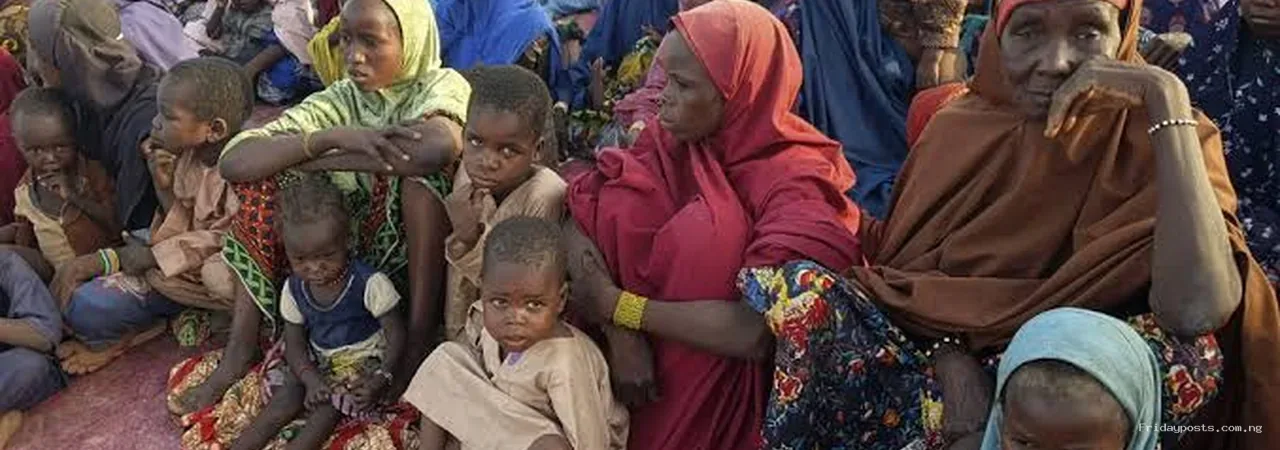
Survivors need more than condolence visits
After mass-casualty attacks, government attention often concentrates on statements, funerals and deployments.
Survivors face longer consequences.
Families may lose breadwinners.
Children may stop attending school.
Injured people need medical care.
Farmers may be afraid to return to fields.
Businesses may have lost inventory.
Trauma can persist for years.
A serious security response should include victim support, reconstruction and safe return.
Otherwise, the attack succeeds even after the gunmen have left because the community remains economically broken.
Investigation quality matters for deterrence
Nigeria frequently hears that attackers will be brought to justice.
The real deterrent comes when that promise becomes visible.
How many suspects were identified?
How many were arrested?
What evidence linked them to the crime?
Were weapons recovered?
Did prosecutions occur?
Were financiers or informants investigated?
If communities rarely hear the outcome of investigations, criminals may conclude that the probability of punishment is low.
Security agencies should publish follow-up information when doing so will not compromise operations.
Casualty data should be reconciled transparently
The Binnari attack also demonstrates a recurring problem in crisis reporting.
Police may confirm only bodies they have formally verified at a particular time.
Community organisations or rights groups may later report additional casualties.
Hospitals may have separate records.
Some people initially listed as missing may later be confirmed dead or alive.
Different figures do not automatically mean one institution is lying.
But government should reconcile them quickly.
A transparent final incident report should state the verified death toll, injuries, displaced households, property losses, response timeline and investigative status.
This would improve both public trust and policy learning.
Taraba needs local answers, but the pattern is national
Every attack has a local context.
Taraba's geography, communities, transport routes and security threats are specific.
But the vulnerability pattern is visible across Nigeria.
Remote settlements are attacked.
Security is reinforced afterward.
Officials promise investigation.
Public attention moves on.
A preventive system has to break that cycle.
The country should judge security performance not only by the number of criminals killed or arrested, but by the number of attacks prevented and the speed of protection when warnings emerge.
A practical rural-community protection model
Nigeria could build a stronger model around five layers.
First, every high-risk local government should maintain a regularly updated community risk map.
Second, community leaders should have verified direct channels to security coordination centres.
Third, rapid-response units should be positioned according to travel time rather than administrative boundaries.
Fourth, transport and telecom infrastructure in vulnerable areas should be treated as security infrastructure.
Fifth, every major attack should generate an after-action report with measurable recommendations.
These are not spectacular reforms.
They are the operational details that determine whether citizens survive.
What authorities should answer about Binnari
The public deserves a disciplined set of answers.
What is the final verified casualty count?
When did the attack begin?
When was the first alert received?
Which security formation responded first?
How long did deployment take?
Were there prior warnings in the area?
What exactly was looted or destroyed?
How many residents have been displaced?
What evidence has been collected about the attackers?
What protection is now in place that was not there before 23 October?
Those questions are more useful than generic promises that the perpetrators will be found.
The measure of security is what does not happen
Governments naturally publicise arrests, weapons recovered and successful military operations.
But the highest form of security performance is invisible.
It is the attack that never happens because intelligence worked.
It is the armed group that changes course because patrols are unpredictable.
It is the village that raises an alarm and receives help before attackers arrive.
It is the farmer who continues working because the road and surrounding communities are secure.
Binnari should therefore become more than another tragic location added to Nigeria's long list of attacks.
The deaths should force a practical review of how rural communities are protected.
Nigeria's security institutions are judged ultimately not by the size of their budgets or the number of commands on paper.
They are judged by whether an ordinary citizen in a vulnerable village can reasonably expect the state to arrive before the funeral.
Sources and further reading
- Reuters, 24 October 2026: gunmen kill at least 40 in Taraba, citing Amnesty International
- FridayPosts Daily Top 10, 25 October 2026: editorial brief and cautions — Supplied editorial brief






Reader conversation
0 approved comments