
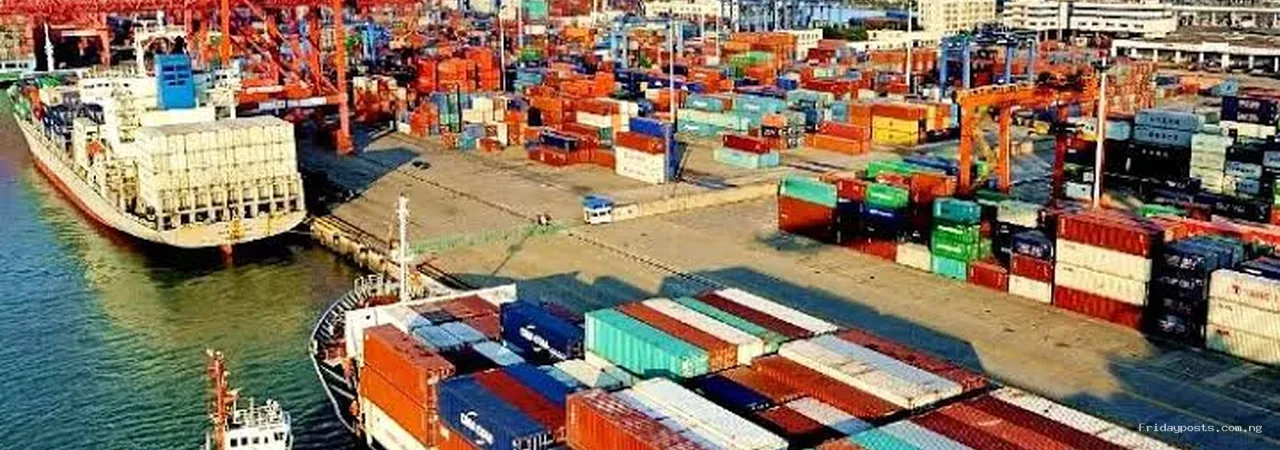
A container can arrive at a Nigerian port long before the goods inside it become economically available to the importer.
Between vessel arrival and final delivery, time begins to create cost.
Documents must be processed.
Customs assessments must be completed.
Terminal operations must move.
Shipping lines release containers.
Inspections may occur.
Trucks have to reach the port.
The container must leave before storage and demurrage accumulate further.
When the process works smoothly, trade becomes cheaper.
When it does not, every extra day becomes part of the retail price.
This is why the Nigerian Ports Economic Regulatory Agency's renewed commitment on 24 October 2026 to reduce avoidable logistics costs and cargo-clearance delays matters beyond the maritime industry.
Nigeria has already set a policy goal of reducing cargo dwell time from roughly 18-21 days to below seven days by the end of 2026.
The country now has to prove that the reforms are changing the actual journey of a container.
Port cost is not one charge
Public debate often asks, “How much does it cost to clear a container?”
There is no single answer.
The total can include customs duty and taxes, port and terminal charges, shipping-line fees, storage, demurrage, container deposits, documentation, inspection costs, clearing-agent fees, trucking, insurance and financing costs.
Some charges are statutory.
Some are commercial.
Some arise only because the cargo remained too long.
Some are disputed or described by industry participants as arbitrary.
This complexity is one reason importers can struggle to predict final landed cost.
Predictability may be as important as the nominal price.
Time is money at a port
The Nigeria Customs Service's Time Release Study provides a useful way to understand the problem.
Its analysis of Tincan Island processes found that significant delays occur in scheduling, documentation and gate processes rather than only during physical inspection.
The study estimated that implementing its recommendations could reduce average clearance time substantially and save the economy large sums in demurrage, storage and logistics costs.
The exact measurement in a time-release study is not identical to broader cargo dwell time used in policy discussions.
That distinction is important.
One measure may track a defined customs-release process.
Another may include the wider period a cargo remains in the port ecosystem.
Nigeria needs both to improve.
The 18-21 day headline shows the scale of the competitiveness problem
Government's March 2026 reform announcement said average cargo dwell time was around 18-21 days and set a target of under seven days.
Even if individual containers clear faster, a national average at that level is expensive.
Inventory sits idle.
Importers finance goods that are not yet generating revenue.
Factories wait for raw materials.
Retailers run short of stock.
Storage charges rise.
Truck schedules become unpredictable.
The cost of capital increases because cash is trapped in the logistics chain.
The consumer eventually pays.
Demurrage is a penalty for time
Demurrage and detention are often misunderstood.
In general terms, shipping lines and terminals provide limited free periods for containers and cargo.
When equipment or cargo remains beyond those periods, additional charges can apply.
These charges are designed partly to encourage quick movement and return of equipment.
The problem arises when the delay is not entirely under the importer's control.
If documentation systems fail, inspections are rescheduled, access roads are blocked or release authorisation is delayed, the importer can still face a growing bill.
A fair port system should distinguish avoidable importer delay from system-caused delay.
Storage charges turn inefficiency into a daily cost
Customs officials have previously said unnecessary delays can add substantial daily storage costs per container.
The number varies by terminal, container type and time period, but the principle is clear.
Every day matters.
An importer with ten containers faces a very different exposure from someone with one.
For manufacturers importing raw materials, delay can also stop production.
The true cost is therefore larger than the invoice from the port.
It includes lost output.
Documentation is still one of the biggest bottlenecks
Nigeria has spent years discussing digitalisation and a National Single Window.
The idea is straightforward.
A trader should not submit the same information repeatedly to multiple government agencies through disconnected systems.
A single digital environment can reduce duplication, improve risk assessment and create a clearer audit trail.
The challenge is implementation.
Digitalisation does not help if agencies still demand paper copies afterward.
It does not help if one platform works but another government system is offline.
It does not help if human discretion simply moves from a physical desk to a digital approval queue.
The goal must be process redesign, not computerising bureaucracy.
Too many agencies can create too many handoffs
Ports involve legitimate regulatory concerns.
Customs protects revenue and enforces trade rules.
Health and safety agencies regulate controlled goods.
Security agencies may have roles.
Port authorities manage infrastructure.
The problem comes when responsibilities overlap.
Every additional handoff can create delay, duplication and opportunities for informal payment.
Nigeria should enforce a lead-agency model for examinations and risk management.
Where multiple agencies need to inspect, joint inspection should be the default rather than sequential visits.
Customs reform is central but not sufficient
The Nigeria Customs Service has made substantial investments in automation and trade facilitation.
Customs, however, does not control the entire port chain.
A cargo can receive customs release and still remain trapped because of terminal, shipping-line, trucking or gate issues.
This is why the new economic-regulation role of NPERA matters.
Someone has to look at the total user cost, not only the performance of one institution.
Port charges need a public tariff map
Importers should be able to know which charges are approved and what service each charge pays for.
Nigeria would benefit from a public digital tariff register.
Terminal charge.
Shipping-line documentation fee.
Container deposit.
Storage schedule.
Demurrage schedule.
Truck or access charges where regulated.
The register should show the legal or contractual basis and the responsible operator.
This would make unauthorised or duplicated charges easier to challenge.
The total cost matters more than arguing about one fee
Former port officials and maritime experts have pointed out that the cost of clearing a standard container in Lagos can reach many millions of naira once the full chain is counted.
Industry estimates vary, and some published figures represent advocacy positions rather than official national averages.
FridayPosts would therefore avoid presenting one number as the universal cost of clearing every container.
The better approach is to follow actual containers and document real invoices.
This is the strongest original reporting opportunity in the story.
FridayPosts should follow one container from ship to warehouse
A transparent case study could record:
Date of vessel arrival.
Customs declaration date.
Assessment date.
Payment date.
Inspection or scanning date.
Customs release date.
Shipping-line release date.
Terminal exit date.
Truck-gate time.
Final warehouse delivery.
Then list each legitimate charge and identify which costs arose because of delay.
Repeat the exercise at Apapa, Tincan and Lekki.
That would produce a more useful picture than another general complaint about expensive ports.
Trucking remains a major part of the landed cost
A container is not economically cleared until it leaves the port.
Trucking costs depend on distance, traffic, road condition, access systems, fuel and the time a truck spends waiting.
Lagos port congestion has historically created extraordinary inefficiency in this stage.
Electronic call-up systems have improved parts of the problem, but trucking remains a significant variable.
A predictable port should allow a truck to arrive within a defined window, collect cargo and leave without hours of unnecessary delay.
Road and port planning cannot be separated
Apapa and Tincan depend on surrounding road infrastructure.
Lekki port depends on its own transport connections.
Other Nigerian ports need road and rail links that make them commercially attractive.
A port is not only a quay and cranes.
It is a logistics ecosystem.
If the exit corridor is weak, the port's internal efficiency is wasted.
Rail could change the economics of bulk cargo
Nigeria has tried to improve rail links to ports.
Rail is particularly useful for moving large volumes over long distances.
If more containers can leave by rail, road congestion falls and inland logistics become more predictable.
But rail capacity, schedules and terminal integration have to be reliable enough for importers to use them commercially.
Infrastructure becomes valuable when it changes behaviour.
Refund delays also tie down working capital
Maritime-industry reports have complained about slow refunds of container deposits and disputed overcharges.
A refund delayed for months is not a minor inconvenience.
It is working capital that the importer cannot use.
For a business handling many containers, the amount can become substantial.
Regulation should establish clear timelines for legitimate refunds and penalties for unreasonable delay.
Nigeria's ports compete with other West African gateways
Importers and shipping lines compare alternatives.
Tema, Lome, Cotonou and other regional ports compete for trade and transshipment.
Nigeria has the largest consumer market in West Africa, which gives its ports a natural advantage.
But market size cannot permanently compensate for high cost and unpredictability.
If importing through a neighbouring country and moving goods overland becomes cheaper or easier, businesses will look for alternatives, legally or illegally.
Port reform is therefore part of regional competitiveness.
The seven-day target should be published as a monthly dashboard
Government has set the target.
The public now needs data.
Average cargo dwell time by port.
Median time, not only average.
Customs-release time.
Percentage of declarations completed within 48 hours.
Number of physical examinations.
Scanning utilisation.
Gate turnaround time.
Average truck waiting time.
Complaints about unauthorised charges.
This would show whether the under-seven-day objective is becoming real.
Risk management should reduce unnecessary inspections
Modern customs systems do not inspect every shipment physically.
They use data to identify higher-risk cargo.
Trusted traders with strong compliance records should face fewer interventions.
High-risk shipments should receive greater scrutiny.
This makes enforcement smarter rather than weaker.
Nigeria should continue strengthening risk-based clearance and post-clearance audit so that compliant trade moves quickly without sacrificing revenue or security.
Corruption risk grows when rules are unpredictable
A slow, complicated system creates opportunities for unofficial payments.
When a trader does not know how long a process should take or which charge is legitimate, intermediaries can sell “speed”.
Transparency is therefore an anti-corruption tool.
Published timelines, electronic payments, digital audit trails and clear tariffs reduce discretion.
The objective should be to make the legal process faster than the informal shortcut.
Consumers pay port inefficiency through prices
An importer does not absorb every additional logistics cost permanently.
The cost is built into the selling price.
A manufacturer adds it to production cost.
A retailer adds it to inventory cost.
This means port reform can contribute to lower inflation.
Faster clearance reduces storage and financing expenses.
More predictable logistics reduce the risk premium businesses add to prices.
Port policy is therefore consumer policy.
What NPERA should do next
First, publish a complete and searchable tariff registry.
Second, create a complaints dashboard showing the most common disputed charges and resolution times.
Third, publish comparative performance data for terminals and shipping lines where legally permissible.
Fourth, coordinate with Customs and the port authority on a single cargo-time dashboard.
Fifth, enforce refunds and dispute-resolution timelines.
Sixth, measure total door-to-door trade cost, not only individual port fees.
What would success look like by the end of 2026?
The average importer should know the expected timeline before cargo arrives.
Government systems should exchange data automatically.
Inspections should be coordinated.
Approved charges should be easy to verify.
The truck should arrive on schedule.
The container should leave before avoidable demurrage begins.
Disputes should have a rapid resolution mechanism.
And the national dashboard should show whether the seven-day target is being achieved.
Nigeria does not need cheaper ports only. It needs predictable ports
Trade can absorb a known cost better than an unpredictable one.
A manufacturer can price a clear tariff into a business plan.
It struggles when a container sits for an unknown number of days while charges accumulate.
This is why the strongest port reform is predictability.
Predictable documentation.
Predictable inspection.
Predictable release.
Predictable tariffs.
Predictable trucking.
Nigeria's ports sit at the entrance to much of the country's imported machinery, medicine, industrial raw materials and consumer goods.
Every unnecessary hour at that entrance has an economic cost.
Reducing that cost would help importers and manufacturers first.
Eventually, it should help every Nigerian who buys what passes through the port.
Sources and further reading
- BusinessDay, 24 October 2026: NPERA commits to cutting avoidable logistics costs and delays
- PUNCH, 24 March 2026: FG targets cargo dwell time below seven days
- Nigeria Customs Service, 2026 Time Release Study
- Guardian, 2026: discussion of total port clearing costs and tariff structure










Reader conversation
0 approved comments