
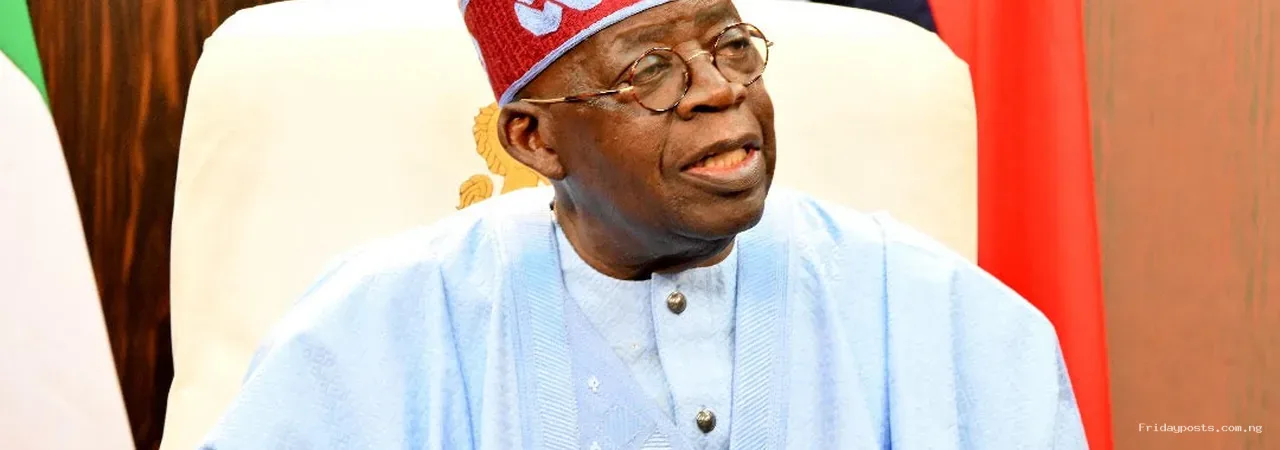
President Bola Tinubu has officially moved Nigeria's economic debate into campaign mode.
At a rally in Kaduna on 24 October 2026, the President launched his bid for a second term ahead of the 16 January 2027 presidential election. His argument is familiar: the reforms introduced since 2023 were painful but necessary, and Nigeria is now moving towards stronger growth, improved public finances, healthier foreign reserves and greater investment.
His opponents are making the opposite political argument.
They say Nigerians have paid too high a price for reforms that removed the petrol subsidy, weakened the naira and pushed living costs sharply upward before the later improvement in inflation.
Both sides will repeat these claims for the next three months.
FridayPosts believes the most useful way to evaluate them is not by applause at rallies or political endorsements, but through a 2023-2026 economic performance scorecard.
What changed?
What improved?
What became worse?
And, most importantly, which indicators are visible in the household budget?
The central political question is no longer whether reform happened
Reform happened.
The petrol subsidy system was dismantled.
The foreign-exchange framework changed.
Tax and fiscal reforms followed.
Monetary policy tightened aggressively before beginning to ease.
Government argues that these decisions removed distortions and restored macroeconomic discipline.
The political question now is whether those changes produced enough measurable improvement to justify another four years.
That is a higher standard.
A government can be correct that a reform was economically necessary and still lose public support if the benefits arrive too slowly.
Democracy evaluates policy through both long-term logic and present experience.
Growth: improving, but still below the government's ambition
Nigeria's economy grew by 4.43 per cent year-on-year in the second quarter of 2026, according to the National Bureau of Statistics. That was stronger than the 3.89 per cent recorded in the first quarter and above the rates recorded in the preceding two years.
This is positive.
An economy growing faster has more room for jobs, tax revenue and investment.
But growth must be interpreted against population growth and the government's own targets.
The administration has talked about moving towards annual growth of around seven per cent.
At 4.43 per cent, the economy is moving in the right direction but has not reached that ambition.
FridayPosts score: Improving, but not yet transformational.
Inflation: falling, but the price level remains painful
September 2026 headline inflation fell to 14.63 per cent, from 15.39 per cent in August.
That is a substantial improvement from the most intense inflationary period of the reform years.
But lower inflation does not mean prices have returned to their old levels.
It means the pace of increase has slowed.
Food inflation remained 19.59 per cent in September.
That matters because food takes a large share of household income, especially for lower-income families.
A Nigerian who pays much more today for rice, transport, electricity or rent than in 2023 does not feel richer simply because those costs are now rising more slowly.
FridayPosts score: Clear macro improvement, incomplete household relief.
Petrol: subsidy removal changed public finance and household economics simultaneously
The end of the old petrol subsidy arrangement is perhaps the administration's defining economic decision.
Government argues that the system was fiscally unsustainable and diverted money that could support infrastructure and social investment.
That argument has economic weight.
But the household consequence was immediate.
Petrol prices rose dramatically.
Transport costs followed.
Businesses that depend on generators and road logistics faced higher operating costs.
The effect travelled into food prices and services.
By September 2026, Reuters reported petrol selling around N1,400 to N1,500 per litre in many places.
The administration has made clear it does not intend to restore the old subsidy.
The political test is therefore whether higher fuel costs are now being offset by higher incomes, better transport systems, more reliable power or stronger social protection.
FridayPosts score: Fiscal reform achieved; social adjustment remains difficult.
Foreign exchange: a more transparent market, but the naira shock was severe
Tinubu's government changed a foreign-exchange system that had multiple exchange rates and severe shortages.
A more market-oriented system can improve price discovery and reduce opportunities created by preferential access to official dollars.
It can also make foreign investors more confident that they can enter and exit the market.
But the transition involved a major depreciation of the naira.
That raised the local cost of imported fuel, machinery, medicines, industrial inputs, vehicles and foreign-currency services.
A stable but weaker currency can eventually be better for planning than an artificially strong currency that businesses cannot obtain.
The public, however, experiences the transition through prices.
FridayPosts score: Structural improvement with heavy transition costs.
Foreign reserves and investor confidence: stronger indicators, but the composition matters
The government points to stronger foreign reserves and improved investor sentiment as evidence that confidence is returning.
Finance Minister Taiwo Oyedele said in London that the next growth phase should rely increasingly on domestic and foreign private capital rather than additional government borrowing.
This is significant.
Nigeria needs long-term capital for power, transport, manufacturing, housing and digital infrastructure.
But not every inflow has the same value.
Short-term portfolio investment can improve market liquidity and help finance securities.
Foreign direct investment builds factories, infrastructure and businesses that are harder to withdraw overnight.
The next administration - whether Tinubu's or another - will have to prove that reform credibility can attract more productive capital.
FridayPosts score: Investor perception improving; productive-investment test still underway.
Public finance: subsidy reform created space, but Nigerians want to see the dividend
Removing the petrol subsidy reduced one large fiscal burden.
Tax reform and better revenue collection are also intended to strengthen government finances.
The question for voters is what happens to the money.
A reform is easier to defend when citizens can see new roads, better schools, reliable power, functioning hospitals and safer communities.
If increased public revenue disappears into recurrent spending, debt service or opaque projects, the political dividend weakens.
The administration therefore needs a visible reform-to-service chain.
How much additional fiscal space was created?
Where was it spent?
What measurable service improved?
FridayPosts score: Fiscal structure strengthened, public-service conversion still under scrutiny.
Wages and purchasing power: this may be the election's most personal economic indicator
A voter experiences economics through income after essential expenses.
The minimum wage rose to N70,000 in 2024, and other wage adjustments have occurred across parts of the public and private sectors.
But the relevant measure is real purchasing power.
Can the worker buy more food, transport, housing and electricity than before?
For many households, the answer remains difficult.
A salary can increase in naira terms while losing value if prices rise faster.
This is why the election debate will not be settled by inflation alone.
Voters will compare income with the cost of living.
FridayPosts score: Mixed, with strong household pressure remaining.
Employment: growth needs to become visible opportunity
Economic growth is politically powerful when people can find work.
Nigeria's labour market is dominated by informal employment, self-employment and small enterprises.
That means traditional unemployment measures do not capture the full quality-of-work problem.
A person may be working but earning too little.
A graduate may be employed in a role far below his or her skills.
A small entrepreneur may technically be self-employed but struggling with electricity, credit and weak demand.
The government's strongest re-election case would therefore be a visible expansion in productive jobs, not simply improvement in GDP.
FridayPosts score: Still a major vulnerability.
Security is an economic indicator too
Tinubu's campaign cannot separate economic reform from security.
Farmers cannot produce efficiently in unsafe areas.
Transporters charge more on dangerous roads.
Businesses hesitate to invest where kidnapping or armed violence is persistent.
The Taraba attack reported on the same weekend as the campaign launch illustrates the problem.
Economic reform cannot deliver full benefits if insecurity raises the cost of production and weakens public confidence.
FridayPosts score: Major unresolved constraint.
Infrastructure: the government can point to projects, but voters will judge service
Road, rail, power and port infrastructure are central to the administration's development claims.
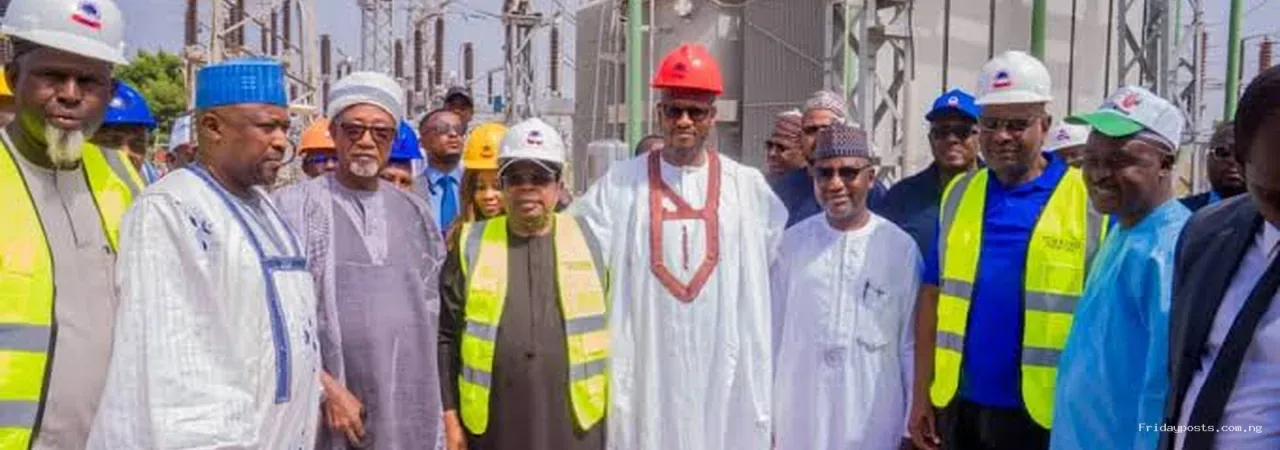
The recent commissioning of transmission substations in Kano and Katsina offers a good example.
Additional capacity is useful.
But the voter asks a simpler question: did electricity improve?
The same applies to highways.
A project can be technically significant and still feel irrelevant to a household if transport remains expensive or local roads remain unusable.
Infrastructure must be measured through outcomes: travel time, electricity hours, freight cost, business productivity and access.
FridayPosts score: Visible project activity; outcome measurement needed.
Poverty and social protection remain politically decisive
The reforms were introduced in a country where a large share of the population was already economically vulnerable.
Government has expanded cash transfers and other targeted interventions. Oyedele said about ten million households were receiving cash support.
The challenge is scale, targeting and sustainability.
Temporary transfers can reduce immediate hardship.
They are not a substitute for jobs, affordable food and functioning public services.
The political question is whether social protection helped families bridge the reform shock or merely softened a small part of it.
FridayPosts score: Expanded intervention, but hardship remains widespread.
The north will be a crucial test of the economic message
Tinubu launched the campaign in Kaduna for political reasons as well as symbolism.
Reuters noted that he enters the race with broad support among governors but faces a competitive northern environment, including former Vice President Atiku Abubakar's support base.
Economic hardship and insecurity are likely to shape voting behaviour strongly in the region.
Campaign endorsements matter.
They do not automatically move households whose personal experience contradicts political messaging.
The administration will need to translate macroeconomic indicators into a persuasive local story.
The opposition also needs to answer a harder question
Criticising the cost of reform is easy.
An opposition seeking power must explain what it would do differently.
Would it restore petrol subsidy?
At what annual cost?
Would it reverse foreign-exchange reform?
How would it prevent the return of shortages and multiple rates?
Would it reduce taxes, increase spending or both?
How would it finance those choices?
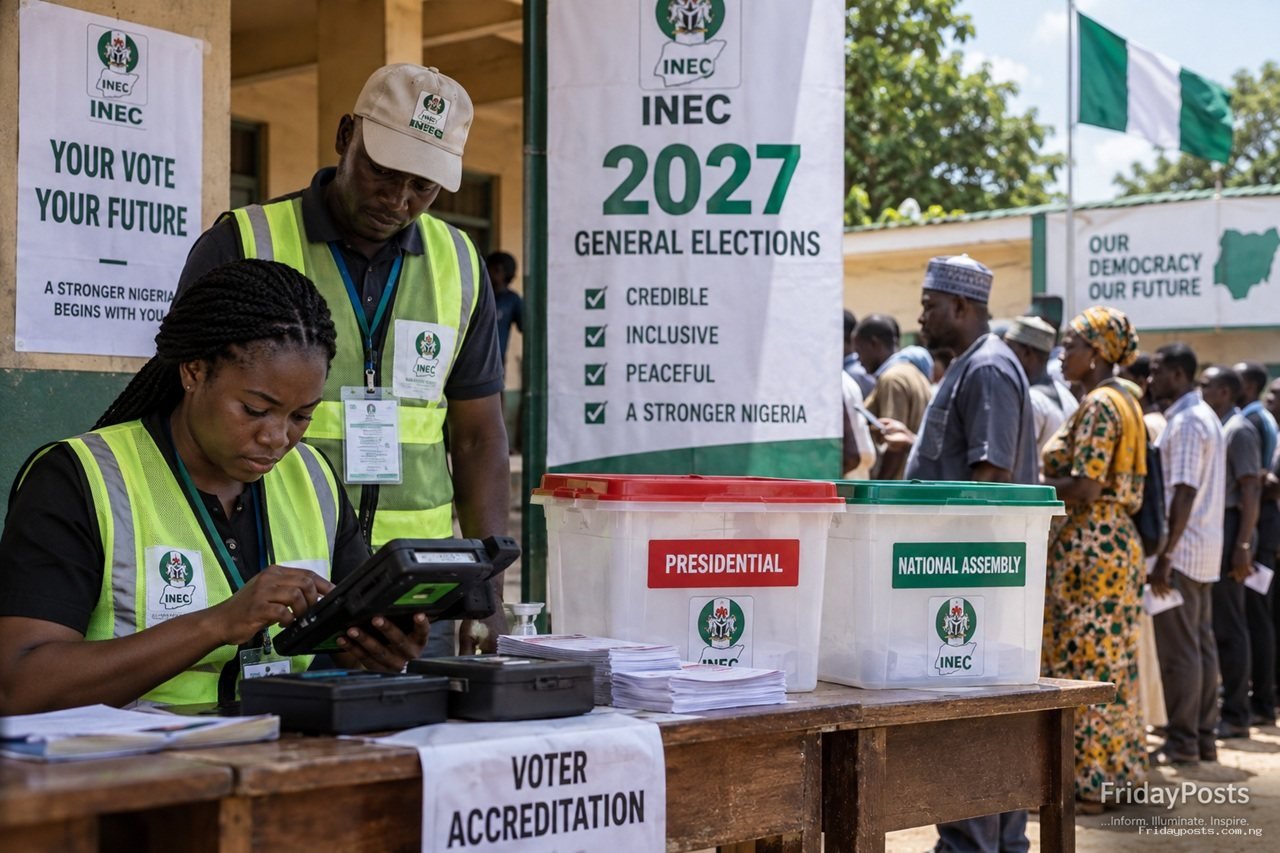
A serious election should compare policy alternatives rather than one side's hardship narrative against the other side's reform narrative.
FridayPosts 2023-2026 economic scorecard
Economic growth: Improving.
Inflation: Improving, but still painful.
Food affordability: Major household pressure.
Petrol and transport: Major household pressure.
Foreign-exchange framework: More transparent, after severe adjustment.
Investor confidence: Improving.
Productive investment: Still needs stronger evidence.
Public finance: Structurally improved, service dividend still contested.
Employment quality: Major unresolved issue.
Security: Major unresolved issue.
Infrastructure delivery: Progress with uneven lived impact.
Purchasing power: Still weak for many households.
This is not a partisan scorecard.
It is a way to separate indicators that have improved from those voters still experience as failure.
What Tinubu needs to prove between now and January
The President's strongest argument is that the hardest phase of reform is ending and that macroeconomic stability is beginning to produce growth.
To make that case convincing, the administration needs more than campaign speeches.
It needs evidence that food inflation continues to fall.
It needs a credible path to lower transport and energy costs.
It needs job growth.
It needs stronger security.
It needs public services that make higher taxes and reduced subsidies feel like an exchange rather than a loss.
If those improvements accelerate before January, Tinubu can argue that Nigerians should not reverse course just as reform begins to pay off.
If households still feel poorer, opponents will argue that the reform has been economically disciplined but socially unsuccessful.
The election will test the difference between macro recovery and lived recovery
Nigeria's economy is not in the same condition it was in 2023.
Some indicators are clearly stronger.
Growth has improved.
Inflation has moderated.
The foreign-exchange and fiscal systems have changed substantially.
Investor sentiment is better than during the worst instability.
But elections are decided by human beings, not dashboards.
A voter may acknowledge that inflation is falling and still be unable to afford meat.
A business owner may welcome a more transparent foreign-exchange market and still be paying too much for power.
A civil servant may have received a higher wage and still face a larger transport bill.
That is the challenge of Tinubu's 2027 campaign.
He does not merely have to prove that the reforms were intellectually defensible.
He has to convince Nigerians that the reforms are beginning to improve their lives.
Sources and further reading
- Reuters, 24 October 2026: Tinubu launches re-election campaign
- Reuters, 15 October 2026: September inflation eases to 14.63%
- Reuters, 31 August 2026: Nigeria Q2 GDP grows 4.43%
- Reuters, 21 October 2026: private capital to drive next growth phase
- National Bureau of Statistics: September 2026 CPI and Q2 2026 GDP reports







Reader conversation
0 approved comments