
Nigeria’s import bill is often discussed as though every import is evidence of national failure.
That is not economically sensible.
Countries import goods because trade allows them to access products, technology and inputs they cannot produce efficiently at home.
A factory may import machinery to increase productivity. A hospital may import specialised equipment that would make little sense to manufacture locally at small scale. A technology company may import servers or components because global supply chains are highly specialised.
The more useful question is narrower.
Where is Nigeria importing at scale even though domestic demand, raw materials, industrial capability and market size suggest local production could become competitive?
That question turns import dependence into an investment map.
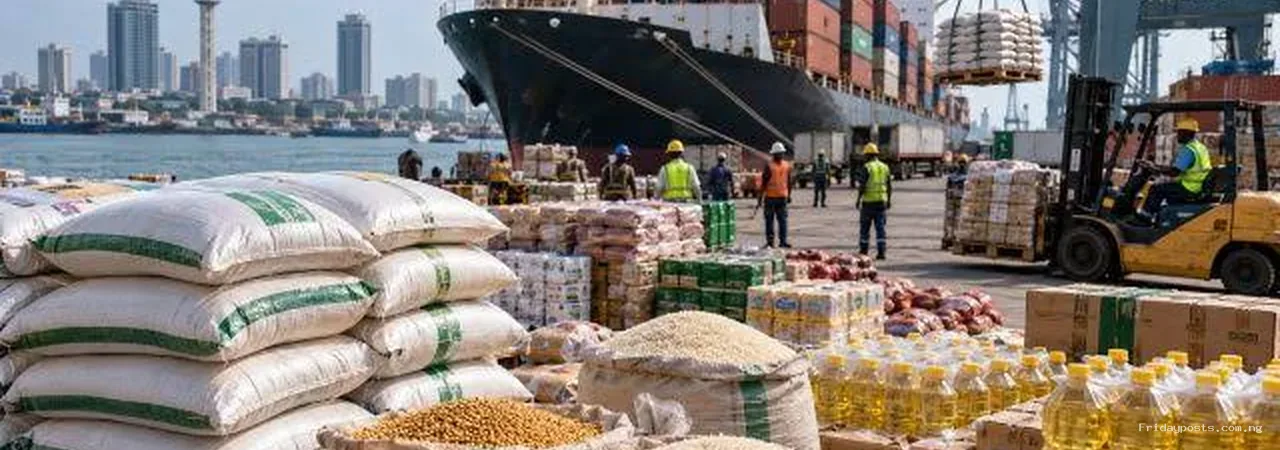
National Bureau of Statistics data for the second quarter of 2026 show machinery and transport equipment among the largest import categories, followed by chemicals and manufactured goods. Food and beverage imports also remain substantial. The Nigerian Investment Promotion Commission identifies manufacturing, agriculture, healthcare, energy and related value chains as major investment opportunities.
FridayPosts has ranked ten industries using five criteria: import-substitution potential, domestic market size, availability of local inputs, realistic technology requirements and potential for jobs and exports.
This is an editorial ranking, not an official government index.
1. Food processing and agro-industrial manufacturing — 94/100
This is Nigeria’s clearest import-substitution opportunity because the country already produces large volumes of agricultural raw materials and has a huge consumer market.
The gap is between farm output and industrial products.
Tomatoes become paste.
Cassava becomes starch and sweeteners.
Fruit becomes concentrate.
Maize becomes flour and industrial inputs.
Oilseeds become edible oils.
Milk becomes processed dairy products.
Nigeria still imports large volumes of food and food-related industrial inputs while suffering post-harvest losses at home.
The business opportunity is not simply “farming”.
It is processing, cold storage, packaging, aggregation and distribution.
Investors who build close to production zones can reduce transport of bulky raw commodities and create local demand for farmers.
The main constraints are electricity, logistics, quality consistency and working capital.
If these are solved, agro-processing can create more geographically distributed jobs than many heavy industries.
2. Pharmaceuticals and medical products — 92/100
Nigeria’s dependence on imported medicines remains high.
NAFDAC and industry groups have historically put the import share around 60 to 70 per cent depending on the period and product definition.
That creates an obvious market.
Local production opportunities include generic medicines, over-the-counter products, syringes, IV fluids, diagnostics, medical disposables, packaging and eventually selected active pharmaceutical ingredients.
The healthcare market is large, recurrent and relatively resilient.
Government is also offering policy support through the 5+5 framework and broader health-value-chain reforms.
The challenge is quality.
This is not a sector where weak products should be protected for patriotic reasons.
Manufacturers need NAFDAC compliance, modern GMP systems, reliable electricity and strong laboratories.
The companies that meet international standards can eventually export into West Africa.
3. Machinery, equipment and light industrial fabrication — 89/100
Machinery and transport equipment represent one of Nigeria’s largest import categories.
The country cannot realistically localise advanced semiconductor fabrication or every heavy industrial machine in the near term.
But there is a large middle ground.
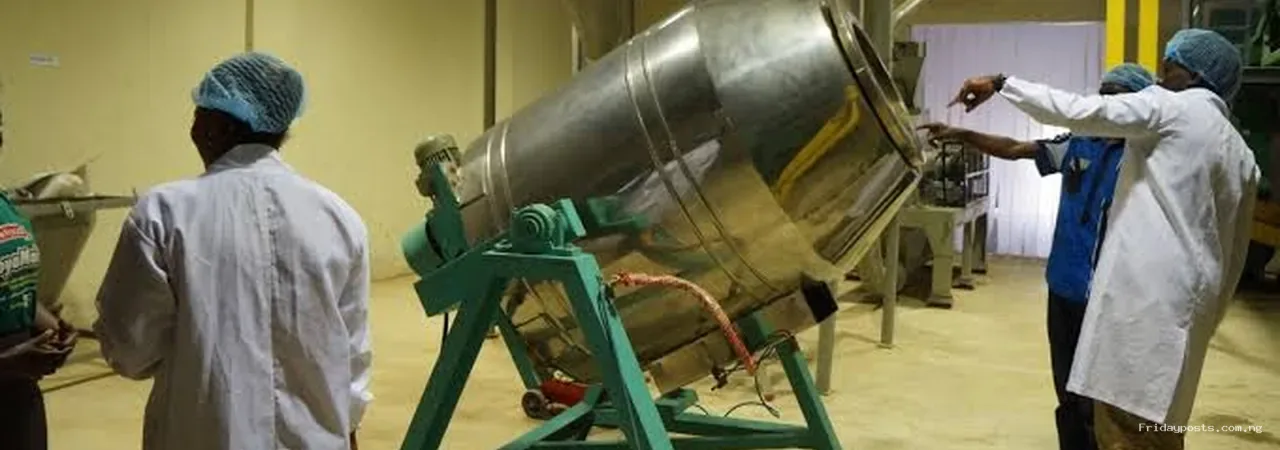
Food-processing machinery.
Farm implements.
Pumps.
Tanks.
Boilers.
Electrical panels.
Conveyors.
Packaging lines.
Metal structures.
Spare parts.
Industrial maintenance components.
Nigeria already has engineering firms and fabrication capability.
The opportunity is to move from custom workshop production to standardised, certified manufacturing.
Local machinery has a major advantage: service and spare parts can be closer to the customer.
This sector also strengthens every other manufacturing sector.
4. Chemicals, petrochemicals and plastics — 88/100
NBS data show chemicals as a major import category.
Nigeria has hydrocarbons and an expanding refining and petrochemical base.
That creates the potential to produce more resins, industrial chemicals, packaging materials, solvents, detergents, coatings and plastic products locally.
The Dangote Refinery and other industrial projects can make more feedstocks available domestically.
The opportunity is not only replacing finished plastic goods.
It is building downstream manufacturers that convert local petrochemical feedstocks into thousands of products used in construction, food, healthcare and consumer goods.
The environmental challenge is serious.
Nigeria should develop recycling, extended-producer-responsibility systems and cleaner production at the same time.
Industrialisation should not simply increase plastic waste.
5. Building materials beyond cement — 86/100
Nigeria has built a strong cement industry.
That success can create a misleading impression that construction materials are already fully localised.
They are not.
Ceramic tiles, sanitary ware, glass, specialised roofing materials, insulation, fittings and other building products still offer import-substitution opportunities.
Nigeria has minerals, gas and a large construction market.
The main issue is energy.
Glass and ceramics require high-temperature processes.
Reliable gas and electricity can determine competitiveness.
If industrial energy improves, Nigeria can replace more imports while supplying regional markets.
6. Textiles, garments, footwear and leather — 84/100
Nigeria once had a much larger textile industry.
The collapse is well known.
But the market never disappeared.
Nigerians still buy clothes, uniforms, shoes, bags and fashion products in enormous volumes.
The country also has cotton potential, leather clusters in Kano and footwear capability in Aba.
The opportunity is to rebuild the chain rather than protect one old factory model.
Spinning.
Weaving.
Dyeing.
Garment production.
Footwear.
Design.
Branding.
Export.
Nigeria’s fashion culture is already globally visible.
The missing layer is industrial production at consistent quality and scale.
Energy, machinery and smuggling remain major obstacles.
7. Renewable-energy components and electrical equipment — 82/100
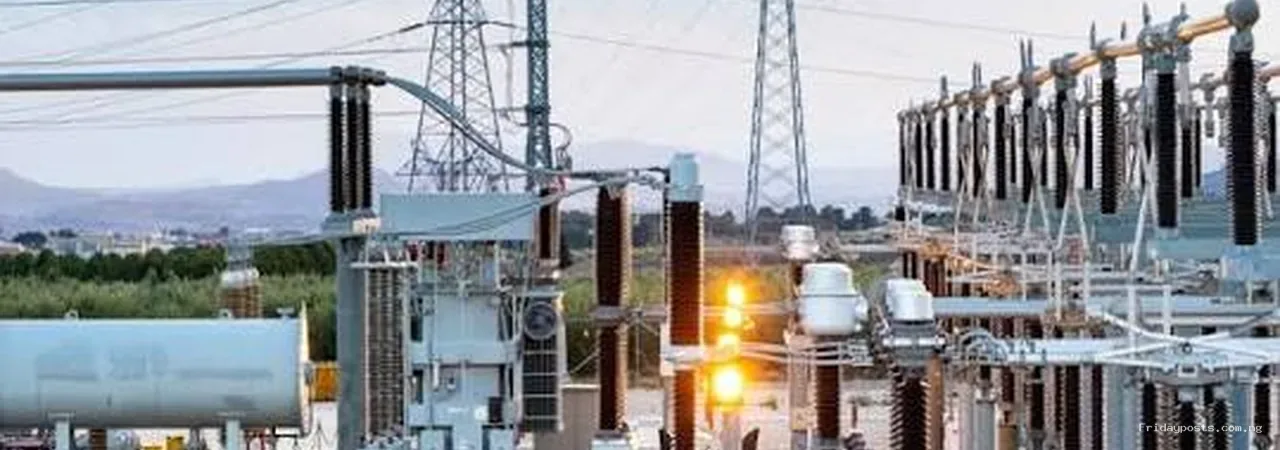
Nigeria’s unreliable grid has created huge demand for solar panels, inverters, batteries, cables, meters, transformers and related equipment.
Much of this market is supplied by imports.
Nigeria does not need to begin with manufacturing advanced solar cells.
It can localise mounting structures, enclosures, cables, distribution boards, battery packs, meters, transformers and eventually more module components.
The domestic demand is already real because households and businesses are buying backup power.
The bigger opportunity is to turn survival spending into an industrial supply chain.
Quality standards are critical because poor electrical equipment creates fire and safety risks.
8. Automotive components, motorcycles and mobility equipment — 80/100
Nigeria imports vehicles and transport equipment at scale.
Full automotive manufacturing is capital intensive and requires large volumes.
But component localisation is more realistic.
Seats.
Batteries.
Tyres.
Glass.
Wiring harnesses.
Plastic trims.
Filters.
Lubricants.
Body components.
Motorcycles and three-wheelers also offer opportunities because they are widely used commercially.
Nigeria should avoid “screwdriver industrialisation” in which almost every component is imported and only final assembly occurs locally.
The goal should be a rising local-content curve over time.
Electric mobility also creates new opportunities in chargers, battery packs and power electronics.
9. Packaging, paper and recycling — 78/100
A growing consumer economy needs packaging.
Food companies need cartons, flexible packaging and labels.
Pharmaceutical companies need boxes and bottles.
E-commerce needs shipping materials.
Restaurants and retail businesses need containers.
Nigeria imports paper and packaging inputs while also generating large volumes of recoverable waste.
Modern recycling and paper-conversion plants can reduce imports and create a circular-economy value chain.
The country should not assume every grade of pulp or paper can be competitive locally immediately.
But corrugated cartons, tissue, labels, recycled paper and many packaging formats have clear domestic demand.
10. Cold-chain, refrigeration and logistics equipment — 76/100
This sector is less obvious than cement or pharmaceuticals, but it solves one of Nigeria’s biggest economic inefficiencies.
Food, vaccines, fish, dairy and other temperature-sensitive products require cold storage and refrigerated transport.
Nigeria’s weak cold chain contributes to post-harvest losses and limits modern retail.
Local production and assembly opportunities include insulated panels, cold rooms, refrigerated boxes, cooling systems, monitoring devices and related components.
This is a strategic import-substitution sector because it increases the productivity of agriculture and healthcare simultaneously.
Why these ten sectors rank above more glamorous industries
Nigeria could aspire to aircraft manufacturing, semiconductor fabrication or advanced robotics.
Those industries may become relevant over time.
But FridayPosts’ ranking prioritises realistic near- to medium-term opportunity.
A strong industrial policy starts where demand, inputs and capability already overlap.
The goal is not to announce the most technologically impressive sector.
It is to build industries that can survive commercially.
Import value is only one part of the ranking
A product can have a huge import bill and still be a poor localisation target.
Nigeria imports sophisticated machinery because producing it locally may require enormous capital and specialised technology.
Another product with a smaller import bill may be easier to manufacture and create more jobs.
That is why this ranking considers feasibility and local value addition alongside import exposure.
Local raw materials create an advantage only if quality is consistent
Nigeria often says it has raw materials.
Manufacturers need more than existence.
They need specifications.
A food processor needs maize of consistent moisture and quality.
A pharmaceutical company needs regulated inputs.
A glass manufacturer needs minerals that meet chemical requirements.
Industrialisation therefore requires standards at the raw-material stage.
This is where research institutes and suppliers become important.
Energy is the common bottleneck across almost every sector
The ten sectors differ, but most share one constraint: reliable power.
Some need electricity.
Some need gas.
Some need both.
Nigeria’s industrial future therefore depends heavily on electricity reform, gas infrastructure and embedded generation.
An import-substitution policy that ignores energy will struggle.
Factories cannot compete with global producers while running expensive backup systems continuously.
Finance is the second common bottleneck
Industrial investment needs long-term capital.
Machines may take five or ten years to repay.
Commercial loans priced at very high rates can destroy the economics.
Nigeria needs deeper development finance, credit guarantees, equipment leasing, private equity and capital-market funding for manufacturing.
But finance should follow commercially credible projects.
Cheap money does not make a bad factory viable.
Standards enforcement protects good local manufacturers
One reason local companies struggle is competition from substandard imports and informal products.
Standards Organisation of Nigeria, NAFDAC and other regulators need stronger enforcement.
At the same time, local companies must meet the same standards.
Consumers will support Nigerian products when quality is reliable.
Patriotism cannot replace performance.
Government procurement is a huge industrial lever
Federal and state governments buy medicines, uniforms, furniture, vehicles, meters, cables, construction materials and food.
Procurement can create predictable demand for local manufacturers.
But it must remain competitive.
Local preference should have price and quality limits.
Otherwise, government becomes a captive customer for inefficient producers.
Industrial clusters can lower the cost of entry
A factory needs land, roads, water, power, security and waste management.
Providing these separately is expensive.
Industrial parks and special economic zones can share infrastructure.
The model works only when the infrastructure actually exists.
Nigeria has too many “industrial parks” that are more visible in speeches than in output.
Success should be measured by operating factories, exports and jobs.
AfCFTA changes the scale calculation
Nigeria’s domestic market is large, but regional exports can make factories more efficient.
A pharmaceutical plant that sells only to Nigeria has one scale.
A plant that serves ECOWAS and wider African markets can invest in larger, more modern capacity.
AfCFTA therefore makes import substitution more attractive when it becomes export substitution too.
The strongest Nigerian factories should eventually replace imports in neighbouring countries, not only at home.
Smuggling can destroy legitimate industrial policy
If Nigeria protects a local industry with tariffs while the border allows uncontrolled smuggling, compliant firms face the worst of both worlds.
They pay taxes and meet standards while illegal goods enter cheaply.
Customs reform and trade enforcement are therefore part of manufacturing policy.
But border enforcement should be intelligent.
Permanent blanket closures can also hurt legitimate businesses.
The objective is predictable trade, not isolation.
Skills need to become more technical
Factories need machinists, electricians, production supervisors, laboratory technicians, welders, quality engineers and maintenance specialists.
Nigeria’s education system often produces certificates faster than industrial skills.
Technical colleges, polytechnics and employer-led training need stronger links to actual factories.
A manufacturer deciding where to locate will ask whether skilled people are available.
Human capital is part of the investment climate.
The ranking should guide entrepreneurs as well as large investors
Not every opportunity requires a billion-dollar plant.
SMEs can enter packaging, fabrication, cold-chain services, garment production, electrical enclosures, food processing and component supply.
Large anchor manufacturers often create opportunities for smaller suppliers.
Nigeria should therefore develop supplier-development programmes around major industrial projects.
Industrialisation becomes deeper when local SMEs enter the value chain.
Import substitution must not become an excuse for monopoly
A country can reduce imports and still hurt consumers if one local producer dominates the market.
Competition remains essential.
Government should encourage multiple producers where scale allows.
Open access to infrastructure and transparent regulation matter.
The objective is not merely “made in Nigeria”.
It is competitively made in Nigeria.
How investors should read this list
A high ranking is not a promise of profit.
Every sector requires project-level analysis.
Who is the customer?
What is the imported benchmark price?
How much local content is realistic?
What is the energy cost?
What volume is required to break even?
What standards apply?
What export markets are available?
These questions turn a national opportunity into an investable business.
The biggest opportunity is the gap between what Nigeria consumes and what it produces
Nigeria’s large population is often described as an economic advantage.
It becomes an advantage only when local firms can serve the demand.
Otherwise, population simply increases the import bill.
That is the strategic lesson of the 2026 trade data.
Nigeria imports machinery, chemicals, manufactured goods and food because the economy needs them.
The country should not try to replace everything.
It should build where demand is deep, capabilities are attainable and local value can become competitive.
These ten sectors offer some of the clearest places to start.
The real measure of success will come later.
Not when government announces an import-substitution policy.
Not when an investor signs a memorandum of understanding.
But when Nigerian factories produce goods that consumers choose because the price and quality make sense, and when those same factories begin exporting to the rest of Africa.
That is when import dependence becomes industrial opportunity.
Sources and further reading
- NBS Foreign Trade in Goods Statistics Q2 2026
- Nigerian Investment Promotion Commission: Manufacturing
- Nigerian Investment Promotion Commission: Agriculture
- Voice of Nigeria, Q2 2026 trade summary









Reader conversation
0 approved comments