

Nigeria’s wage debate has returned because the last wage debate never fully solved the problem.
The statutory national minimum wage was raised to ₦70,000 in 2024 after a prolonged dispute over the cost of living. Two years later, both the Nigeria Labour Congress and the Trade Union Congress are again warning that workers’ incomes have been weakened by petrol prices, food costs, transport, housing and other pressures.
The NLC has demanded fresh negotiations and lower petrol prices. The TUC has called for urgent, measurable action on workers’ remuneration, insecurity, industrial decline and living costs.
It is tempting to reduce the conversation to a new number.
Should the minimum wage be ₦100,000? ₦150,000? ₦300,000? More?
But a nominal wage by itself tells us very little.
The important question is real purchasing power: how much food, transport, rent, electricity, healthcare and other necessities can the salary buy?
That is where the Nigerian worker’s problem becomes clearer.
A wage can rise while the worker becomes poorer
Suppose a worker earns ₦70,000 when a basket of essential monthly expenses costs ₦60,000.
The worker has ₦10,000 left.
If the salary later rises to ₦100,000 but the same basket now costs ₦120,000, nominal income increased by 43 per cent while the worker’s real position worsened.
This is the difference between nominal and real wages.
Nigeria’s recent years of high inflation mean many workers experienced exactly this type of erosion.
The payslip may be larger.
The life it can finance may be smaller.
The minimum wage was never supposed to carry every household cost alone
The concept of a minimum wage is often misunderstood.
It is a legal floor for formal employment, not a guarantee that one salary will comfortably support every possible family size and lifestyle.
But the floor still needs to have economic meaning.
If it becomes too low relative to food, transport and housing, workers begin to depend on debt, side jobs or family support simply to maintain basic living standards.
That weakens productivity and social stability.
A minimum wage that cannot cover a meaningful share of basic costs may comply with the law while failing its social purpose.
Inflation since 2024 has changed the real value of ₦70,000
Nigeria experienced significant price increases after the 2024 wage was agreed.
Headline inflation has moderated in 2026, reaching 14.63 per cent in September, but that lower rate comes after accumulated increases in the price level.
The key mistake is to compare the current wage only with the current inflation rate.
Purchasing power depends on cumulative inflation since the wage was set.
If prices rise 20 per cent one year and another 15 per cent the next, the total increase is not simply 35 per cent in a straight line because the second increase applies to the already higher base.
This compounding effect explains why wages can lose value quickly.
Transport is eating a larger share of income
Petrol is central to labour’s demands because transport affects almost every worker.
A commuter may not own a car, but the bus or taxi still responds to fuel prices.
Workers living far from employment centres are hit hardest.
A person travelling daily from the outskirts of Lagos, Abuja, Port Harcourt or another city may spend tens of thousands of naira each month simply getting to work.
This creates a strange labour-market problem.
A job can become uneconomic because the cost of reaching it is too high.
Employers then face turnover, lateness and demands for salary adjustments.
Transport policy is therefore wage policy.
Food remains the most painful line in the household budget
Food inflation is still much higher than the headline rate.
For lower-income workers, this is critical because food takes a larger share of spending.
A professional earning ₦1 million may notice a rise in rice prices but still have room to adjust discretionary spending.
A worker earning ₦100,000 may have no discretionary budget to cut.
The household responds by buying less protein, reducing portions, switching to cheaper foods or delaying other expenses.
This is why the same inflation rate produces different welfare outcomes across income levels.
Housing makes the squeeze worse
Rent does not necessarily rise every month.
It often hits the worker as an annual shock.
A landlord may increase rent by 30 or 50 per cent at renewal.
The worker then has to find a large lump sum in an economy where savings have already been weakened by food and transport costs.
Housing policy therefore matters to labour welfare.
If cities cannot produce enough affordable housing near jobs, workers will continue to trade cheap rent for expensive commuting.
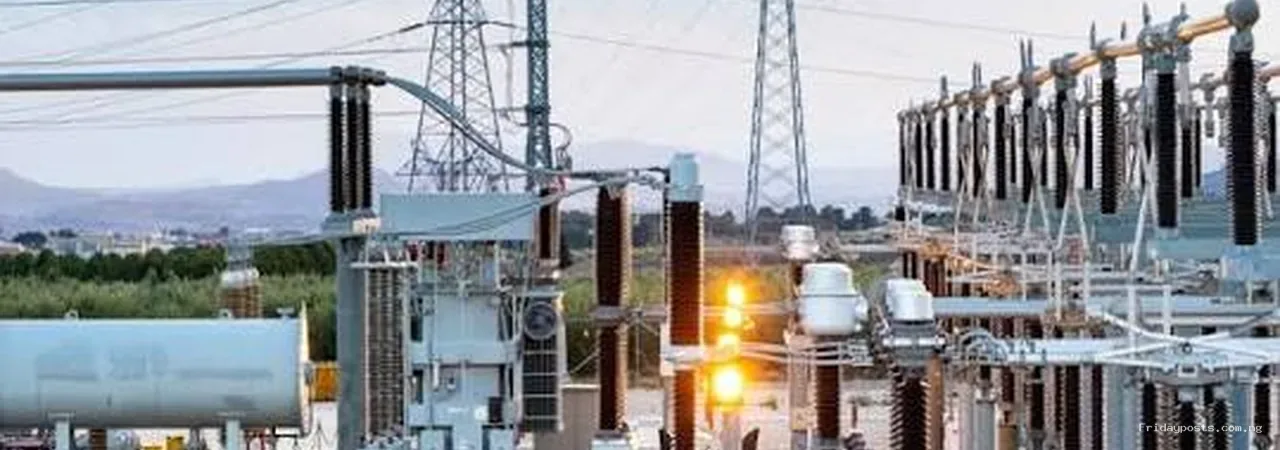
Electricity has become a second wage deduction
Workers pay for electricity directly through tariffs and indirectly through the cost of goods produced with expensive power.
Many households also buy backup energy: petrol, diesel, gas, batteries, inverters or solar systems.
A salary therefore finances two electricity systems.
This is one reason wage discussions should not be separated from public-service reform.
A worker who receives reliable electricity, affordable transport, good healthcare and quality public schools needs less cash to achieve the same living standard as a worker who must privately finance all four.
Public services are part of real income.
The informal sector complicates every minimum-wage debate
Nigeria’s economy contains a large informal workforce.
Many workers are self-employed or employed by small businesses that do not operate under formal wage structures.
A higher statutory minimum wage may therefore protect formal employees while leaving millions outside the direct effect of the law.
This does not make the minimum wage irrelevant.
It does mean the broader goal should be rising productivity and earnings across the economy.
An informal worker benefits more from lower food prices, stronger demand and better transport than from a law an employer may never implement.
Small businesses cannot be ignored
Labour’s case for higher wages is understandable.
Employers also face a genuine constraint.
A small restaurant, school, workshop or retail business pays the same high electricity, fuel, rent and finance costs that workers face.
If wages rise sharply without productivity or revenue improving, the business may raise prices, cut jobs, reduce hours or move employment off the books.
This is why wage policy requires tripartite negotiation among government, labour and employers.
A wage that businesses cannot pay becomes a paper victory.
Government payrolls create another layer of complexity
A higher national minimum wage affects federal, state and local governments.
The fiscal capacity of these governments differs greatly.
Some states have large internally generated revenues.
Others depend heavily on monthly federation allocations.
When the wage floor rises, higher grades often demand consequential adjustments to preserve salary differentials.
The final payroll effect can therefore be much larger than the change at the bottom.
Any new wage agreement should publish the fiscal arithmetic before it is signed.
Nigeria needs a real-wage index
One reason the debate becomes emotional is that Nigeria does not routinely publish a simple measure of how workers’ purchasing power has changed by income group.
NBS already produces inflation data.
Government payroll data exist.
Private-sector wage surveys exist.
A quarterly Real Wage Index could show whether median salaries are rising faster or slower than consumer prices.
It could also compare sectors and states.
This would give labour negotiations an evidence base.
Instead of arguing only about headline inflation, negotiators could see how far purchasing power has moved since the last agreement.
Minimum-wage reviews should become more predictable
Nigeria tends to wait until hardship becomes a crisis before reopening wage discussions.
That creates strikes, ultimatums and political pressure.
A more mature system would establish a regular review mechanism linked to defined indicators.
Inflation.
Productivity.
Median wages.
Poverty thresholds.
Government revenue.
Business conditions.
The final wage would still be negotiated, but the process would begin from shared evidence.
A cost-of-living adjustment could be considered carefully
Some countries adjust wages or pensions automatically when inflation crosses certain thresholds.
Nigeria could consider a limited version for public-sector workers or the minimum wage.
But automatic indexation carries risk.
If every price increase immediately produces a wage increase, businesses raise prices again to cover labour costs. The cycle can become self-reinforcing.
Any adjustment mechanism therefore needs productivity and fiscal safeguards.
The goal is to protect workers without institutionalising inflation.
Tax policy can raise take-home pay without raising payroll cost equally
One alternative is to reduce the tax burden on low-income workers.
If a worker keeps more of the same gross salary, disposable income rises.
Nigeria’s recent tax reforms contain measures intended to protect lower-income earners and simplify taxation.
The implementation matters.
Tax relief cannot compensate for extreme cost increases, but it can form part of a wider wage package.
Transport support may be more targeted than universal fuel subsidy
Labour often focuses on petrol because fuel prices affect workers quickly.
A universal petrol subsidy can reduce the pump price but also subsidise high-income consumers and create large fiscal costs.
Targeted transport support may provide better value.
Public buses.
Rail.
Employer transport schemes.
Urban commuter subsidies.
These interventions reduce the worker’s cost without necessarily subsidising every litre of fuel consumed in the economy.
The challenge is implementation and leakage.
Housing and healthcare belong in the wage conversation
A worker’s welfare depends on more than cash.
Employer health insurance, pension contributions, housing support, meals and transport can materially change real living standards.
Collective bargaining should therefore consider total compensation.
In some sectors, a moderate wage increase combined with healthcare and transport support may deliver more real value than a larger cash increase that is quickly consumed by inflation.
Productivity is the long-term foundation of higher wages
Countries do not become high-wage economies by decree alone.
Wages rise sustainably when workers produce more value.
Better machinery.
Reliable electricity.
Skills.
Technology.
Efficient logistics.
Larger markets.
When productivity rises, employers can pay more without raising prices at the same rate.
Nigeria’s wage problem is therefore also an industrialisation problem.
A low-productivity economy will always struggle to support high real wages.
The public sector should lead by measuring performance
Higher public wages should be connected to better public-service performance.
This is not a punishment argument.
It is an institutional one.
If taxpayers fund higher compensation, citizens should receive better service.
Digital payroll verification, performance management, training and role clarity can improve the value generated by public spending.
Wage reform and civil-service reform should move together.
Employers need relief from the costs that suppress wages
Businesses often say they cannot pay more.
Government should ask why.
Is electricity too expensive?
Is credit too costly?
Are taxes duplicated?
Is logistics inefficient?
Is demand weak?
Removing these constraints creates space for wage growth.
A company that saves millions on diesel may be able to redirect some of that value to workers and expansion.
What has really happened to the Nigerian worker?
The worker has experienced a transfer of income towards essentials.
More of the salary now goes to food, transport, energy and housing.
Less remains for savings, investment, recreation and emergencies.
This is why people can earn more naira and feel poorer.
It is not simply perception.
It is a change in the structure of household spending.
What should the next wage negotiation achieve?
It should do more than announce a new number.
It should include a transparent real-wage analysis, a realistic implementation plan for states and businesses, targeted measures for transport and low-income households, tax treatment, and a timetable for the next review.
Government should also publish progress on inflation, electricity, housing and public transport because these determine how long the wage gain survives.
Purchasing power is the metric that matters
Workers do not live inside wage legislation.
They live in markets.
They buy food.
They pay rent.
They board buses.
They buy medicine.
They pay school fees.
The success of Nigeria’s next wage settlement should therefore be judged two years later, not on the day it is signed.
Can the worker buy more?
Can the worker save?
Can the worker absorb an emergency without debt?
If the answer remains no, the country will return to the same negotiation again.
Labour is right to focus attention on purchasing power.
But Nigeria’s solution must go beyond wages.
The country needs an economy in which productivity rises, essential services cost less and inflation stops repeatedly destroying the value of every wage agreement.
Sources and further reading
- Politics Nigeria, 20 October 2026: TUC issues fresh demands over hardship and insecurity
- Channels Television, 8 October 2026: NLC ultimatum on petrol price and minimum wage
- National Bureau of Statistics

A. Joshua Adedeji
A. Joshua Adedeji is a leadership strategist, organisational development consultant, author, teacher and values-driven transformation leader. He writes on leadership, strategy, governance, organisational effectiveness, business, personal development and Nigeria’s social and economic transformation, connecting ideas and current realities to practical implications for leaders, institutions, entrepreneurs and citizens. His work is shaped by a commitment to clear thinking, responsible leadership, stronger institutions and the development of people and systems capable of producing lasting impact.






Reader conversation
0 approved comments