
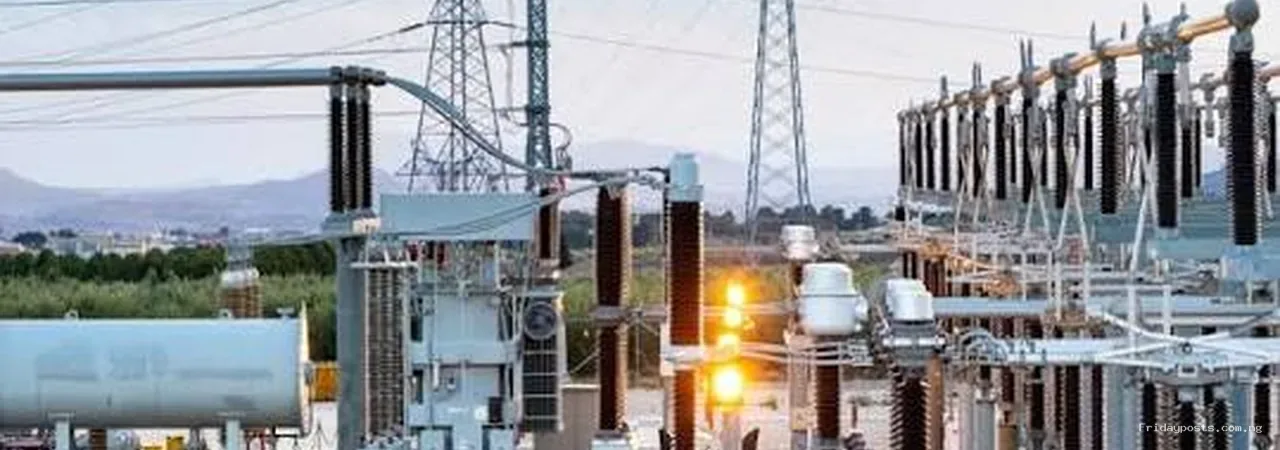
For one hour on Monday, 19 October 2026, Nigeria’s electricity system offered a stark reminder of how fragile the national grid remains.
Data reported from the Nigerian Independent System Operator showed that grid supply fell from about 3,647 megawatts at noon to roughly 675MW by 1 p.m. Nine power plants were reported to have gone offline, leaving only 12 plants supplying the system at that point. Distribution companies warned customers of severe supply constraints.
The important thing is to describe the event correctly. It was a major system disturbance and generation collapse, not evidence that every part of Nigeria’s grid permanently failed at exactly the same moment. The system operator later said operations were restored. But that clarification should not make the event less serious. A power system serving Africa’s most populous country should not be able to lose nearly 3,000MW in one hour without exposing millions of homes and businesses to immediate disruption.
Nigeria’s electricity problem is no longer simply that the country does not have enough generating plants. The deeper problem is that generation, fuel supply, transmission, distribution, market finance and operational discipline remain tightly coupled. Weakness in one part can travel quickly through the entire chain.
The 675MW headline is dramatic, but the structure behind it matters more
When Nigerians hear that the grid “fell to 675MW”, it is easy to imagine a single giant machine failing. The national electricity system is more complicated.
Generating companies produce power from gas, hydro and other sources. The transmission network moves that power across the country at high voltage. Distribution companies receive allocations and supply customers through local networks. The system operator must keep supply and demand balanced every second.
If several large generating units trip at once, the frequency of the system can change sharply. If transmission lines are overloaded or unavailable, power may not be able to move from where it is generated to where it is needed. If the system loses too much generation too quickly, automatic protection systems may disconnect more equipment to prevent deeper damage.
This is why a power grid is not judged only by how much installed capacity exists. It is judged by resilience. Can the system absorb the loss of one major plant or line without cascading into a wider disturbance?
Nigeria still struggles with that test.
Installed capacity is not the same as dependable capacity
Nigeria has far more installed generation capacity than it typically puts on the grid. That creates a common misunderstanding.
A power station can exist physically and still be unavailable because of gas shortages, maintenance, equipment faults, water conditions, transmission constraints or commercial disputes. A plant may also be capable of producing more than the grid can safely evacuate at a particular time.
For households, these distinctions can sound technical. For system planning, they are fundamental.
What matters is dependable capacity: the amount of electricity that can reliably be produced and delivered when needed.
A country can announce 12,000MW, 13,000MW or more in nominal installed capacity and still operate most days with a fraction of that if fuel, transmission and market arrangements are weak. Nigeria’s practical electricity supply has for years remained far below what its population and economy require.
That is why a sudden loss of a few major plants can have such a large effect. The system begins from a relatively thin operating margin.
Nigeria has too little redundancy
Strong power systems are designed around the expectation that something will fail.
A turbine will trip. A transmission line will be struck by lightning. A transformer will need maintenance. Gas supply will be interrupted. Human error will occur.
Resilience comes from redundancy: alternative lines, reserve generation, storage, automatic controls and enough spare capacity to absorb failures.
Nigeria’s grid often operates with limited reserves. If 500MW disappears, there may not be another 500MW ready to enter quickly. If a major transmission corridor becomes unavailable, alternative routes may not have enough capacity.
This is one reason disturbances can spread.
The engineering principle is simple. A national grid should not be designed on the assumption that every important component will work perfectly at the same time.
Nigeria needs more N-1 security, the technical idea that the system should continue operating even after the loss of one major component. In critical areas, N-2 resilience may also be necessary.
Gas supply remains one of the hidden weaknesses
Much of Nigeria’s electricity generation depends on natural gas.
This should be an advantage. Nigeria has one of Africa’s largest gas resource bases.
Yet power plants have repeatedly faced gas supply constraints.
The problem is not only whether gas exists underground. It is whether producers can supply it reliably to power plants, whether pipelines are secure, whether contracts are bankable and whether generating companies can pay.
The electricity market has historically accumulated debts across the value chain. When distribution companies do not collect enough from customers, they may struggle to meet market obligations. That affects payments to generating companies. Generating companies then have difficulty paying gas suppliers and maintaining equipment.
This financial weakness can become a physical electricity problem.
A gas-fired plant does not respond to speeches about national gas reserves. It needs molecules arriving through a pipeline under a functioning contract.
Transmission remains the narrow bridge
Nigeria’s transmission network is often described as the “national grid”, but transmission is only one layer of the wider electricity system.
Still, it is a critical bottleneck.
Generation can increase faster than transmission capacity. If new power plants come online without enough high-voltage lines and substations, electricity becomes stranded.
The Transmission Company of Nigeria has added transformers and upgraded substations over time, but the scale of demand growth means the network needs far more investment.
Nigeria’s economy is geographically large. Electricity must travel long distances from power plants to load centres. Some areas depend heavily on a limited number of major corridors.
A stronger network needs more 330kV and 132kV lines, modern substations, digital monitoring, protection systems and regional loops that give operators alternative paths when faults occur.
The grid should increasingly look like a mesh rather than a chain.
Distribution weaknesses also feed back into the grid
It is tempting to think the fragility ends at transmission.
It does not.
Distribution companies determine how much electricity reaches paying customers and how much money returns to the market.
If technical losses are high, meters are missing, customers bypass supply or bills are not collected, the financial health of the entire chain weakens.
NERC’s recent quarterly reports have continued to show high Aggregate Technical, Commercial and Collection losses across the DisCos. Those losses represent energy that is lost physically, not properly billed or not paid for.
A weak distribution market makes upstream investment harder.
This is why power reform cannot succeed by fixing only the grid control room. Nigeria needs healthier distribution networks, better metering and more credible tariff-service relationships.
Tariffs cannot solve reliability by themselves
Electricity tariffs have increased for some customer classes, particularly Band A customers expected to receive higher supply hours.
The logic is that a market cannot provide reliable service if tariffs do not cover reasonable costs.
That is economically sensible.
But tariff reform becomes politically fragile when service quality does not improve at the same pace.
A household paying a premium tariff does not care that the industry’s revenue requirement is mathematically justified if the feeder remains dark for long periods.
The social contract must be visible: higher payment in exchange for more reliable supply, accurate metering, faster fault response and better customer service.
If the system collects more while repeated disturbances continue, public trust erodes.
The grid is being asked to do a job it was not built for
Nigeria’s population has multiplied, cities have expanded and electricity demand has changed dramatically.
The grid architecture did not expand at the same rate.
Lagos alone now has a power demand that would challenge the entire national supply available in some periods. Industrial corridors in Ogun, Rivers, Kano, Kaduna, Anambra and other states need dependable power. Data centres, rail systems, hospitals and digital businesses add new forms of load.
The system is therefore carrying a modern economy on infrastructure partly inherited from an earlier era.
Upgrades have occurred, but incremental projects are competing with decades of accumulated deficit.
This is one reason the country needs to stop treating power projects as isolated announcements and start managing them as a national reliability programme.
State electricity markets can reduce pressure, but they also create new risks
The Electricity Act has opened the door for states to develop intrastate electricity markets and regulators.
This could become one of the most important reforms in the sector.
States may attract embedded generation, mini-grids, industrial power systems and distribution investment tailored to local needs.
A state with a large industrial cluster could contract power directly instead of waiting for national supply to improve.
But decentralisation is not automatically success.
Weak state regulators could create inconsistent rules. Small markets may lack technical expertise. Political interference could move from federal to state level.
The best outcome is not 36 disconnected electricity islands. It is a layered system in which state markets improve local supply while remaining technically coordinated with the national grid.
Distributed power is becoming an economic necessity
Nigeria’s electricity future will not be built by the national grid alone.
Solar mini-grids, rooftop solar, battery storage, captive gas plants and embedded generation are already filling gaps.
For many businesses, these systems are not environmental lifestyle choices. They are survival infrastructure.
The challenge is cost.
When every factory builds its own power system, the economy duplicates investment. Each company buys generators, fuel tanks, batteries and technical staff instead of relying on shared infrastructure.
A stronger electricity market should allow distributed power where it makes sense while gradually reducing the need for every business to become its own utility.
Battery storage could change system stability
One of the technologies Nigeria should take more seriously is grid-scale battery storage.
Batteries cannot replace generation for long periods, but they can respond within seconds to frequency disturbances, smooth short-term fluctuations and provide reserve capacity.
For a fragile system, that speed matters.
Storage can also help integrate more solar generation, which varies with sunlight.
The economics of large batteries are changing globally. Nigeria should evaluate where storage can provide reliability value that is cheaper than keeping expensive thermal reserve running.
The country should not copy foreign solutions blindly, but it should also avoid locking itself into a power architecture designed decades ago.
The system operator needs stronger transparency
Power disturbances generate rumours quickly.
Customers hear “grid collapse”. Operators use technical terms. Distribution companies issue apologies. Social media fills the gap.
Nigeria needs a more disciplined public incident-reporting system.
After any major disturbance, the system operator should publish a short preliminary report within hours and a fuller technical report later.
The public should know what tripped, how much generation was lost, whether transmission equipment failed, how long restoration took and what corrective action is being taken.
This is normal accountability for critical infrastructure.
It would also help distinguish genuine nationwide collapse from local or partial disturbances.
Power plants themselves need a reliability culture
The 19 October event reportedly involved several plants going offline.
That should trigger questions about maintenance, protection systems, fuel supply and coordination.
Nigeria needs to know the forced-outage rate of major plants.
Which units are available most consistently?
Which plants repeatedly trip?
How long are outages?
Are maintenance schedules being followed?
A market cannot improve if chronic poor performance remains hidden inside national averages.
Publishing plant-level availability data would allow investors, regulators and consumers to understand where reliability is being lost.
Nigeria needs a national reliability standard
The electricity conversation is often dominated by megawatts.
The country should move towards reliability metrics.
How many minutes of supply interruption does the average customer experience?
How often does the grid experience a significant frequency excursion?
How much spinning reserve is available?
How much transmission capacity is redundant?
How quickly is service restored after a major fault?
These are the kinds of measures that mature power systems track.
Without them, Nigeria can celebrate capacity additions without knowing whether the system is becoming more dependable.
What should change after the 675MW incident?
The first priority is a transparent technical account of what happened.
The second is to identify whether the event revealed a recurring vulnerability: too little reserve, weak transmission redundancy, gas constraints, plant protection problems or operational coordination.
The third is investment.
Nigeria needs stronger transmission loops, better frequency control, modern system-management technology, more dependable generation, storage and healthier distribution finances.
The fourth is decentralisation with coordination.
Industrial clusters, states and private developers should be allowed to build reliable local systems while the national grid becomes stronger.
The real cost is not the darkness alone
When electricity supply collapses, the economy does not simply stop.
It switches fuel.
Factories start generators.
Telecom towers use batteries and diesel.
Restaurants protect refrigeration.
Homes run inverters.
Hospitals activate backup systems.
Every one of these responses has a cost.
Those costs appear in the price of food, transport, healthcare, manufactured goods and services.
That is why the power crisis is ultimately an inflation and productivity problem.
Nigeria cannot become a low-cost manufacturing economy while electricity remains structurally unreliable.
The 675MW episode may have lasted only part of a day.
The fragility it exposed has lasted for years.
The country should judge the power sector not by how quickly supply returns after the next disturbance, but by whether the system becomes strong enough that a similar disturbance no longer removes most of the electricity available to the nation.
Sources and further reading
- Vanguard, 19 October 2026: Grid supply crashes 81% to 675MW as nine plants go offline
- Nigerian Electricity Regulatory Commission
- Transmission Company of Nigeria







Reader conversation
0 approved comments