
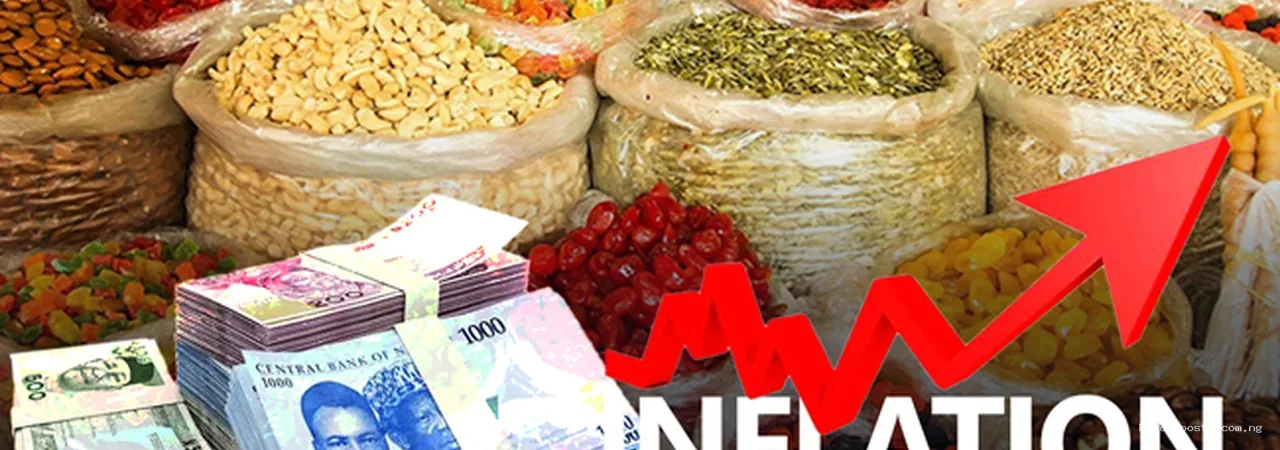
Nigeria’s September inflation figure created one of those economic headlines that can feel disconnected from ordinary life.
The National Bureau of Statistics reported that headline inflation eased to 14.63 per cent year-on-year in September 2026, down from 15.39 per cent in August. On the surface, that is good news. A lower inflation rate suggests the pace at which the general price level is rising is slowing.
Yet the same data showed energy costs rising sharply. Monthly energy prices jumped by more than five per cent, while annual energy inflation rose to 10.85 per cent. Food inflation remained much higher than the headline rate at 19.59 per cent year-on-year.
So a household can read that inflation is falling and still spend more on petrol, electricity, cooking fuel, transport and food.
There is no contradiction.
The problem is that inflation measures the rate of change in prices. It does not tell you that prices have gone back down to the levels people experienced before several years of rapid increases.
This distinction is central to understanding why Nigeria’s macroeconomic indicators can improve before households feel a recovery.
Lower inflation does not mean lower prices
Imagine a product rises from ₦1,000 to ₦1,500 in one year.
That is a 50 per cent increase.
If it rises the following year from ₦1,500 to ₦1,650, inflation on that product has slowed to 10 per cent.
The inflation rate has improved dramatically.
But the customer is still paying ₦650 more than the original price.
This is the basic reason people sometimes distrust inflation headlines.
They hear “inflation is down” and interpret it as “prices are down”.
Economists mean something different: prices are still increasing, but more slowly than before.
For households that have already absorbed several years of price increases, slower inflation is necessary but not sufficient. Income also has to catch up.
Nigeria’s cost-of-living problem is cumulative
The average household does not reset its memory every month.
People compare current prices with what they paid one, two or three years ago.
Transport fares that doubled do not become cheap because the next increase is smaller.
Rent that moved sharply upward does not become affordable because rent inflation moderates later.
A bag of food that rose through several rounds of inflation remains expensive even when food prices temporarily stabilise.
This is why recovery has a lag.
Macroeconomic stabilisation can stop conditions from worsening at the previous speed. It does not instantly reverse the accumulated loss in purchasing power.
Energy is different because it enters almost every other price
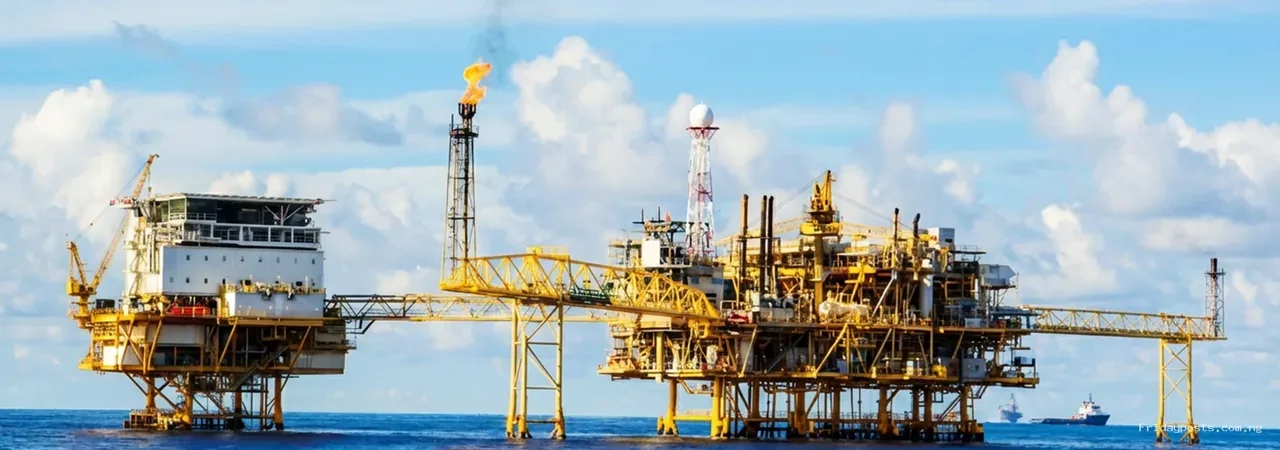
The September data are especially important because the pressure came from energy.
Energy is not just another item in the household basket.
It is an input into other goods and services.
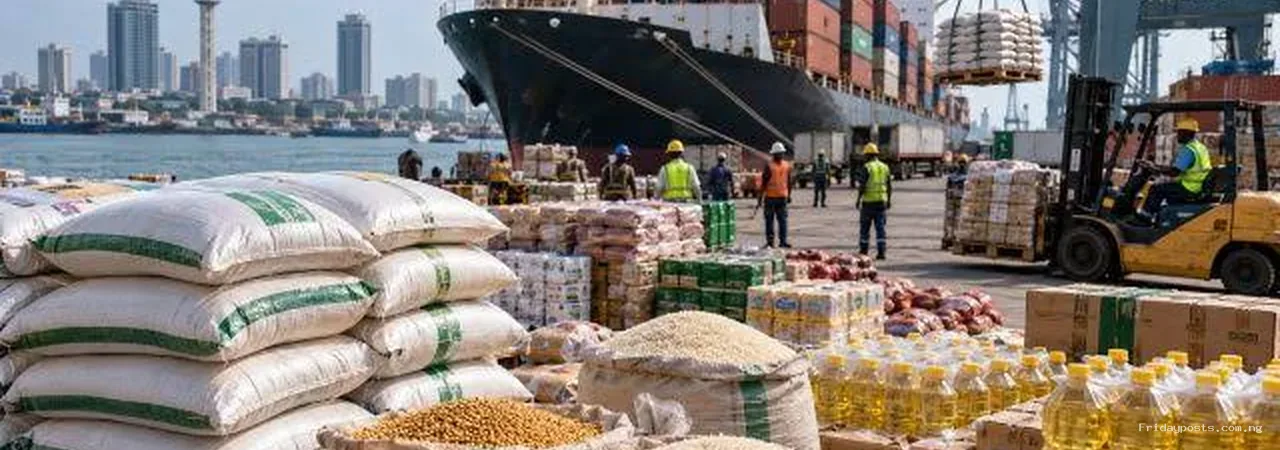
When petrol rises, commuting becomes more expensive. Delivery costs rise. Food transport becomes more expensive. Workers demand higher wages because the trip to work costs more.
When electricity tariffs rise, factories, shops, schools, hospitals and offices face higher operating costs.
When diesel, gas or generator fuel becomes more expensive, businesses that rely on self-generation pass at least part of the cost to customers.
This creates second-round effects.
An energy-price shock today can become food, service and core inflation tomorrow.
Energy inflation can rise while food prices fall
One reason the overall September headline rate moderated was that some food prices declined month-on-month.
NBS data and subsequent analysis pointed to lower prices in several farm-produce categories, including some grains, vegetables and other food items.
That can pull the overall consumer price index lower even when energy rises.
This is how an average works.
Different parts of the basket move in different directions.
The danger is assuming that the average describes every household equally.
A family that spends a large share of income on transport and electricity may experience a more painful month than a household whose biggest expenses were in categories that became cheaper.
Inflation is one national number built from many lived experiences.
Food inflation remains the bigger household pressure
Food inflation of 19.59 per cent is still very high.
That matters because lower-income Nigerians spend a larger share of their income on food.
A wealthy household can absorb a rise in food prices by cutting discretionary spending.
A poorer household may have nowhere to cut except quantity or quality.
Families respond by reducing protein, switching brands, buying smaller quantities or skipping meals.
This is why food inflation has a stronger welfare effect than many other price increases.
Even when headline inflation falls, food can keep the sense of hardship alive.
The base effect can make improvement look faster than it feels
Year-on-year inflation compares current prices with prices in the same month a year earlier.
When the comparison month was already expensive, the annual rate can moderate even if prices are still high.
This is called a base effect.
It does not make the inflation data false.
It simply means the interpretation needs care.
Nigeria has experienced major price adjustments since fuel-subsidy removal, exchange-rate reforms and other changes. As those large earlier increases move into the comparison base, annual inflation can fall mechanically.
The stronger test is whether month-on-month price increases remain low for a sustained period.
If monthly inflation stays subdued, the improvement is more likely to be durable.
The naira matters even when the exchange rate looks stable
Nigeria imports machinery, medicines, fuel-related inputs, chemicals, vehicles, industrial raw materials and other goods.
A weaker naira raises the local-currency cost of these imports.
Recent foreign-exchange reforms have improved market transparency and narrowed some distortions, but businesses still price decisions around the cost and availability of foreign currency.
Exchange-rate stability is therefore one of the conditions required for lasting disinflation.
If the naira becomes more predictable, importers can plan. Manufacturers can price inputs more confidently. Investors face less currency risk.
But currency stability alone does not make old price increases disappear.
Interest-rate policy works slowly
The Central Bank of Nigeria has begun to ease monetary policy after a long tightening cycle, with the Monetary Policy Rate reduced to 23 per cent in September 2026.
Lower interest rates can eventually reduce financing costs and support investment.
But the effect is not immediate.
Banks price loans based on more than the policy rate. They consider inflation expectations, credit risk, liquidity regulation, government-bond yields and deposit costs.
Businesses may therefore continue to face expensive credit even after the central bank changes direction.
Monetary policy has long and uneven transmission.
This is another reason the public can hear that policy conditions are improving while the real economy still feels tight.
Wages have not kept pace with the price level
The deepest reason recovery feels weak is income.
The national minimum wage rose to ₦70,000 in 2024, but the cost of basic goods and services has continued to change.
Many private-sector workers did not receive wage increases equal to inflation. Informal workers may have experienced unstable earnings. Pensioners and people on fixed incomes have even less flexibility.
When prices rise faster than income, households lose real purchasing power.
A later fall in inflation does not automatically restore that loss.
Real wages recover only when nominal incomes begin to grow faster than prices for a sustained period.
This is why labour unions are again demanding wage discussions.
Transport has become an invisible tax on work
For many urban workers, transport is now one of the largest monthly expenses.
A salary can look adequate until commuting is deducted.
Workers who travel from satellite towns into Abuja, Lagos, Port Harcourt or other cities may spend a significant part of income simply getting to work.
When petrol prices rise, public transport responds quickly.
This weakens the value of employment itself.
A job that pays ₦150,000 means something very different when transport is ₦20,000 a month than when it is ₦60,000 or ₦80,000.
Economic recovery must therefore be evaluated after essential costs, not before them.
Housing creates another delayed pressure
Rent often adjusts less frequently than food or fuel.
That means housing inflation can arrive in sudden household shocks.
A tenant may pay the same rent for one year and then face a 40 or 60 per cent increase at renewal.
National monthly inflation data can understate how disruptive this feels.
The solution is not price control alone.
Nigeria needs more housing supply, better mortgage finance, cheaper construction inputs and improved transport so workers are not forced to live close to the most expensive employment centres.
Housing is part of the inflation story because scarcity raises the cost of shelter.
Businesses also experience inflation differently
A manufacturer cares about electricity, diesel, imported inputs, wages and interest rates.
A restaurant cares about food, cooking gas, rent and transport.
A technology company may care more about salaries, data, cloud services and foreign-currency software subscriptions.
A farmer cares about fertiliser, fuel, seeds and security.
This is why one headline rate cannot describe every company’s cost structure.
For some sectors, inflation may already feel much lower.
For energy-intensive sectors, the pressure can still be severe.
The recovery becomes real when unit costs begin to fall
Nigeria should track whether the cost of producing one unit of output is declining.
If a factory produces more goods with the same electricity, labour and capital, productivity improves.
If logistics become faster, transport cost per item falls.
If power supply improves, generator dependence declines.
If interest rates fall, financing costs decrease.
These improvements can allow businesses to reduce price pressure without sacrificing margins.
That is a stronger path to lower inflation than simply suppressing demand.
Government has a role in the cost structure
Fiscal policy influences inflation too.
Taxes and levies raise or lower business costs.
Infrastructure affects logistics.
Security affects farming.
Public borrowing can influence interest rates.
Energy policy affects petrol, electricity and gas.
A credible anti-inflation strategy therefore cannot belong only to the Central Bank.
The ministries responsible for finance, agriculture, petroleum, power, transport and trade all influence the price level.
Nigeria needs coordinated disinflation.
Better competition can reduce price stickiness
Prices often rise quickly and fall slowly.
Part of that is rational. Businesses may be uncertain whether lower input costs will last.
Part can reflect weak competition.
Where markets are concentrated, firms may have less pressure to pass cost reductions to consumers.
Competition policy therefore matters.
Transparent pricing, easier entry and stronger consumer protection can help ensure that lower costs eventually become lower prices.
Households need a recovery dashboard, not one number
Headline inflation is useful, but FridayPosts would argue that Nigerians need a broader household recovery dashboard.
It could include food inflation, energy inflation, transport costs, average wages, rent, electricity tariffs, unemployment or underemployment measures, and consumer credit conditions.
That would make the economic conversation more practical.
A country can have lower inflation and still have a cost-of-living crisis if wages remain weak and essential costs remain high.
What would make the improvement feel real?
First, inflation must stay lower for more than a few months.
Second, food inflation needs to come down meaningfully.
Third, energy prices need greater stability.
Fourth, wages and incomes must begin to grow faster than prices.
Fifth, interest rates need to decline without destabilising the naira.
Sixth, public services must reduce the amount households are forced to buy privately.
Reliable electricity, public transport, healthcare and education function like indirect income support because they reduce household expenditure.
Recovery is not complete until purchasing power recovers
The September inflation figure is encouraging.
It suggests that Nigeria may be moving away from the most intense phase of price instability.
But the number should not be used to tell households that their experience is wrong.
People are reacting to the price level, not merely the inflation rate.
They remember what food cost. They remember what petrol cost. They know how much of their salary now disappears into transport and electricity.
The proper interpretation is therefore balanced.
Lower inflation is progress.
Rising energy costs are a warning.
And the true test of economic recovery is not whether a chart improves before an election or a policy meeting.
It is whether the average Nigerian can buy more with the income he or she earns.
Until that happens, recovery will continue to feel more convincing in the data than in the household budget.
Sources and further reading
- Reuters, 15 October 2026: Nigeria’s inflation rate eases in September
- PUNCH, 16 October 2026: Inflation drops to 14.63% despite rising energy costs
- National Bureau of Statistics

A. Joshua Adedeji
A. Joshua Adedeji is a leadership strategist, organisational development consultant, author, teacher and values-driven transformation leader. He writes on leadership, strategy, governance, organisational effectiveness, business, personal development and Nigeria’s social and economic transformation, connecting ideas and current realities to practical implications for leaders, institutions, entrepreneurs and citizens. His work is shaped by a commitment to clear thinking, responsible leadership, stronger institutions and the development of people and systems capable of producing lasting impact.






Reader conversation
0 approved comments