
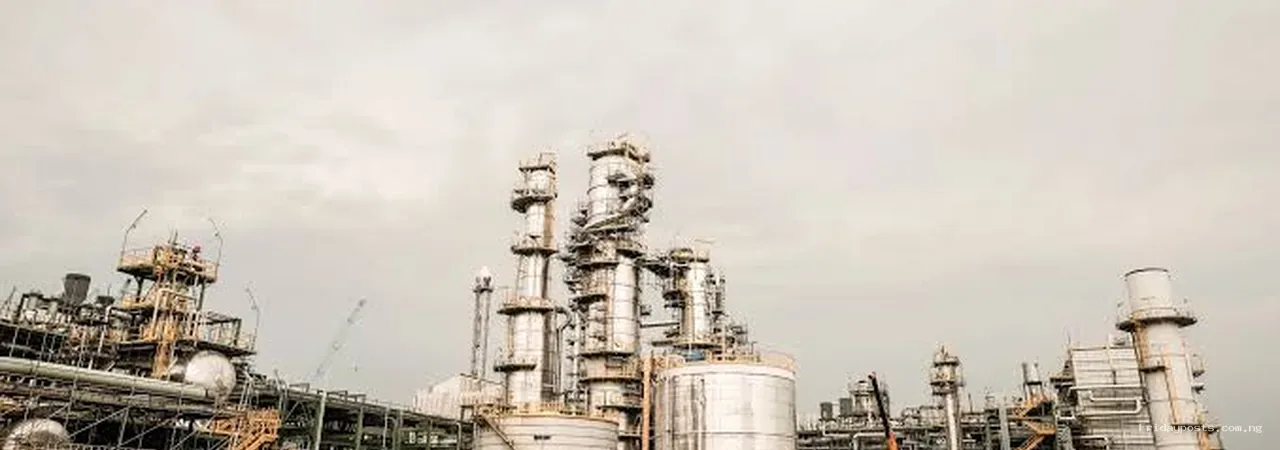
Few Nigerian public assets have generated as much frustration as the government-owned refineries.
For decades, Port Harcourt, Warri and Kaduna have represented a recurring promise: rehabilitation is underway, production will resume, imports will fall and Nigeria will finally refine its own crude at scale.
The outcome has repeatedly fallen short of the promise.
NNPC’s audited 2024 financial statements showed investment in the three refinery subsidiaries rising to about ₦2.92 trillion. Other public and industry estimates of rehabilitation expenditure over longer periods run into several billions of dollars. Yet the plants have struggled to sustain commercial operation.
In October 2026, the Nigerian Society of Chemical Engineers called for a transparent, competitive and time-bound privatisation process, recommending majority private ownership and professional management rather than more public rehabilitation spending.
President Bola Tinubu has taken a different public position, saying the refineries should not be allowed to waste away after the investments already made and promising an evidence-based reset.
The debate is therefore no longer simply technical.
It is about ownership.
Should Nigeria continue to own refineries directly, or should it sell controlling stakes to private investors?
First, what exactly would be sold?
Nigeria’s state refining assets are not one refinery.
They include the Port Harcourt complex, Warri Refining and Petrochemical Company and Kaduna Refining and Petrochemical Company, with associated land, utilities, storage and infrastructure.
Each asset has a different configuration, age, location and commercial prospect.
A serious privatisation programme would therefore need independent technical and financial valuation for each facility.
Government should not treat them as one political package.
Some units may be economically recoverable.
Some may require conversion to terminals, petrochemical facilities or other uses.
Some may be worth more for land and infrastructure than as traditional refineries.
The first principle should be asset-by-asset reality.
The strongest argument for privatisation is the record of public ownership
The economic case begins with history.
Nigeria has owned these assets for decades.
Successive governments have funded turnaround maintenance, rehabilitation and contractor programmes.
The refineries have still not delivered reliable production comparable with their installed capacity.
This suggests the problem is not simply a broken pump or one missing spare part.
It points to governance, incentives, procurement, maintenance culture and commercial discipline.
A private owner who puts its own capital at risk has a stronger incentive to control cost and maintain production than a public enterprise that can return to the treasury for another intervention.
That is the central privatisation argument.
Private ownership can change accountability
When a refinery is privately controlled, the questions become commercially direct.
Is it producing?
Is it profitable?
Can it secure crude?
Can it sell products competitively?
If the answer is no, shareholders lose money.
In a state-owned system, failure can be absorbed through public budgets, opaque transfers or repeated rehabilitation programmes.
This weakens accountability.
Privatisation transfers more of the execution risk to investors.
The government becomes regulator and tax collector rather than operator.
But private ownership does not guarantee competence
Nigeria has also had poorly managed private companies.
The word “private” is not a synonym for efficient.
A politically connected buyer could acquire an asset cheaply, strip value, seek subsidies or use market power without making the required investment.
That is why process matters as much as ownership.
The buyer must have technical capability, capital, refining experience and a credible business plan.
A sale based mainly on the highest headline price may select the wrong owner.
Government should evaluate both financial and operational capacity.
Valuation is one of the greatest risks
Old industrial assets are difficult to value.
They contain land, pipelines, tanks, jetties, power systems, processing units and environmental liabilities.
Their replacement cost may be huge.
Their current productive value may be much lower.
A buyer will price the rehabilitation risk.
Citizens, however, may compare the sale price with the billions spent historically and conclude the asset was “given away”.
This is why independent valuation and disclosure are essential.
Government should publish enough information for Nigerians to understand the basis of the transaction without compromising legitimate commercial negotiations.
The sunk-cost fallacy should not drive policy
One argument for continued public ownership is that Nigeria has already spent so much money on the refineries that selling them would waste the investment.
Economics warns against this reasoning.
Past spending is a sunk cost.
The relevant question is not how much has already been spent.
It is which future option creates the highest value from today forward.
If another ₦1 trillion of public money has a low probability of producing a profitable refinery, previous expenditure does not justify the next expenditure.
Conversely, if a modest additional investment can complete a genuinely viable asset, selling immediately may destroy value.
The decision should be forward-looking.
Nigeria no longer depends on state refineries for domestic refining capacity
The downstream market has changed dramatically.
The Dangote Refinery has created large private refining capacity. Smaller modular refineries also operate or are developing. Government policy is increasingly focused on domestic crude supply and market competition.
This weakens the old argument that government must own refineries to guarantee national refining capacity.
Energy security does not require the state to own every refinery.
It requires adequate, reliable and competitive domestic supply.
Government can support that through regulation, crude-supply rules, strategic reserves and competition policy.
The case for retaining some public ownership
There are still arguments for government retaining a minority stake.
A minority share can allow the public to participate in future upside without controlling day-to-day operations.
It can also provide visibility into strategic decisions, depending on shareholder rights.
A structure in which private investors hold operational control while government retains a non-controlling stake may balance commercial discipline and public interest.
But the state should not retain veto powers so extensive that private management becomes nominal.
The governance structure must be clear.
Listing the refineries could create another route
Privatisation does not have to mean selling the entire asset to one buyer.
Government could restructure viable refinery companies, bring in strategic investors and eventually list shares on the Nigerian Exchange.
Public listing can widen ownership and impose disclosure requirements.
But an IPO should not be used to sell an unviable business to ordinary investors.
The operating model needs to make sense first.
Capital markets cannot repair engineering problems by themselves.
Competition policy is essential
A privatised refinery can still harm consumers if the market becomes too concentrated.
Nigeria’s downstream sector is moving from import dependence towards domestic refining.
That transition may create new concentration risks.
If a small number of refiners dominate supply, competition authorities and petroleum regulators need strong powers.
Open access to storage, pipelines and jetties can also matter.
Privatisation should increase competition, not simply replace a state monopoly with a private one.
Crude supply will determine refinery economics
A refinery cannot operate without feedstock.
Nigeria has struggled with domestic crude-supply arrangements, pricing and logistics even as private refining capacity expands.
Any buyer of the state refineries will need confidence about how crude is sourced and priced.
A commercially rehabilitated plant that cannot secure appropriate crude will still fail.
This is why the government’s domestic crude-supply framework is part of the privatisation question.
Ownership reform without feedstock reform is incomplete.
Location creates different opportunities
Port Harcourt is located in a major oil and gas region and close to crude infrastructure and product markets.
Warri also sits inside the Niger Delta energy ecosystem.
Kaduna is different because it is inland, creating additional logistics and crude-supply complexity.
A buyer may have different plans for each asset.
Kaduna, for example, could potentially have value in storage, petrochemicals, product distribution or alternative feedstock strategies even if traditional refining economics are more difficult.
Government should allow investors to propose creative commercial uses rather than insist every facility return to its original configuration.
Environmental liabilities must be priced
Old refinery sites can carry environmental obligations.
Soil contamination, waste, old equipment and emissions compliance may require remediation.
Who pays for this after a sale?
If the contract is unclear, disputes can emerge later.
The government should conduct environmental audits before privatisation and assign liabilities transparently.
A low sale price can become misleading if the buyer is also assuming huge remediation costs.
Labour needs a transition plan
Refineries employ workers directly and support contractors and surrounding communities.
A private investor may restructure staffing.
That creates a legitimate labour concern.
But keeping an unproductive asset permanently overstaffed is also not sustainable.
A fair transition should include severance, pension protection, retraining and opportunities for capable technical staff to remain under the new operator.
Labour should be part of the transaction design rather than informed after the sale.
Host communities should also have a voice
Large industrial assets affect local land, environment, employment and infrastructure.
Host communities often bear the costs of pollution and disruption while expecting jobs and social investment.
A privatisation contract should preserve environmental and community obligations.
The buyer should not inherit public assets without inheriting public responsibilities attached to operating them safely.
The government’s best role is regulator, not operator
This is the strongest structural case for privatisation.
Government needs to set fuel standards, regulate competition, protect consumers, manage strategic reserves, enforce environmental rules and collect taxes.
Operating refineries requires different capabilities: procurement, maintenance, feedstock trading, plant optimisation, product marketing and cost control.
These are commercial functions.
The Nigerian state has not demonstrated that direct ownership improves them.
Separating policy from operation can reduce conflicts of interest.
Yet privatisation must not become a fire sale
The worst outcome would be to sell because public frustration is high.
Government should first publish a transaction roadmap.
Technical audits.
Financial audits.
Environmental audits.
Independent valuation.
Prequalification criteria.
Competitive bidding.
Disclosure of beneficial ownership.
Investment obligations.
Performance milestones.
Sanctions for failure.
Without these, privatisation can simply transfer public frustration into private controversy.
Nigeria should consider performance-based sale conditions
A buyer should not be allowed to acquire a strategic refinery and leave it idle indefinitely.
The sale agreement can include minimum investment commitments, rehabilitation deadlines, capacity targets and reporting requirements.
Failure to meet them could trigger penalties or even clawback rights under clearly defined conditions.
This protects the public from speculative acquisition.
What about management contracts instead of sale?
Another option is to retain ownership while giving a private operator a long-term management contract.
This can introduce expertise without selling the asset.
The weakness is incentive alignment.
A manager paid fees may not have the same risk exposure as an owner investing equity.
Management contracts can work, but they need strong performance incentives and independent oversight.
Nigeria has already experimented with forms of public-private management in different sectors. The results depend on contract quality.
A concession may offer a middle route
Government could concession a refinery for a long period, allowing a private investor to rehabilitate and operate it while ownership remains with the state.
This can attract capital while reducing political resistance to outright sale.
But concessions are complex.
The investor needs enough years to recover capital.
Government must resist changing terms after investment begins.
The contract needs clear tariff, tax, environmental and handback conditions.
Again, governance matters more than labels.
FridayPosts’ test: which option stops future public losses?
The policy choice should be evaluated using a simple forward-looking test.
Which structure has the highest probability of producing reliable output without recurring public subsidy?
If majority private ownership achieves that, Nigeria should pursue it transparently.
If a concession produces better value, use a concession.
If one refinery has a credible public-commercial model, demonstrate it with audited performance.
The country should stop treating ownership as ideology.
The burden of proof has shifted
After decades of poor refinery performance, the case for continued direct government operation needs evidence.
Supporters of public ownership should show why the next restructuring will produce a different outcome from previous ones.
They should publish the business plan, capital requirement, management model, crude-supply arrangement and expected return.
Without that evidence, another rehabilitation programme looks like repetition.
Privatisation is not the goal; reliable refining is
Nigeria’s strategic objective is simple.
The country needs a competitive downstream petroleum market that reliably supplies products, creates industrial value and protects consumers from both scarcity and monopoly.
The state-owned refineries should be judged by whether they contribute to that objective.
They are assets, not national monuments.
If public ownership can create value, prove it.
If private ownership can create more value, sell transparently.
If an asset no longer makes economic sense as a refinery, repurpose it.
The worst policy is to keep spending because admitting failure feels politically difficult.
Nigeria has already paid heavily for uncertainty.
The next decision should be based on economics, engineering and governance, not nostalgia.
Sources and further reading
- Vanguard, 14 October 2026: Chemical engineers seek private control of moribund refineries
- State House, 13 August 2026: President Tinubu vows refinery reset
- PUNCH, 28 November 2025: NNPC investment in refineries rises to ₦2.92tn

A. Joshua Adedeji
A. Joshua Adedeji is a leadership strategist, organisational development consultant, author, teacher and values-driven transformation leader. He writes on leadership, strategy, governance, organisational effectiveness, business, personal development and Nigeria’s social and economic transformation, connecting ideas and current realities to practical implications for leaders, institutions, entrepreneurs and citizens. His work is shaped by a commitment to clear thinking, responsible leadership, stronger institutions and the development of people and systems capable of producing lasting impact.









Reader conversation
0 approved comments