
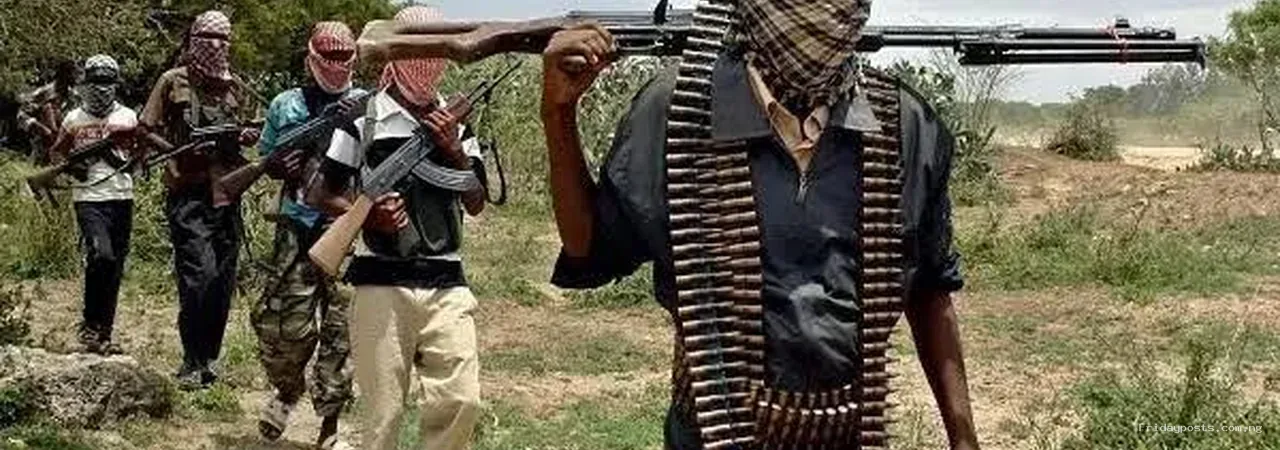
The weekend attack in Zamfara is horrifying not only because of the number of people killed, but because of who appears to have been targeted.
Police said gunmen attacked Gidan Taba in the Maradun area, killing a government-backed security volunteer and 10 of his relatives. Thirteen other people were abducted.
Security forces have been deployed.
At the time of the reporting reviewed for this article, the release of the abducted people had not been confirmed.
The motive remains under investigation.
But the pattern raises a serious national-security question.
When government relies on local volunteers, vigilantes or community security groups to support the fight against armed gangs, what protection does it owe those people and their families?
Community volunteers fill a real security gap
Rural insecurity is difficult to manage from distant headquarters.
Local volunteers understand terrain.
They know farms, forest paths, cattle routes and community relationships.
They can identify strangers and unusual movement.
They often provide early warning to police and military units.
This local knowledge can be invaluable.
The problem is that visibility also creates risk.
An armed group may know exactly who is sharing information with security forces.
Retaliation can become a deliberate tactic
Killing a volunteer's relatives can serve several purposes for attackers.
Punish cooperation.
Intimidate others.
Destroy community trust in government.
Show that the state cannot protect its own partners.
Force volunteers to withdraw.
Even if the Zamfara motive is not yet confirmed publicly, these are known risks in community-security models.
A volunteer programme must therefore plan for retaliation.
The family becomes part of the security risk
Government may provide a uniform, weapon, stipend or training to a volunteer.
But the person's spouse, children, parents and siblings remain in ordinary homes.
If armed groups know where they live, the security arrangement is incomplete.
A volunteer cannot operate effectively while believing cooperation may expose the entire family.
Protection policy needs to extend beyond the individual operative.
Nigeria uses multiple forms of local security support
Across the country, communities rely on hunters, vigilantes, state-backed security organisations and other local groups.
The legal status varies.
Training varies.
Weapons vary.
Payment varies.
Command structures vary.
This diversity reflects local realities.
It also creates accountability problems.
Nigeria needs clearer national standards for how government-backed volunteers are recruited, supervised and protected.
Volunteers should not be treated as disposable auxiliaries
Local security supporters often take serious risks for limited compensation.
If they are killed, families may struggle.
If injured, medical support can be uncertain.
If abducted, rescue may be difficult.
A professional framework should include insurance, death benefits, medical care and family assistance.
The state benefits from the intelligence and presence.
It should share the cost of the risk.
Safe housing may be necessary in extreme-risk areas
Where volunteers face known retaliation, ordinary residence may become unsafe.
Government could provide temporary relocation, secure accommodation or protection plans for high-risk individuals and families.
This would not be necessary everywhere.
It should be based on threat assessment.
But the concept is important.
A person should not be asked to confront armed groups while their family remains completely exposed.
Intelligence sharing must protect sources
Local volunteers can be endangered when information is handled carelessly.
If a report passes through too many people, the source may become known.
Corrupt insiders can leak identities.
Community rivalries can expose informants.
Security agencies need source-protection protocols.
Not every officer should know who provided intelligence.
Information should be shared on a need-to-know basis.
Rural response time remains a structural weakness
A community can raise an alarm and still wait too long.
Roads are poor.
Security posts are distant.
Vehicles may be limited.
Mobile coverage may fail.
Attackers exploit these gaps.
The Zamfara case should trigger a response-time review.
When was the first alert received?
Which formation responded?
How long did it take?
Were there prior warnings?
The answers may reveal preventable delays.
Protection should be based on travel time, not administrative boundaries
A police formation may technically serve an area but still be too far away.
Nigeria needs rural-security deployment maps based on how long armed responders take to reach vulnerable communities.
A village 90 minutes from assistance is exposed even if it appears covered on paper.
Rapid-response bases should reflect risk and geography.
Telecommunications are part of security
A phone signal can be a life-saving asset.
Residents need to call for help.
Security volunteers need to share intelligence.
Responders need location updates.
Areas with poor mobile coverage are harder to protect.
Government should treat telecom expansion in high-risk rural areas as security infrastructure.
The same applies to radio systems where commercial networks are unreliable.
Roads also affect survival
Poor rural roads slow security vehicles.
They slow ambulances.
They make night movement difficult.
They can give attackers predictable escape routes.
Road investment is therefore not separate from security.
A government deciding which rural road to rehabilitate should consider security value alongside economic value.
Armed groups often understand terrain better than formal forces
Local criminal groups may know forests and communities intimately.
Security agencies need the same geographic awareness.
Drones can help.
Satellite imagery can help.
Local guides can help.
But technology should complement human intelligence.
A drone image is useful only if someone understands what it means and can act quickly.
The 13 abducted people should remain central
Mass killings dominate headlines.
Abducted survivors can then disappear from public attention.
Thirteen people were reportedly taken.
Their status matters.
Authorities should provide verified updates where operational security allows.
Families need liaison officers.
They should not depend on rumours.
Rescue or negotiation efforts should be coordinated professionally.
Ransom policy remains difficult
Nigeria discourages ransom payments because they sustain kidnapping markets.
Families, however, face unbearable pressure when loved ones are held.
The strongest anti-ransom policy is not a prohibition.
It is credible rescue capability.
If citizens believe government can recover hostages, they are less likely to depend entirely on private negotiations.
Community security groups need professional training
Volunteers should be trained in more than weapons.
Observation.
Reporting.
Human rights.
Evidence preservation.
First aid.
Communication.
Avoiding unnecessary confrontation.
They should know when to withdraw and call professional forces.
Poorly trained volunteers can escalate disputes or place themselves at greater risk.
Weapon control is essential
Government-backed security groups can become dangerous if arms are poorly controlled.
Who issues weapons?
Where are they stored?
How is ammunition tracked?
What happens when a volunteer leaves?
What if a weapon is lost?
Accountability protects communities from abuse and prevents arms leakage.
Payment and welfare reduce corruption risk
A volunteer who receives irregular or inadequate support may be tempted to collect money unofficially.
Some community groups create checkpoints or levies.
This can produce abuse.
If government recognises a security group officially, welfare and accountability should be formal too.
Professionalisation reduces the space for predatory behaviour.
Local participation should not replace the police
Community volunteers can support security.
They should not become the only line of defence.
Armed groups may have superior weapons.
They may be more mobile.
They may be connected across states.
Professional police, intelligence and military capabilities remain necessary.
The volunteer's strongest role is often local knowledge and early warning.
State police could eventually change this equation
Nigeria is debating more decentralised policing.
One argument for state police is that local forces could absorb some community-security functions into a professional structure.
That could improve training and accountability.
It could also create new political risks.
Whatever model Nigeria adopts, the need for local knowledge will remain.
The goal should be professional local security, not permanent dependence on informal armed volunteers.
Communities need threat assessments
Not every village faces the same risk.
Security agencies should identify factors such as:
Recent attacks.
Kidnapping routes.
Forest access.
Known armed-group movement.
Presence of security volunteers.
Market days.
Mining activity.
Communal disputes.
This creates a vulnerability map.
Protection can then be targeted before an attack.
Government-backed volunteers should have confidential risk profiles
If an individual has helped identify criminals, participated in arrests or received threats, the system should record that risk.
Family members may need support.
Movement routines may need to change.
Residence may need protection.
Security should not wait until retaliation occurs.
Investigation must identify the full network
The attackers should not be treated only as gunmen who arrived and disappeared.
Investigators should ask:
Who supplied weapons?
Who provided intelligence on the family?
Who transported the attackers?
Who receives ransom if abductees are held for money?
Who buys stolen goods?
Who provides shelter?
Criminal networks survive because support systems remain hidden.
Prosecution is part of protection
If attackers believe retaliation will go unpunished, community cooperation with government becomes harder.
Visible investigation and prosecution create deterrence.
Authorities should publish follow-up information when safe.
Communities need to see that cases do not disappear after condolence visits.
Families of victims need structured support
Eleven deaths in one extended family can destroy a household economically.
Children may lose providers.
Farms may be abandoned.
Funeral costs arise.
Trauma persists.
Government assistance should include medical care for survivors, psychological support, temporary income help where necessary and school support for affected children.
Security policy should recognise the aftermath.
FridayPosts would track four questions
First, whether the 13 abducted people are rescued or released.
Second, whether suspects are identified and prosecuted.
Third, what formal status the killed security volunteer held.
Fourth, what protection and compensation are provided to the family.
These outcomes will show whether the state treats local security volunteers as partners or expendable assets.
Rural protection has to begin before the next attack
Deploying forces after a massacre is necessary.
It is also evidence that prevention failed.
Nigeria's rural-security problem is not caused by one missing policy.
It is a chain.
Intelligence.
Response time.
Roads.
Communications.
Local trust.
Professional policing.
Accountable community support.
Justice.
If any link is weak, armed groups exploit it.
The Zamfara attack should therefore be treated as more than another tragic security update.
It should force a practical question.
If the state asks citizens to stand with it against armed groups, can those citizens reasonably expect the state to stand between the armed groups and their families?
A formal volunteer-protection register could reduce hidden risk
Government-backed volunteers who have participated in sensitive operations should not disappear into ordinary administrative files after deployment.
A confidential risk register could record threats, previous attacks, family exposure, location, insurance status and any need for relocation.
This would allow commanders to identify people whose cooperation with the state has made them unusually vulnerable.
Such a register would need strong privacy controls. Publishing the names would create more danger.
The purpose would be internal risk management.
Insurance should be automatic, not negotiated after death
Families should not have to campaign for support after a volunteer is killed.
Government-backed schemes should include defined death benefits, injury cover and support for dependants.
The rules should be known before deployment.
This matters for morale.
A person is more likely to cooperate with government when the family knows there is a formal welfare structure.
Security partnerships become more credible when risk is acknowledged financially as well as rhetorically.
Local protection plans should be reviewed after every retaliation attack
An attack on one volunteer's family should trigger a review of every other exposed volunteer in the area.
Who has received threats?
Whose home is known to armed groups?
Who has recently participated in arrests?
Which families need temporary relocation?
This turns one tragedy into preventive learning.
A security system that fails to review adjacent risks may allow the same retaliation pattern to repeat.









Reader conversation
0 approved comments