
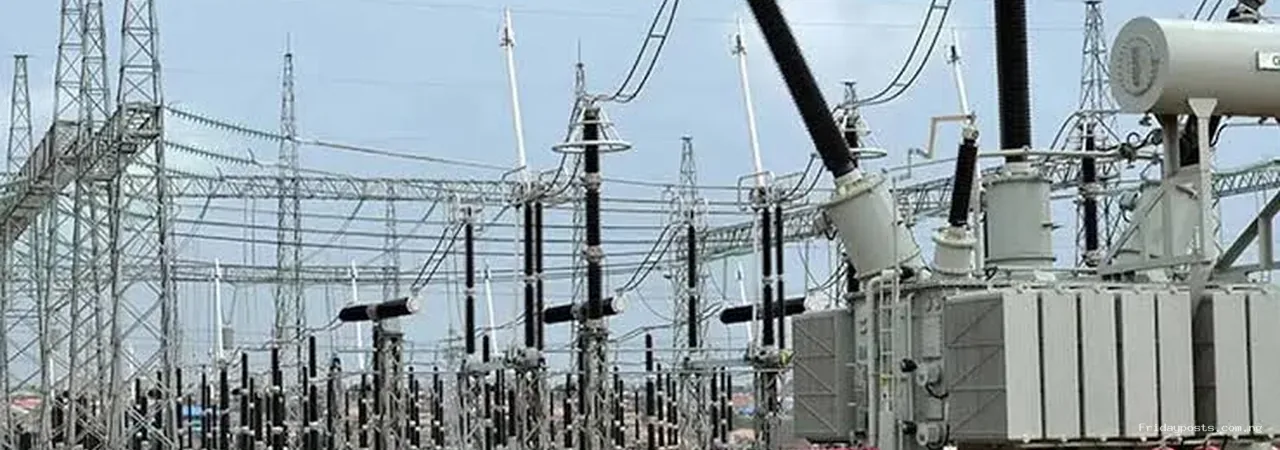
Lagos may be Nigeria's commercial capital, but millions of its homes and businesses still operate as miniature private power companies.
On 5 November 2026, Lagos State Commissioner for Energy and Mineral Resources Biodun Ogunleye highlighted the state's dependence on fossil-fuel generators.
Citing a 2024 study conducted with Sustainable Energy for All, he said approximately 4.5 million generators operate across Lagos.
He also said the national grid meets only about 20 per cent of the state's electricity demand.
The study estimated generator use produces about 39 million tonnes of carbon dioxide-equivalent emissions annually.
The 4.5 million figure should be understood correctly.
It comes from a 2024 study.
It is not a fresh physical count conducted across Lagos in November 2026.
Even with that caution, the estimate captures a basic truth about the city's economy.
Businesses and households spend enormous amounts privately to compensate for unreliable public electricity.
A generator is a private infrastructure tax
When a business buys a generator, fuel, oil, batteries and maintenance, it is purchasing electricity infrastructure that would normally be supplied through a reliable grid.
The expense is private.
The economic consequence is public.
Higher production costs.
Higher prices.
Lower profit.
Reduced competitiveness.
Noise.
Air pollution.
Carbon emissions.
Generator dependence is therefore more than an energy story.
It is an economic-development problem.
Four and a half million generators implies extraordinary capital duplication
Imagine the combined purchase cost of millions of generators.
Even if many are small household units, the total capital tied up is enormous.
Now add replacement cycles.
Engines wear out.
Batteries fail.
Businesses upgrade capacity.
This is money that could otherwise finance equipment, housing, education or business expansion.
Fuel is the recurring burden
The purchase price is only the beginning.
Petrol and diesel create the larger recurring cost for many users.
Fuel prices have changed sharply in recent years.
Every increase feeds directly into the cost of self-generated electricity.
For small businesses, energy can become one of the largest operating expenses.
Generator electricity is usually more expensive than grid electricity
A small petrol generator is inefficient.
The cost per kilowatt-hour can be several times higher than regulated grid tariffs, depending on fuel price, load and maintenance.
Large diesel generators can be more efficient than small units, but they still impose substantial cost.
This is why reliable grid power can be economically transformative even when tariffs rise.
Consumers compare the grid not with free electricity but with the alternative cost of self-generation.
The 20 per cent grid figure explains the structural gap
If the national grid supplies only around one-fifth of Lagos demand, the remaining energy need must be met somehow.
Generators.
Solar.
Embedded generation.
Industrial captive power.
Other distributed systems.
The state cannot solve its electricity problem by waiting for national generation alone.
It needs multiple supply channels.
Lagos's economy makes reliability especially valuable
Lagos concentrates finance, manufacturing, technology, logistics, retail, healthcare and services.
Power interruptions therefore have outsized national effects.
A factory loses production.
A data centre switches to backup.
A restaurant runs a generator.
A shop raises prices.
A household spends more on fuel.
Electricity unreliability becomes embedded across the economy.
The environmental cost is also large
Millions of generators emit carbon dioxide and local air pollutants.
They also create noise.
People operate them close to homes and shops.
Poor ventilation can create deadly carbon-monoxide risk.
The environmental argument for cleaner electricity is therefore immediate, not abstract.
State electricity reform creates a new opportunity
Nigeria's evolving electricity framework gives states more room to organise intrastate electricity markets.
Lagos can use this to support embedded generation, mini-grids, private distribution networks and dedicated industrial supply.
The challenge is coordination.
A state market still interacts with national transmission and existing distribution infrastructure.
Rules must be clear.
Embedded generation can reduce dependence on the national grid
Embedded plants generate electricity closer to consumers.
They can serve defined areas or feed distribution networks.
Shorter distances can reduce transmission constraints.
Gas-fired embedded plants may suit some industrial corridors.
Solar and storage may suit others.
The right mix depends on demand and economics.
Dedicated power can support industrial clusters
Manufacturers need reliable electricity more than they need artificially low tariffs.
A factory can plan around a known cost.
It struggles with unpredictable outages.
Dedicated power systems for industrial areas can reduce generator use and support investment.
The state should measure how many businesses move away from self-generation after new projects begin.
Solar adoption is already part of the response
Falling solar costs and high fuel prices have encouraged more homes and businesses to install solar systems.
Solar does not solve every load profile.
Batteries add cost.
Large industrial users need more complex systems.
But distributed solar can reduce generator runtime substantially.
Policy should support safe, quality installations rather than low-quality equipment markets.
Financing is a major barrier to cleaner alternatives
A generator is relatively cheap to buy even if expensive to run.
A solar-battery system often has a higher upfront cost but lower recurring fuel expense.
This financing mismatch keeps people on generators.
Long-term consumer and business financing could accelerate transition.
Pay-as-you-go models may also help.
Generator dependence hurts small businesses most
Large companies can negotiate bulk diesel, invest in efficient generators and hire engineers.
A small tailor, salon or shop cannot.
The same outage therefore creates a larger relative burden for the small business.
This reduces entrepreneurship and employment.
Energy reform should be judged partly by whether it lowers the cost of operating a small enterprise.
The informal economy hides much of the true cost
Many generator expenses never appear in formal statistics.
Small traders buy petrol daily.
Mechanics repair engines for cash.
Households purchase oil and spare parts.
The generator economy is larger than official utility accounts suggest.
FridayPosts believes Nigeria needs a national generator-economy study.
A Nigeria Generator Economy Report would be valuable
Start with Lagos.
Then Abuja.
Port Harcourt.
Kano.
Aba.
Onitsha.
Ibadan.
Estimate generator ownership.
Average capacity.
Fuel use.
Annual operating cost.
Maintenance.
Emissions.
Business impact.
This would quantify one of Nigeria's most important hidden infrastructure taxes.
Electricity reform should track generator displacement
A new power project should not be judged only by megawatts installed.
How many generator hours did it eliminate?
How much diesel was displaced?
How much did business operating cost fall?
Did local air quality improve?
Did households save money?
These are outcome measures.
Distribution quality remains part of the problem
Even if more electricity becomes available, local networks must carry it.
Transformers.
Feeders.
Meters.
Protection systems.
Maintenance.
If distribution infrastructure is weak, new generation does not become reliable household power.
Lagos's reform has to address the whole chain.
Metering is essential to commercial sustainability
Investors will not build power systems indefinitely without reliable revenue.
Accurate metering creates a fairer relationship.
Customers pay for actual consumption.
Utilities reduce estimated billing disputes.
Better collection supports investment.
The state should treat metering as core infrastructure.
Tariffs will remain politically sensitive
Reliable electricity may cost more than historical subsidised tariffs.
Consumers understandably resist higher bills when service is poor.
The solution is not permanently cheap, unreliable electricity.
It is transparent pricing connected to better service and targeted protection for vulnerable consumers.
Lagos needs a public electricity dashboard
The state should publish demand estimates.
Grid supply.
Embedded generation.
Renewable capacity.
Average service hours by area.
Generator displacement estimates.
Major projects.
This would make electricity reform measurable.
The city should also tackle generator safety
Millions of machines create safety risks.
Carbon-monoxide poisoning.
Fuel storage.
Fire.
Noise.
Improper wiring.
As Lagos moves towards cleaner power, it should also strengthen public education and enforcement around generator use.
A just transition matters for generator-related businesses
The generator economy supports jobs.
Mechanics.
Spare-parts sellers.
Fuel retailers.
Technicians.
As cleaner electricity expands, some of these jobs will change.
Training can help workers move into solar, battery, inverter and electrical maintenance.
Energy transition should create new technical opportunities.
The 4.5 million figure should trigger a cost calculation
The exact generator count may change over time.
The stronger question is how much Lagos households and businesses spend because reliable grid electricity is insufficient.
If the annual figure is hundreds of billions or trillions of naira, electricity reform should be viewed as an economic competitiveness programme.
Lagos cannot become globally competitive while self-generating at this scale
Modern cities depend on reliable electricity.
Factories, digital services, transport systems and homes all need it.
Generators are useful backup infrastructure.
They should not be the primary design of an urban electricity system.
The state's reported dependence shows how far the gap remains.
Businesses need energy data they can use for investment decisions
A company deciding where to locate a factory or office needs more than a general promise that power is improving.
It needs feeder-level reliability, expected supply hours, tariff information and the availability of embedded or dedicated power options.
Lagos can improve competitiveness by publishing clearer electricity-performance data for major commercial and industrial corridors.
This would allow investors to compare the real cost of grid supply, backup generation and cleaner alternatives before committing capital.
Better information would also make it easier to identify where new substations, feeders or embedded plants would produce the greatest economic return.
The measure of reform is the generator that no longer needs to run
Lagos can announce embedded generation projects, new regulations and private investment.
The public will judge the outcome more simply.
Does the light stay on?
Does the business reduce diesel use?
Does the household spend less on petrol?
Does the air become cleaner?
The 4.5 million generator estimate gives Lagos a baseline problem.
The next phase should be measured by how quickly that dependence falls.










Reader conversation
0 approved comments