
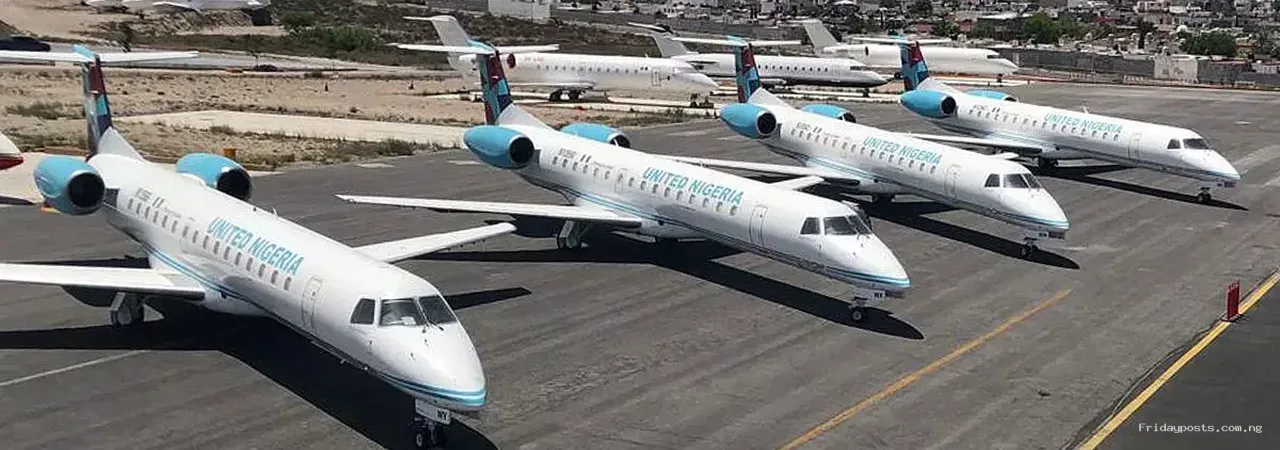
Nigeria's December travel season is becoming a major household-budget problem.
A new investigation into domestic airline booking prices shows that selected economy fares for travel around 20-21 December 2026 were listed between roughly N196,000 and N337,500 on some routes.
PUNCH compared selected earlier-November fares with December travel dates and found sharp increases.
Lagos to Asaba on Aero Contractors moved from about N106,286 to N327,940 in the comparison.
Lagos to Asaba on Air Peace moved from about N118,400 to N337,500.
Abuja to Enugu on Air Peace moved from about N116,400 to N335,500.
Lagos to Benin on United Nigeria moved from about N120,000 to N310,500.
These are selected routes, airlines and dates.
They do not prove that all Nigerian domestic airfares have increased by the same percentage.
Airline prices can also change quickly as seats are sold.
The broader trend, however, is familiar to Nigerian travellers.
December travel becomes expensive because millions of people want to move at roughly the same time while airline capacity remains limited.
Christmas demand is unusually concentrated
Nigeria's festive travel pattern is not evenly distributed across the month.
People want to leave major cities before Christmas.
Many return shortly after New Year.
This creates intense demand on particular dates.
Airlines know that seats on those dates will sell quickly.
Prices rise as cheaper fare buckets disappear.
This is normal airline revenue management.
Dynamic pricing is not automatically price gouging
Airlines typically sell seats at different price levels.
The first group may be cheaper.
Later seats cost more as the flight fills.
A passenger buying early may pay far less than someone buying the same flight days later.
The system is designed to maximise revenue while filling the aircraft.
A high December fare does not by itself prove unlawful conduct.
But consumers still deserve transparency
Dynamic pricing can feel arbitrary when passengers do not understand what is happening.
Airlines should display the full fare clearly.
Base fare.
Taxes.
Fees.
Baggage charges.
Change conditions.
Refund rules.
A traveller should know the real cost before payment.
Limited aircraft capacity makes peak-season pressure worse
Nigeria's domestic aviation market has finite aircraft.
Some airlines operate small fleets.
Maintenance can remove aircraft temporarily.
Foreign-exchange constraints can make spare parts expensive.
Aircraft leasing is costly.
When capacity does not expand as quickly as Christmas demand, prices rise sharply.
Aviation fuel remains a major operating cost
Jet fuel is one of the largest airline expenses.
Its price reflects international energy markets, domestic supply conditions, logistics and exchange rates.
When fuel becomes expensive, airlines have less room to absorb peak demand without raising fares.
Fuel is not the only cause of December pricing, but it shapes the cost base.
Foreign exchange affects maintenance and leasing
Aircraft are capital-intensive assets.
Many leases, spare parts, insurance and maintenance services are priced in foreign currency.
A weaker naira raises the local-currency cost.
Airlines must recover those expenses through fares and other revenue.
This is why aviation pricing is connected to macroeconomic stability.
Airport and regulatory charges also enter the ticket price
Airlines pay multiple charges related to airports, navigation, regulation and passenger services.
Some are passed directly to passengers.
Others are embedded in airline operating costs.
The industry has repeatedly argued that high taxes and charges make Nigerian aviation expensive.
Government should publish a clear breakdown of mandatory charges to improve debate.
Peak-season travellers are less price sensitive
A person travelling for an ordinary weekend may postpone the trip when the fare is high.
A person trying to attend Christmas with family may travel anyway.
Airlines understand this.
Demand becomes less sensitive to price during culturally important periods.
That creates room for higher fares.
Competition should still limit excessive pricing where enough airlines serve the route.
Some routes have weaker competition
Lagos-Abuja is served by several airlines.
Smaller regional routes may have fewer options.
When one or two airlines dominate a route, consumers have less ability to switch.
This can amplify peak-season prices.
A healthy aviation market needs reliable competition across more cities.
A high fare does not guarantee a high profit
Consumers often assume an expensive ticket means airlines are making extraordinary profits.
That may not be true.
Aircraft utilisation, fuel, maintenance, leasing and airport charges can consume large amounts of revenue.
Flights can also be disrupted by weather or operational problems.
The right policy question is whether pricing is competitive and transparent, not whether a ticket simply feels expensive.
Passengers should understand cancellation and delay rights
Peak travel creates operational pressure.
Flights can be delayed or rescheduled.
Passengers should know what the airline owes them under Nigerian consumer and aviation rules.
Airlines should communicate changes promptly.
Refund and rebooking procedures should be clear.
The regulator should make passenger rights easy to find.
Booking early is still the strongest practical strategy
The most predictable way to reduce Christmas airfare is to book before the high-demand fare buckets disappear.
This is not always possible.
Work schedules change.
School calendars vary.
Family plans can be uncertain.
But where travel dates are known, early booking is usually cheaper.
Flexible travel dates can make a large difference
A traveller who can move on 18 December instead of 21 December may find a lower fare.
Likewise, returning after the first rush can help.
Consumers should compare adjacent dates before paying.
The cheapest ticket is often not on the most convenient day.
Compare airports where practical
Some travellers can use nearby airports.
A person heading to parts of the South-East may compare Enugu, Owerri and Asaba depending on final destination.
The airfare difference must be weighed against road transport cost and security.
A cheaper flight is not a saving if the onward journey becomes expensive or unsafe.
Alternative transport has become part of the calculation
High airfares push travellers towards road transport.
Buses are usually cheaper.
They also take longer and may involve different safety considerations.
Rail can be an option on limited corridors.
A rational travel decision compares total cost, time, reliability and risk.
Families should calculate the total trip, not one ticket
A household of four can face more than N1 million in airfares on some routes at peak prices.
Then add airport transport.
Baggage.
Local transport at destination.
Food during travel.
The Christmas trip can become one of the family's largest annual discretionary expenses.
Planning should begin with the household total.
Airlines should publish clearer fare calendars
A simple fare-calendar interface can help consumers see cheaper dates.
Some booking systems already do this.
Wider adoption would improve transparency and reduce frustration.
Passengers understand dynamic pricing better when they can see the pattern.
Regulators should monitor capacity and competition, not dictate arbitrary prices
Government price controls could create unintended consequences.
If airlines cannot recover costs, they may reduce flights.
That would worsen scarcity.
The better regulatory approach is to monitor competition, prevent collusion, enforce disclosure and improve market capacity.
Price coordination would be a different issue
If airlines colluded to set fares, that would raise serious competition concerns.
The current fare comparisons do not establish such conduct.
High prices can emerge naturally from demand and capacity constraints.
Accusations of collusion require evidence.
Nigeria needs more reliable domestic capacity
More aircraft and stronger airlines can reduce scarcity.
But aviation investment requires a stable policy environment.
Access to foreign exchange.
Predictable taxes.
Efficient airports.
Maintenance capability.
Safety oversight.
The long-term solution to expensive peak travel is more efficient supply.
Government can improve the airport side of the experience
Passengers paying high fares become even more frustrated by poor terminals, delays and baggage problems.
Airport services should improve alongside airline pricing.
A premium fare should not lead to a low-quality travel experience.
FridayPosts' ten practical ways to reduce Christmas travel cost
Book as early as possible.
Compare multiple airlines.
Check adjacent travel dates.
Compare nearby airports where safe and practical.
Travel with only necessary baggage.
Check fare rules before choosing the cheapest ticket.
Consider road or rail for suitable routes.
Avoid last-minute changes.
Use official airline channels to avoid agent markups and fraud.
Calculate the full family travel budget before committing.
These steps cannot eliminate peak pricing, but they can reduce its impact.
Airlines should plan peak-season capacity earlier
December demand is predictable.
That means airlines, airports and regulators can prepare for it months in advance.
Carriers can review schedules, maintenance plans and aircraft availability so that avoidable capacity shortages do not deepen the price spike.
Airports can prepare ground handling and passenger processing for heavier traffic.
The regulator can monitor cancellations and schedule reliability more closely during the peak period.
The objective is not to manufacture cheap seats by decree.
It is to make sure that predictable seasonal demand is met with the highest safe and commercially realistic capacity available.
More reliable capacity can also reduce the temptation for passengers to make unsafe last-minute road journeys after flight prices become unaffordable.
The December airfare story is ultimately about scarcity
Millions of Nigerians want to move at the same time.
Airline capacity is limited.
Aircraft and fuel are expensive.
Some routes have weak competition.
The result is a sharp price increase for the seats that remain.
The fairest response is not to pretend every high fare is illegal.
It is to improve competition, capacity and transparency while helping passengers understand how to plan.
Christmas travel will probably remain expensive on peak dates.
The policy goal should be to make the market more predictable and the consumer better protected.








Reader conversation
0 approved comments