
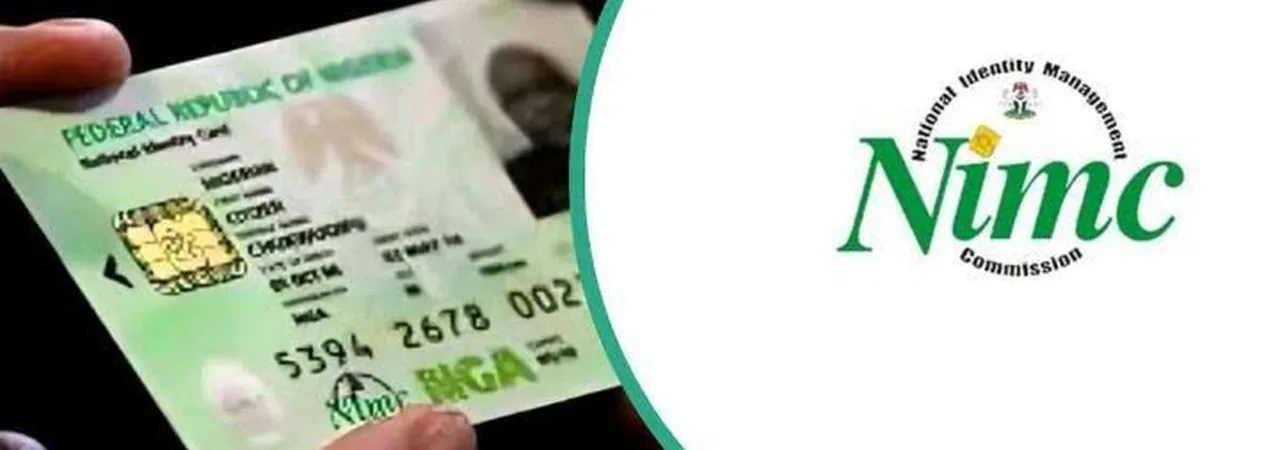
Nigeria's national digital identity programme has become one of the clearest examples of the difference between funding a public technology project and actually delivering it at population scale.
A World Bank restructuring paper dated 22 October 2026 shows that the Federal Government has requested another 12-month extension for the Digital Identification for Development Project.
The programme has total financing of approximately $430 million.
According to the document, around $234 million had been disbursed, leaving roughly $196 million undisbursed.
By 30 September 2026, approximately 121 million people had received National Identification Numbers.
That leaves the programme about 59 million short of its 180 million target.
The proposed extension would move the closing date from 31 December 2026 to 31 December 2027.
It would be the project's third extension since approval in 2020.
The reporting reviewed for this article shows that the extension has been requested. It does not establish that the World Bank has finally approved the new closing date.
The central question is therefore not only why money remains unused.
It is why a nationally important identity programme continues to struggle with implementation despite substantial financing.
Digital identity is basic infrastructure now
A national identity number is no longer only an administrative record.
It is connected to banking, telecommunications, public services, pensions, taxation, social programmes and digital transactions.
As government digitises more services, people without reliable identity credentials can become excluded.
This makes NIN enrolment a form of public infrastructure.
The target is ambitious but important
A target of 180 million NINs implies near-universal coverage of eligible residents at very large scale.
Nigeria's population and geography make this difficult.
Cities have high demand.
Rural communities can be far from enrolment centres.
People may lack documents.
Biometric equipment can fail.
Connectivity can be poor.
But the scale of difficulty is precisely why the project received substantial international financing.
Undisbursed funds do not automatically mean unused cash sitting in an account
World Bank project finance is often disbursed against approved activities, milestones and expenditure.
An undisbursed balance means financing remains available under the project but has not yet been drawn down for eligible implementation.
The reason may be procurement delays, unmet conditions, slow implementation or a change in project sequencing.
The public needs a breakdown.
How much financing is committed to contracts?
How much remains unallocated?
Which activities are delayed?
Which components are performing well?
Technology upgrades appear to be part of the delay
The restructuring paper reportedly identifies delays involving technology upgrades and enrolment systems.
A national identity platform has several technical layers.
Biometric capture.
Deduplication.
Database infrastructure.
Connectivity.
Security.
Credential generation.
Verification services.
Integration with partners.
If one part is weak, the entire enrolment chain can slow.
Registration partners matter because government cannot enrol everyone alone
Nigeria has used public and private registration partners to extend enrolment capacity.
This makes sense operationally.
Banks, telecom operators and accredited centres can reach people more quickly than a single federal agency.
But partner management creates challenges.
Payment delays.
Quality control.
Equipment standards.
Fraud risk.
Data security.
Uneven geographic coverage.
The World Bank document's reference to payments to registration partners deserves particular attention.
Citizens often experience the programme through friction
The national policy goal may be universal identity.
The citizen experiences a queue.
A broken device.
A centre that has closed.
A request to return another day.
Unofficial fees.
A NIN that has been generated but needs correction.
A name mismatch at a bank.
Implementation should therefore be judged from the user's perspective.
Enrolment is not the same as successful identity issuance
The source brief correctly highlights the need to distinguish between people who have enrolled and people whose NINs have been successfully generated and validated.
A person can submit biometric data and still face a delay before receiving a usable number.
A project that counts enrolment attempts as completed identities can overstate progress.
Government should publish both metrics.
Rural access is a major equity issue
Urban residents often have several enrolment options.
Rural citizens may travel long distances.
Transport cost can exceed the formal cost of the service.
Where centres are unreliable, people may make repeated journeys.
This can turn a nominally free public service into an expensive one.
The project should therefore publish geographic coverage data.
Unofficial charges undermine trust
Citizens frequently complain about unofficial fees around public administrative services.
A national identity system should minimise this risk.
Official pricing for corrections or premium services should be clear.
Core enrolment rules should be public.
Complaint channels should work.
Registration partners should face consequences for extortion.
Identity quality is more important than raw numbers
A rushed programme can hit a numerical target while creating a weak database.
Duplicate identities.
Poor biometrics.
Incorrect demographic details.
Unverified records.
These problems create downstream costs for banks, government programmes and security agencies.
The 180 million target matters, but data quality should not be sacrificed to reach it.
Cybersecurity has to be treated as critical infrastructure protection
A national identity database is extremely sensitive.
Biometric data cannot be changed like a password.
The platform therefore requires strong access control, encryption, monitoring and incident response.
Every registration partner creates another endpoint that must be secured.
Project delays caused by stronger security work may be frustrating but can be justified.
What matters is transparent explanation and competent implementation.
The project needs a public accountability tracker
FridayPosts recommends a Nigeria Digital Identity Project Accountability Tracker.
Total project financing.
Amount disbursed.
Amount undisbursed.
NIN target.
NINs issued.
Number of active enrolment centres.
Rural coverage.
Technology milestones.
Partner payments.
Project closing date.
Major procurement contracts.
This would make a complex programme understandable.
Another extension should come with stronger conditions
If the World Bank approves a new closing date to 31 December 2027, government gains time.
Time alone does not solve implementation problems.
The extension should be tied to a recovery plan.
Quarterly enrolment targets.
Technology milestones.
Partner-payment timelines.
Rural deployment targets.
Data-quality indicators.
Public reporting.
A third extension without stronger execution discipline would weaken confidence.
The identity programme affects financial inclusion
Banks increasingly rely on NIN-linked identity verification.
People without functioning identity records can struggle to open or maintain accounts.
Digital lenders and fintechs also depend on identity data.
A stronger identity system can reduce fraud and make customer verification easier.
That means project delays can affect private-sector growth.
Social programmes also depend on reliable identity
Government needs to know whether a beneficiary is a real person and whether one person is receiving multiple benefits improperly.
A strong digital identity layer can improve targeting.
But it can also exclude legitimate people if records are wrong.
Identity systems should therefore include correction and grievance mechanisms.
Name and date-of-birth corrections remain practical pain points
Many Nigerians discover identity inconsistencies only when another institution rejects a record.
Spelling differences.
Order of names.
Date-of-birth errors.
These can block banking, travel or official processes.
The identity project should invest in efficient correction services, not only new enrolment.
Interoperability is one of the biggest long-term benefits
A national identity system becomes more valuable when authorised institutions can verify identity securely without creating separate databases.
This can reduce duplication across government.
But interoperability needs standards and privacy safeguards.
Agencies should access only what they need.
Every verification should be logged.
The financing gap needs a component-by-component explanation
The $196 million undisbursed balance is attention-grabbing.
The useful question is where it sits.
Technology procurement?
Registration-partner payments?
Infrastructure?
Consulting?
Public communication?
Data-centre upgrades?
The World Bank and government should publish component-level implementation data in accessible form.
Nigeria should measure cost per successful NIN
One useful performance indicator would be cost per successfully issued and validated identity.
This should include project-financed expenditure and major domestic implementation costs where available.
The measure would not capture every benefit.
It would help compare implementation efficiency over time.
Project governance matters as much as technology
Large digital projects often fail because responsibility is fragmented.
One agency manages technology.
Another manages enrolment partners.
Another controls procurement.
Another handles payments.
If decision-making is slow, the technology cannot compensate.
Government should identify a single accountable delivery structure.
Citizens should know what the extension would deliver
If government receives another year, what will be different by December 2027?
Will 180 million NINs be reached?
Will rural coverage improve?
Will verification become faster?
Will correction services improve?
Will partner arrears be cleared?
Will the platform be upgraded?
An extension should come with a public promise of outcomes.
The programme is not a failure simply because the target is missed
About 121 million NINs is a significant national identity base.
The project has clearly delivered substantial enrolment.
The problem is that it remains far from its target and behind its planned timeline.
That calls for accountability, not simplistic dismissal.
What FridayPosts would track next
Whether the extension is approved.
Quarterly NIN issuance.
Disbursement of the remaining $196 million.
Technology upgrades.
Registration-partner payments.
Rural enrolment access.
Identity correction performance.
These indicators will show whether the extra time produces acceleration.
Nigeria needs the identity system to work, not merely to exist
The Digital Identification for Development Project is ultimately not about a World Bank closing date.
It is about whether a Nigerian can prove identity reliably when opening a bank account, accessing a public service or completing a digital transaction.
The 59 million gap to the target and the $196 million undisbursed balance show that the project is unfinished.
Another extension may be reasonable if it is accompanied by a credible execution plan.
What the country cannot afford is another year in which the timetable moves but the user experience remains the same.
Sources and further reading
- World Bank: October 2026 restructuring paper
- PUNCH, 5 November 2026: $196 million remains undisbursed









Reader conversation
0 approved comments