
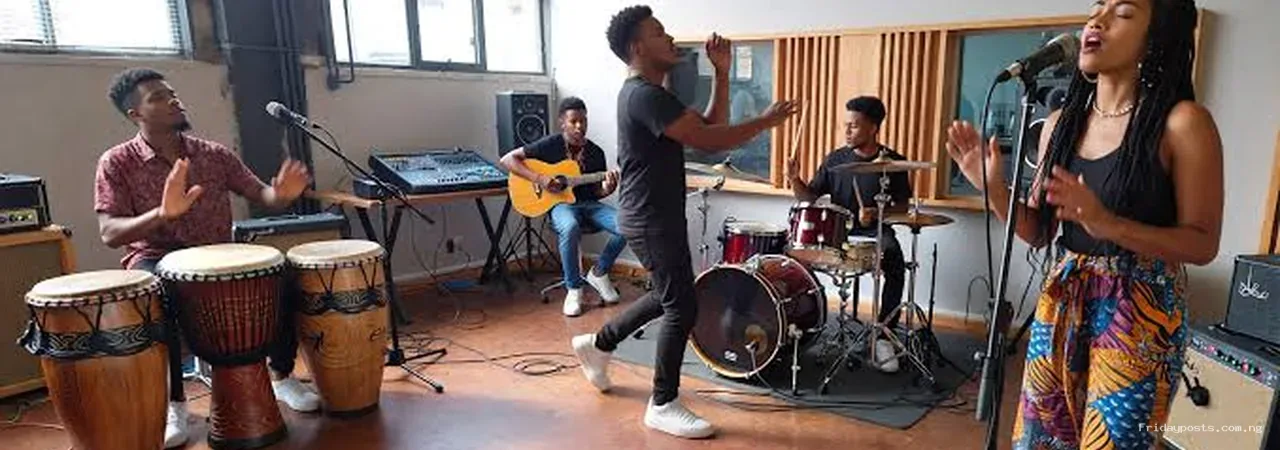
Nigeria already exports culture at a scale that would have sounded improbable twenty years ago. Afrobeats travels through playlists, arenas and social media. Nollywood films reach homes far beyond West Africa. Nigerian designers appear on global red carpets. Online creators build audiences in dozens of countries. Game developers and animators are beginning to find international markets.
The country therefore does not have a creativity problem.
Its bigger challenge is economic conversion: how much of the global attention around Nigerian culture becomes export revenue, intellectual-property income, profitable companies, formal employment, investment and taxes that stay connected to Nigeria?
That question has become more timely as Lagos prepares to host CANEX Weekend 2026 in November, bringing creators, financiers, policymakers and international buyers together across music, film, fashion, literature, design, gastronomy and other creative sectors.
It is tempting to describe the creative economy as Nigeria’s “next oil”. That phrase is catchy but imprecise. Oil is a commodity extracted from the ground. Creativity is generated by people, networks, intellectual property and repeated innovation. Its value grows when the country builds systems that help ideas become exportable products.
The starting advantage is cultural demand
Many countries spend heavily trying to create global cultural recognition. Nigeria already has it.
Afrobeats artists routinely attract listeners across Europe, North America, Africa and the diaspora. Nigerian films have become familiar on global streaming platforms. Fashion, comedy, food and digital slang travel through social media even when there is no formal export strategy behind them.
This attention has economic value because culture reduces distance. A consumer who already knows Nigerian music or films is more likely to recognise Nigerian brands, visit the country, attend a concert, buy fashion, subscribe to content or explore other Nigerian products.
But attention is not the same thing as income.
A song may be heard millions of times while the rights owner earns little. A film may trend globally while the producer struggles to recover production costs. A fashion design may influence international style without the Nigerian designer owning scalable production and distribution.
The first policy lesson is therefore simple: Nigeria should measure the creative economy not only by popularity but by value captured.
Exports begin with intellectual property
The central asset in a creative industry is often not a building or machine. It is a right.
A songwriter owns rights in music. A filmmaker owns rights in a story and audiovisual work. A designer owns creative designs and brands. A game studio owns software, characters and visual assets. A publisher owns rights in books. These rights can generate income repeatedly through licensing, streaming, performance, broadcasting, merchandising, adaptation and international distribution.
This is why copyright administration matters so much.
Where rights are poorly documented, creators struggle to prove ownership. Where royalty systems are weak, usage can occur without payment. Where contracts are poorly understood, artists may surrender valuable future income for immediate cash.
Nigeria’s creative-export strategy therefore needs stronger rights education, modern collection systems, transparent royalty accounting, efficient courts and accessible legal support for small creators.
A creative economy becomes an export industry when intellectual property behaves like an asset rather than a vague idea.
Music shows both the opportunity and the leakage
Nigerian music is perhaps the clearest example of global demand.
Streaming has removed many of the old distribution barriers. An artist in Lagos can release a song worldwide on the same day. Social media can push a track into markets the artist has never visited. International collaborations can move rapidly from online contact to commercial release.
The difficulty is that much of the infrastructure that monetises that demand may sit elsewhere: streaming platforms, publishing administrators, distribution companies, labels, ticketing systems and advertising networks.
That is not inherently bad. Global partnerships are normal. The question is how much Nigerian ownership remains in the value chain.
More Nigerian companies need to specialise in music publishing, rights administration, tour production, data analytics, artist management, sync licensing and catalogue finance. Successful artists should be able to build businesses around their catalogues instead of treating every song as a one-time release.
The export is not merely the sound. It is the rights and services around the sound.
Nollywood needs more capital that understands film economics
Nollywood proved long ago that Nigeria can produce stories at extraordinary scale.
The next stage is not simply making more films. It is making a larger share of films that can support professional wages, recover investment, travel internationally and create reusable intellectual property.
Film finance is difficult because the investor pays before knowing whether the audience will respond. This is one reason many Nigerian productions are financed through personal networks, brand sponsorship or platform commissions.
A stronger industry needs specialised funds, completion bonds, insurance, transparent box-office reporting, better distribution contracts and data that helps investors understand what genres, languages and release models work.
The Nigerian Investment Promotion Commission identifies film production and distribution as a major creative-economy investment area, while Afreximbank’s CANEX programme has also pushed finance towards African film and creative businesses.
The objective should be to move Nollywood from prolific production towards deeper companies with libraries, franchises, export rights and durable balance sheets.
Fashion needs manufacturing behind the design
Nigerian fashion is internationally visible, but design prestige does not automatically create a large export industry.
A designer may receive global attention and still struggle to manufacture one thousand identical pieces on schedule. Fabric may be imported. Quality can vary. Logistics are expensive. Export documentation may be slow. International returns and fulfilment can become difficult.
This is where fashion becomes an industrial-policy issue.
Nigeria needs production clusters with reliable electricity, modern equipment, skilled pattern makers, textile processing, quality assurance, packaging and export logistics. Designers should be able to move from bespoke work to scalable collections without losing quality.
There is also an opportunity in traditional textiles and techniques, but cultural heritage should not become a substitute for commercial discipline. Export customers expect consistent sizing, delivery, labelling and customer service.
The country can have world-class design and still lose the manufacturing value to another country. The goal is to keep more of that chain at home.
Gaming may be the least understood opportunity
Gaming is already a global industry worth hundreds of billions of dollars. Nigeria’s share remains small, but its demographic profile gives it an unusual long-term opportunity.
The country has a young population, expanding smartphone access, creative storytelling traditions and a large base of software talent. Games can also travel internationally without the shipping costs that affect physical goods.
But gaming requires more than programmers.
Studios need artists, writers, sound designers, product managers, testers, community managers, marketing specialists and financing that can survive long development cycles.
Local payment friction and device affordability also shape the market. A game designed only for expensive consoles will miss much of the Nigerian audience, while a mobile-first product may reach millions.
Nigerian studios should not be expected to compete immediately with the world’s largest publishers. They can begin with culturally distinctive mobile games, outsourced production work, animation, educational products and regional intellectual property.
The creator economy is an export sector too
Traditional policy categories often separate film, music and advertising. Digital creators cut across all three.
A Nigerian YouTuber, podcaster, comedian or educator can earn from advertising, subscriptions, sponsorships, affiliate sales, digital products, live events and licensing. The audience may be largely outside Nigeria.
That is export income even when no container leaves a port.
Policy needs to recognise these digital service exports. Payment systems should make it easy for creators to receive foreign earnings. Tax rules should be clear. Platforms should have reliable local partnerships. Creators should understand contracts and business registration.
Most importantly, the country should not treat creators only as celebrities. Many are small media enterprises.
The difference between a successful individual and a sustainable company is often systems: staff, accounting, intellectual property, archives, sales processes and repeatable products.
A $100 billion target should be treated as a scenario, not a slogan
Large creative-economy numbers are frequently quoted in policy speeches. They can inspire ambition, but they can also become meaningless if no one explains what is being measured.
A $100 billion Nigerian creative economy could refer to domestic industry value, revenue, exports or a combination of subsectors. Those are not the same thing.
If Nigeria wants a serious target, it should publish a baseline first.
How much do film, music, fashion, gaming, publishing, live entertainment, advertising, visual arts and digital creators currently contribute? How much is domestic consumption? How much is foreign exchange earned? How many formal jobs exist? How much intellectual-property income is received from abroad?
Only after answering those questions can government set a credible export target.
Ambition should be measurable.
The missing infrastructure is not only physical
Creative businesses certainly need electricity, internet, studios, venues and transport.
But they also need invisible infrastructure.
They need contract templates, copyright databases, market research, talent agencies, financing institutions, accountants who understand royalties, lawyers who understand licensing, insurers who understand productions and export advisers who understand international markets.
Countries with mature creative industries have layers of specialised services around the visible star.
Nigeria’s opportunity is therefore larger than producing more famous musicians or actors. It can build the businesses that serve them.
That service layer creates professional jobs that are less visible but economically important.
Education has to catch up with the industry
Many Nigerian creatives learn by doing because formal education has not always kept pace with industry practice.
Universities and technical institutions should offer stronger programmes in film production, sound engineering, animation, game development, fashion technology, arts management, copyright, entertainment law and creative entrepreneurship.
Short professional programmes may be even more useful for some skills.
The objective should not be to turn creativity into bureaucracy. It is to give talented people business and technical competence.
A gifted filmmaker who cannot budget a production or negotiate a distribution contract is economically vulnerable. A gifted musician who does not understand publishing rights can lose years of income.
Education should protect talent from preventable mistakes.
Cities will compete for creative investment
Lagos dominates Nigeria’s commercial creative industries, but it does not need to dominate everything.
Enugu has film history. Abuja has corporate and institutional demand. Kano has major language markets. Port Harcourt, Benin City, Ibadan and other urban centres have distinct cultural ecosystems.
States can compete by simplifying permits, supporting venues, improving safety, creating production zones and investing in broadband and power.
This is one area where state-level economic development can move faster than national policy.
A governor does not need to create a record label. Government’s better role is to make the city an easier place for private creative businesses to work.
Export growth depends on African markets as much as Western markets
Nigerian creative ambition often looks towards London, New York, Paris or Los Angeles.
Those markets matter, but Africa is a large opportunity in its own right.
Music, film, fashion and digital products can move across a continent with a young population and growing digital access. AfCFTA can reduce some trade barriers, but cultural exports also need payment systems, distribution, touring networks and rights enforcement.
Nigeria already enjoys strong cultural recognition in many African countries. It should build commercial systems around that recognition.
The continental market can provide scale before a company competes globally.
Government should count foreign creative earnings separately
Nigeria has detailed conversations about oil exports because oil earnings affect the naira, reserves and government revenue.
Creative exports deserve better measurement for the same reason.
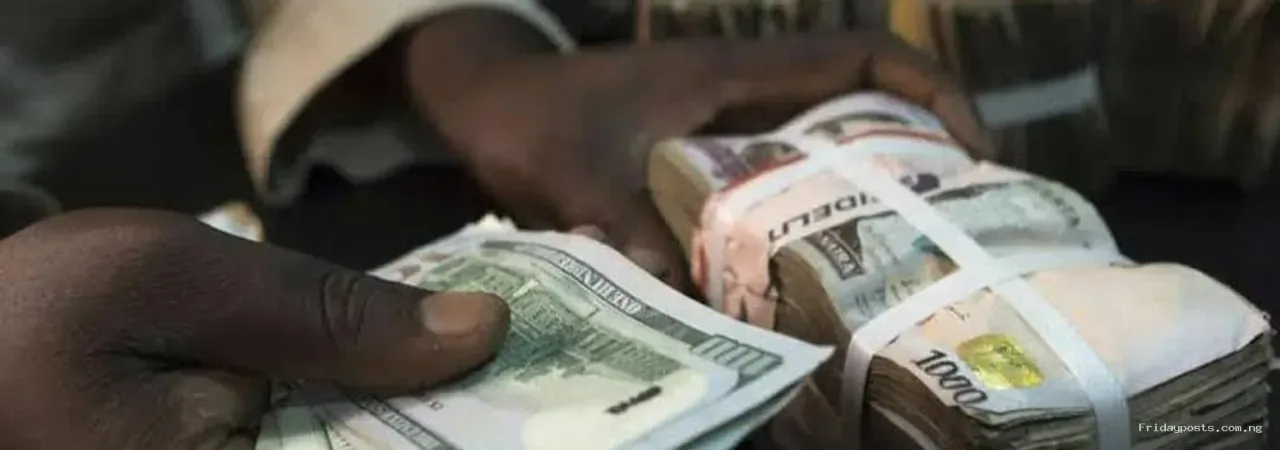
Foreign-exchange earnings from royalties, digital advertising, performance fees, film licensing, fashion sales, game downloads and publishing should be tracked as clearly as possible.
Better data would help investors understand the sector and help policymakers identify which interventions actually work.
It would also change the national imagination.
Creative work would be seen less as entertainment around the economy and more as part of the economy.
The goal should be companies that survive beyond individual fame
Nigeria has many creative stars.
It needs more creative institutions.
A strong export industry requires labels that survive changes in artists, studios that produce multiple franchises, fashion houses that outlive founders, game companies with portfolios and publishing businesses with valuable catalogues.
This is where governance, succession and professional management matter.
Fame can generate cash quickly. Institutions convert cash into durable value.
CANEX should be judged by deals, not attendance
CANEX Weekend 2026 can be useful because it brings capital and creators into the same space.
But conferences should be judged by what happens afterwards.
How many distribution agreements are signed? How much financing is committed? How many co-productions begin? How many Nigerian businesses enter new markets? How many rights deals are completed?
The creative economy does not need another celebration of potential. It needs transactions.
Nigeria’s culture is already global. The business system has to catch up
Nigeria does not need permission to become a creative power. In many cultural fields, it already is one.
The unfinished work is commercial.
Can artists own more of their rights? Can filmmakers attract patient capital? Can designers manufacture at scale? Can game studios build exportable products? Can creators receive international payments easily? Can Nigerian cities provide the infrastructure these businesses need?
If the answers improve, music, film, fashion, gaming and digital media can become a serious source of exports, jobs and foreign exchange.
The most valuable Nigerian resource in that future will not be buried under the ground. It will be carried in the imagination, skills and intellectual property of its people.
Sources and further reading
- Nigerian Investment Promotion Commission, Creative Economy sector profile: https://nipc.gov.ng/sectors/creative-economy
- CANEX Weekend 2026, Lagos: https://wknd.canex.africa/
- UNESCO, The African Film Industry: Trends, Challenges and Opportunities for Growth: https://www.unesco.org/reports/african-film-industry/en
- Nigerian Copyright Commission: https://copyright.gov.ng/







Reader conversation
0 approved comments