
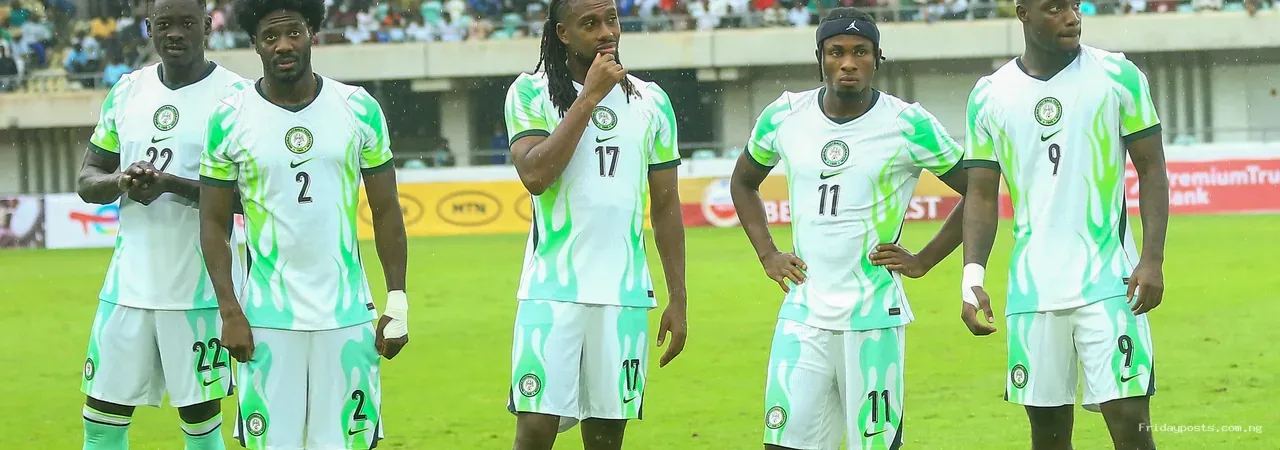
Nigeria can lose a football match. Every football nation does. Brazil loses. Argentina loses. Germany loses. A single result, even an embarrassing one, is not proof that an entire football system has failed.
But some defeats expose questions that were already waiting to be asked.
Guinea-Bissau’s 3-0 victory over Nigeria in the 2027 Africa Cup of Nations qualifying series on 29 September was one of those results. Nigeria had opened the campaign four days earlier with a 2-1 comeback win over Madagascar. Against Guinea-Bissau, the Super Eagles were not merely beaten. They conceded three goals without reply to a country with a much smaller population, player pool and football economy.
The correct response is not to insult players or search immediately for the next coach to sack. It is to ask a harder question: why does a country with Nigeria’s talent, passion, population and international football history continue to experience repeated cycles of promise, disappointment, emergency changes and reform announcements?
Nigeria’s football problem is not a shortage of footballers. It is the weakness of the system that is supposed to discover, develop, organise and continuously improve them.
One bad result should not become a national diagnosis
Football analysis becomes poor when emotion replaces evidence.
Guinea-Bissau deserved credit for the result. CAF described the victory as a major shock and noted that it gave Guinea-Bissau two wins from two in the qualifying group. Nigeria, meanwhile, had already shown some resilience in coming from behind to beat Madagascar in the opening fixture.
It would therefore be wrong to claim that the 3-0 defeat proves every aspect of Nigerian football is broken.
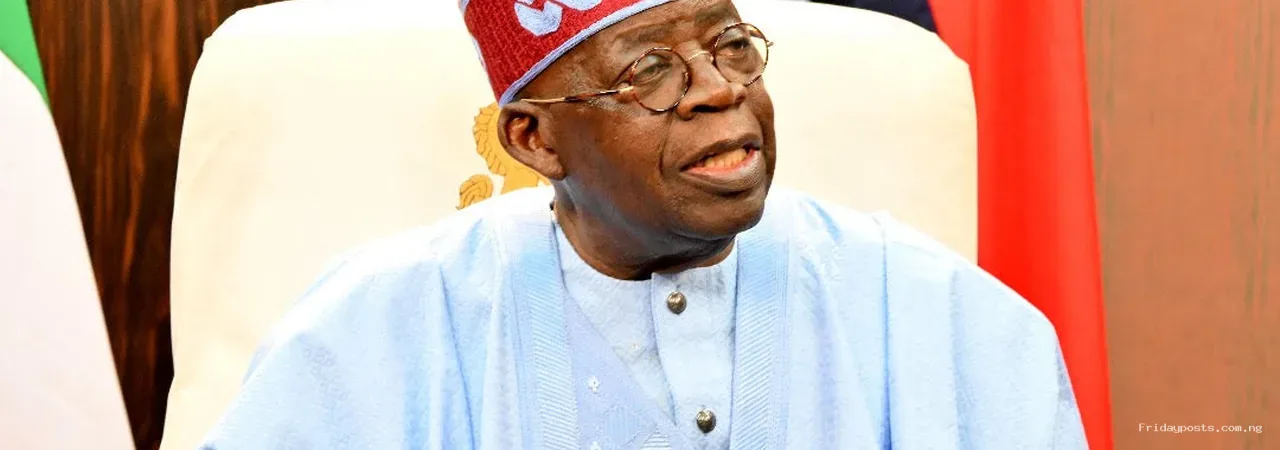
The more useful point is that the result arrived during an existing national debate about structural reform. In August 2026, the Nigeria Football Federation published a presidential directive calling for comprehensive reform in governance, administration, stakeholder representation, development pathways, domestic competitions and accountability. The NFF itself has acknowledged problems in youth development, coaching education and refereeing.
The defeat should therefore be treated as evidence to examine, not as the entire case.
Nigeria’s player talent is real, but talent is not a system
Nigeria has produced elite footballers for decades. Nigerians play professionally across Europe, Africa, Asia and North America. The country has won continental titles, Olympic football gold and youth tournaments. Its diaspora expands the potential player pool even further.
This can create a dangerous assumption: if the country keeps producing talented individuals, the football system must be working.
That conclusion does not follow.
Some Nigerian players succeed because families, academies, foreign clubs, private agents or overseas development systems provide what the domestic structure does not. Exceptional individuals can emerge from a weak system. The real measure of a development system is not whether it produces occasional stars. It is whether it produces quality reliably, in depth, across positions and generations.
A strong system should make elite development ordinary rather than accidental.
Grassroots football needs a pathway, not only tournaments
Nigeria has no shortage of youth football activity.
Schools play competitions. Private academies operate across the country. Communities organise tournaments. Scouts visit local events. State associations run programmes. The problem is that activity does not automatically become a pathway.
A pathway answers several questions.
How is a talented 12-year-old identified? Who trains the child? What coaching standard applies? How is age verified? What matches are available at 14, 16 and 18? How is the player’s education protected? How does a club acquire the player transparently? What data follow the player? What prevents exploitation by agents? How does the best talent move from school or academy football into a professional league?
Without clear answers, Nigerian grassroots football becomes a large marketplace of disconnected effort.
The NFF’s December 2025 communiqué acknowledged the poor international run of youth teams and called for new academy guidelines and a stronger grassroots framework. That is a useful admission. The next step is implementation that can be measured.
Youth national teams should be outputs, not substitutes for development
Nigeria has historically placed enormous emotional value on age-grade national teams. Success at under-17 or under-20 level can create national excitement.
But a youth national team is not a development system. It is a selection from the system.
If national youth coaches have to assemble players hurriedly before a tournament, the country is using the national team to compensate for weak club and academy development. Strong football nations expect clubs and academies to do most of the daily technical work. National youth teams then select from players already receiving structured development.
The objective should not merely be to win the next youth trophy. It should be to produce players who are technically, tactically, physically and psychologically prepared for senior professional football.
That requires continuity beyond tournament cycles.
Coaching education may be Nigeria’s highest-return football investment
Every player spends far more time with coaches than with federation administrators.
That makes the quality of coaching one of the most important variables in football development.
The NFF said in June 2026 that Nigeria had returned to the CAF A-Licence convention and was expanding coaching education after a period in which access had been limited. The federation has also planned CAF A-Licence and B-Licence courses.
This matters because modern football requires more than personal playing experience. Coaches need knowledge of periodisation, tactical principles, physical preparation, child development, performance analysis, sports science, injury prevention and communication.
Nigeria should know how many active licensed coaches it has at each level and how they are distributed geographically. It should set targets for schools, academies and professional clubs. Coaching education should also be affordable enough that talented young coaches are not excluded by cost.
A country cannot sustainably develop better players with an insufficient supply of well-developed coaches.
The domestic league should be a development engine
The Nigeria Premier Football League should perform several functions at once.
It should entertain supporters. It should create jobs. It should develop players and coaches. It should generate commercial value. It should supply talent to national teams. It should give clubs an incentive to run academies because developing and transferring players can become a source of income.
Where the league is weak commercially or institutionally, all of those functions suffer.
The NFF has said domestic competitions have improved, but it has also publicly criticised poor officiating and warned about incompetence, collusion and manipulation. That matters because credibility is an economic asset.
Sponsors, broadcasters and supporters invest more readily in competitions they trust.
A league cannot become a serious business if results are widely suspected, pitches are poor, fixtures are unstable, television coverage is inconsistent or clubs depend almost entirely on government funding.
The stronger the domestic league, the less Nigeria has to treat foreign-based players as the only evidence of football quality.
Club ownership matters
Many Nigerian professional clubs are owned by state governments.
Public ownership is not automatically bad. But it can weaken commercial incentives when a club’s survival depends more on annual government allocation than on supporters, sponsorship, broadcasting, merchandise, player development and transfers.
A commercially serious club asks different questions.
How do we grow attendance? How do we build a youth academy? How do we increase sponsorship revenue? How do we sell media rights? How do we develop players who can be transferred profitably? How do we build a brand beyond one state?
Nigeria needs more clubs that behave like long-term sporting institutions rather than seasonal government projects.
That transition will require better governance, transparent accounts and a regulatory environment that can attract private capital.
Selection should become more data-informed
National-team selection will always involve judgement. No dataset can replace a competent coach.
But modern football increasingly combines scouting judgement with performance data.
Nigeria’s enormous player pool makes this particularly valuable. The country needs a structured player database covering domestic leagues, youth competitions, academies and eligible diaspora players.
Data cannot tell a coach everything. It can, however, help answer questions about minutes played, position, age, injury history, pressing, passing, defensive actions and form over time.
A national system would also reduce the dependence on informal networks and last-minute recommendations.
The objective should be to widen the evidence available to coaches, not to dictate team selection from a spreadsheet.
National-team coaching needs continuity and accountability together
Nigeria has repeatedly treated the senior national-team coach as the central explanation for performance.
Coaches matter enormously. Tactical preparation, selection, standards and dressing-room leadership can change results.
But a coach works inside a system.
Frequent changes create their own costs. Players learn new principles. Staff change. Scouting priorities shift. Preparations restart. Administrators spend time negotiating appointments and exits.
Continuity, however, should not become an excuse for poor performance.
The better model is a clear technical philosophy, measurable targets and professional evaluation. Coaches should know what is expected. The federation should evaluate more than tournament outcomes. Preparation quality, player integration, tactical development and succession planning also matter.
A strong football system can change coaches without changing its entire identity.
Infrastructure is not only about national stadiums
Nigeria’s football infrastructure debate often becomes a conversation about whether a major stadium is fit to host an international match.
That is too narrow.
Players are developed on training pitches long before they enter a national stadium. Coaches need classrooms and analysis tools. Academies need safe pitches. Professional clubs need reliable training grounds. Communities need spaces where children can play regularly.
NFF and FIFA projects in Abuja, including training pitches and a players’ hostel, are useful. But the scale of Nigeria requires a broader network.
State governments that want football success should invest less in occasional cash rewards and more in durable development infrastructure.
A good pitch used every day for ten years may contribute more to national football than a large bonus announced after one victory.
Governance is the system behind the system
The most difficult football issue is governance because it affects everything else.
Who votes in federation elections? Who represents players, coaches, clubs, women’s football and other stakeholders? How are decisions made? How transparent are budgets? How independent is auditing? What authority belongs to the federation, leagues, state associations and clubs?
Nigeria amended NFF statutes and electoral rules in March 2026, and reform discussions have involved FIFA and CAF requirements. Those are institutional issues, not matters that should be reduced to personalities.
A federation with clear roles, stable rules and credible accountability is more likely to sustain technical progress.
Conversely, technical reforms can disappear when governance remains unstable.
Football development must survive political cycles
One reason national sports reforms repeatedly start again is that leadership changes often produce policy changes.
A new sports minister, commission, federation board or national-team coach arrives with a new programme. The previous plan loses momentum.
Football development does not fit neatly into four-year political or administrative cycles.
A 10-year-old entering an academy today may not reach peak professional maturity for another decade. Coaching education also takes years to produce large numbers of high-level coaches.
Nigeria therefore needs a technical development plan that survives individual officeholders.
The plan should have public targets: number of licensed coaches, accredited academies, youth competitions, pitches, registered players, privately financed clubs and elite prospects progressing through the system.
The 3-0 result should not be used to insult a smaller football nation
There is another lesson in the Guinea-Bissau defeat.
Population is not destiny in sport.
A country of more than 200 million people does not automatically deserve to beat a smaller country. Football rewards organisation, preparation, player quality, coaching and execution.
Small countries can build efficient systems. Large countries can waste large talent pools.
The point of mentioning Nigeria’s population is not to argue that opponents are inferior. It is to show the opportunity cost of failing to organise one of the world’s largest concentrations of football talent.
Nigeria’s size is an advantage only when institutions can convert it into development.
What should happen next
The worst response would be another cycle of anger followed by temporary calm.
Nigeria already has an official reform process. That process should now publish a baseline and timetable.
Within the next year, the NFF and National Sports Commission should be able to tell Nigerians how governance will change, how coaching education will expand, how academies will be accredited, how domestic leagues will be strengthened, how refereeing will improve and how youth development will be measured.
The country should also separate the urgent task of qualifying for the 2027 AFCON from the long-term task of fixing football. The national team needs immediate competitive preparation. The system needs reform that will take years.
Both must happen simultaneously.
Nigerian football should become less dependent on miracles
Nigerians are used to football stories built around rescue.
A team qualifies at the last moment. A new coach changes momentum. A gifted player emerges unexpectedly. A government intervention resolves a crisis. Supporters hope that talent will somehow overcome weak preparation.
Sometimes it does.
But sustainable sporting success is less dramatic. It comes from ordinary things done repeatedly: good coaching, competitive leagues, functioning academies, transparent governance, proper pitches, scouting, data, player welfare and institutional memory.
That work rarely produces a national celebration on the day it is done. It produces better football years later.
Guinea-Bissau’s 3-0 victory should therefore be remembered for what it was: one football match that Nigeria deserved to examine seriously.
The bigger failure would be to respond as though the match itself were the problem.
Nigeria has enough talent to compete with the best. The unresolved task is building a football system worthy of that talent.
Sources and further reading
- CAF, 29 September 2026: Guinea-Bissau 3-0 Nigeria in AFCON 2027 qualifying (https://www.cafonline.com/afcon2025/news/nigeria-and-ghana-stunned-as-afcon-qualifying-delivers-major-shocks/)
- CAF, 25 September 2026: Nigeria 2-1 Madagascar in opening qualifier (https://www.cafonline.com/afcon2025/news/nigeria-fight-back-as-gambia-rwanda-and-guinea-bissau-make-winning-starts-to-afcon-2027-qualifiers/)
- NFF, 27 August 2026: comprehensive football reform directive (https://thenff.com/president-tinubu-directs-comprehensive-football-reform/)
- NFF, 10 December 2025: youth development, academies and refereeing concerns (https://thenff.com/communique-of-the-meeting-of-nff-executive-committee-held-at-the-nff-secretariat-abuja-on-wednesday-10th-december-2025/)
- NFF, 24 June 2026: coaching education and CAF licence pathway (https://thenff.com/gusau-vows-to-decentralise-coaching-education-as-nff-closes-caf-b-refresher-course/)








Reader conversation
0 approved comments