
Nigeria’s wage debate has returned to the point where two realities are colliding. Workers are saying, with justification, that the money they earn no longer buys what it used to buy. Government and employers, also with justification, have to ask whether the wage numbers being proposed can be paid every month without creating another financial crisis.
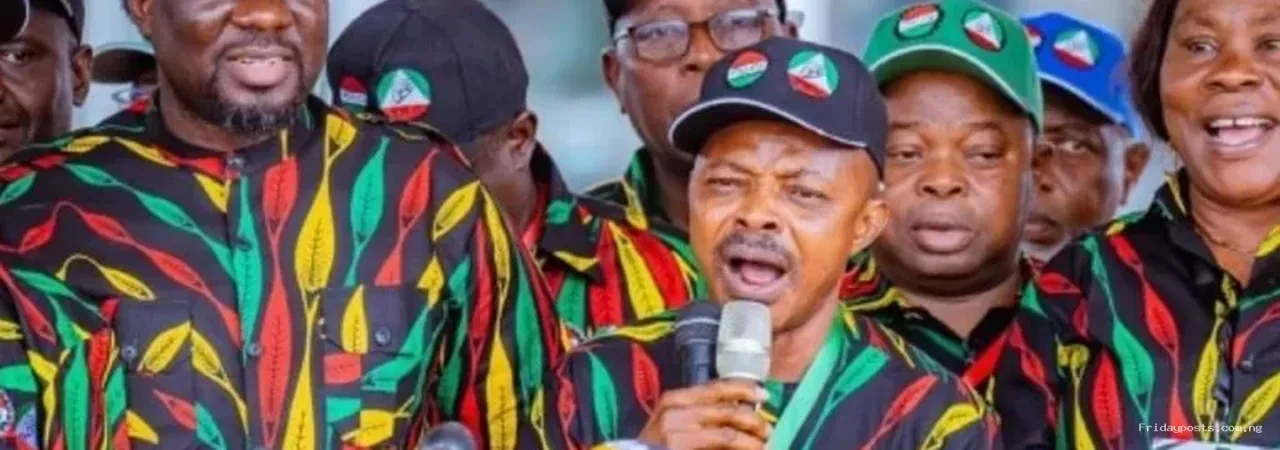
That tension is now sharper. The Joint National Public Service Negotiating Council, a coalition of public-sector unions, says the Federal Government should bring petrol down to ₦500 per litre, provide an immediate wage award and begin negotiations towards a new national minimum wage of not less than ₦500,000 from 2027. It has threatened a three-day warning strike from 2 October if its concerns are not addressed.
The instinctive response is to choose a side. A better response is to test the economics. What does ₦500,000 mean in real terms? What would it do to government payrolls and small businesses? What would be required to sell petrol at ₦500 when market prices are far higher? And, most importantly, how can Nigeria stop repeating the cycle in which wages rise on paper but fall again in purchasing power?
The argument begins with purchasing power, not salary figures
A salary is useful only because of what it can buy. This sounds obvious, yet Nigeria’s wage debates often become arguments about nominal numbers rather than real income.
The statutory national minimum wage was raised from ₦30,000 to ₦70,000 in 2024. That was a large percentage increase. But workers do not live on percentages. They pay for transport, food, rent, school fees, medicine, electricity, data and fuel in current prices. If those costs rise faster than wages, a worker can receive a higher salary and still become poorer in practical terms.
That is the central complaint behind the new demand. It is not difficult to understand why a household that once budgeted a modest amount for transport now feels squeezed when petrol and public-transport fares multiply. Food inflation compounds the pressure because food takes a large share of lower-income household expenditure.
The economic question is therefore not whether workers deserve more purchasing power. They do. The harder question is how to create and preserve that purchasing power.
What would a ₦500,000 minimum wage mean?
A move from ₦70,000 to ₦500,000 would be a more than sevenfold increase in the statutory floor. That does not mean every public servant would automatically receive exactly ₦500,000 because salary structures contain grades, allowances and consequential adjustments. In practice, lifting the bottom can create pressure to adjust the entire wage ladder.
A simple hypothetical shows the scale. If one million workers were affected by an additional ₦430,000 a month, the extra basic wage bill alone would be ₦430 billion monthly, or ₦5.16 trillion annually. If two million workers were affected, the annual increment would be ₦10.32 trillion before pensions, allowances, payroll taxes and the knock-on effect on higher grades.
Those examples are not estimates of the actual government payroll. They are illustrations of arithmetic. The correct fiscal calculation requires verified worker numbers for federal, state and local governments, the current wage distribution, pension obligations and the share of workers already earning above the proposed floor.
The private sector would face a different problem. A profitable bank or telecoms company may absorb a higher floor more easily than a bakery, school, small factory, restaurant or logistics company operating on thin margins.
The minimum wage is national, but employers are not equally strong
One weakness in Nigerian wage debates is the assumption that every employer has the same capacity to pay. They do not.
Large companies can raise prices, automate, reorganise staffing or spread costs over a large customer base. Small firms have fewer options. Many operate in an environment where electricity is unreliable, credit is expensive, taxes and levies overlap, logistics are costly and consumer demand is weak.
If the wage floor rises far faster than productivity and business revenue, employers typically respond in predictable ways. Some raise prices. Some reduce recruitment. Some replace full-time jobs with casual arrangements. Some move workers into informal relationships that are harder to regulate. Some close.
None of those outcomes helps the worker the wage policy is intended to protect.
This does not mean Nigeria should suppress wages in the name of business survival. It means wage policy works best when it is connected to productivity, inflation, the tax burden, energy costs, financing conditions and the capacity of firms to grow.
Why ₦500 petrol is a different policy problem
The demand for petrol at ₦500 per litre cannot be analysed in the same way as wages. Petrol pricing depends on crude costs, refining economics, the exchange rate, shipping where applicable, storage, distribution, taxes and margins.
If the market cost of supplying a litre is materially above ₦500, someone must absorb the difference. That someone could be the refinery, marketer, government or another part of the petroleum value chain. If government pays the difference directly or indirectly, the policy becomes a subsidy or intervention even if a different name is used.
Nigeria has experienced the consequences of opaque petroleum subsidies before. They can provide immediate relief to households, but they can also consume fiscal resources, encourage arbitrage, create payment disputes and crowd out spending on infrastructure, health or education.
The right question is therefore not simply, “Would Nigerians prefer ₦500 petrol?” Almost everyone would. The better question is, “What mechanism would sustainably produce ₦500 petrol, and who would bear the cost?”
Cheaper petrol can come from lower costs, not only government support
There are routes to lower fuel prices that do not depend entirely on a permanent subsidy.
A stronger naira can reduce the local-currency cost of imported inputs and dollar-linked crude. Efficient domestic refining can remove some shipping and import-related costs. Better pipelines and depots can reduce logistics expenses. Competition among refiners and marketers can constrain margins. Stable crude supply arrangements can improve planning. Lower financing costs can reduce working-capital pressure throughout the distribution chain.
None of these guarantees ₦500 petrol. But they improve the economics of cheaper fuel.
That distinction matters. A price reduction created by genuine cost efficiency can last. A price reduction created mainly by public money lasts only as long as the public money lasts.
Wage awards can provide temporary relief, but they are not a wage system
Labour is also asking for an immediate wage award. A wage award is easier to understand as a temporary bridge. It can give workers short-term relief while a formal wage review is negotiated.
The advantage is flexibility. Government can design a time-bound payment rather than permanently embedding the entire amount into the salary structure before negotiations are complete.
The disadvantage is that temporary payments can become politically difficult to withdraw, and they still have to be financed. If a wage award is funded through additional borrowing or money creation without corresponding revenue, it can add to inflationary pressure. The worker receives more naira, but the economy may respond with higher prices.
A well-designed wage award therefore needs a clear amount, duration, funding source and exit point. It should not become another unfunded promise.
The real enemy is the repeated destruction of real wages
Nigeria has changed minimum wages several times in its history, yet the wage question keeps returning because inflation repeatedly erodes the gain.
That pattern should concern both labour and government. If every wage settlement is followed by another period in which food, transport, rent and energy costs rise much faster than earnings, the country is not solving the wage problem. It is resetting the clock.
A durable wage strategy therefore requires lower and more predictable inflation. It requires more housing supply, reliable transport, productive agriculture, stable energy costs and stronger public services. A worker who spends less on transport, power, healthcare and education does not need the same nominal income as a worker who must privately purchase every basic service.
This is where the wage debate becomes a development debate.
Government should publish the payroll arithmetic
The next negotiation should be more transparent than previous ones. Nigerians should be able to see what different wage scenarios mean for public finances.
Government could publish modelled outcomes for wage floors of ₦150,000, ₦200,000, ₦300,000, ₦400,000 and ₦500,000. Each scenario should show estimated federal, state and local payroll effects, pension consequences, revenue assumptions and the likely need for additional taxes or borrowing.
Labour should also publish its own arithmetic. How was ₦500,000 derived? What household basket does it represent? What share is food, transport, housing, healthcare, education and savings? How should the figure vary across Nigeria’s very different cost environments?
This would improve the conversation. A wage demand becomes easier to evaluate when the public can see the assumptions behind it.
States are a major part of the problem
A national minimum wage is negotiated nationally, but many workers are paid by state and local governments whose revenue positions vary widely.
Some states have large internally generated revenue bases. Others depend heavily on federal allocations. A wage level that is manageable for one state may be extremely difficult for another unless revenue sharing, staffing or expenditure priorities change.
The answer cannot be to accept permanent wage inequality for workers performing similar public functions. But neither can Nigeria pretend fiscal differences do not exist.
A serious wage settlement may therefore need to be accompanied by reforms in state revenue, payroll verification, public-sector productivity and the division of responsibilities among the three tiers of government.
Private employers need a transition path
The organised private sector should be inside the discussion from the beginning, not consulted after a political agreement has already been reached.
For smaller employers, any large increase may require a phased implementation period, tax relief, cheaper credit, energy support or productivity programmes. Without this, the law can unintentionally accelerate informality.
The most harmful outcome would be a minimum wage that is impressive in legislation but widely ignored in practice. Enforcement becomes credible only when the legal floor is ambitious enough to protect workers and realistic enough that compliant businesses can survive.
Nigeria needs a wage formula, not a crisis every few years
The deeper reform is to reduce the drama around wage reviews.
Nigeria could adopt a transparent review framework linked to a small number of indicators: inflation, productivity growth, median wages, poverty thresholds and changes in the cost of a basic household basket. A tripartite body could publish annual assessments even when the statutory wage is not being changed.
That would not remove negotiation. Wage policy is always partly social and political. But it would give negotiation a factual baseline.
The same principle should apply to wage awards. Instead of emergency payments announced after hardship becomes unbearable, government and labour could agree in advance on triggers for temporary relief when inflation or energy prices move beyond defined bands.
Workers need higher income, but Nigeria needs higher productivity too
There is a temptation to treat wages and productivity as competing interests. In reality, they have to rise together over time.
A country becomes richer when each worker can produce more value per hour, when businesses use better technology, when electricity works, when logistics improve, when skills deepen and when capital becomes cheaper. Higher productivity creates room for higher wages without simply translating the increase into higher prices.
This is why the wage debate cannot be separated from power supply, transport, education, industrial policy and business finance.
Workers should not be asked to wait indefinitely for an abstract productivity future while their living standards collapse. At the same time, wage policy that ignores the productive capacity of employers can destroy the jobs on which workers depend.
What a workable settlement could contain
A credible package would probably need several parts rather than one dramatic number.
It could include an immediate but time-limited wage award for public servants; an accelerated tripartite minimum-wage review with published economic assumptions; targeted transport support; measures to reduce petroleum logistics costs; stronger competition in refining and marketing; tax relief for low-income earners; and support for small employers adjusting to a higher wage floor.
Government would also need to show that it is reducing waste. Calls for workers to sacrifice become politically weaker when citizens believe public officials are insulated from the same cost pressures.
Labour, for its part, should distinguish what is a negotiating opening position from what it believes can be implemented across the entire economy.
The argument should end with one test: will workers be better off in three years?
Nigeria can raise the minimum wage to any number written into law. It can also announce a lower petrol price if it is willing to pay the difference. The difficult work is making either decision sustainable.
The test is not what the payslip says in the first month. The test is whether the worker can buy more food, pay transport, keep children in school, afford healthcare and save something three years later.
If a ₦500,000 wage is followed by another inflation spiral, it will eventually feel small. If ₦500 petrol is achieved through an opaque subsidy that weakens public finances, the relief may carry another cost.
Nigeria’s workers are asking a legitimate question: how can people live decently on current incomes? Government and employers must answer it. But the answer has to be more than a larger number. It has to be an economic system in which income can rise without being destroyed again by the cost of living.
Sources and further reading
- PUNCH, 30 September 2026: Workers set October strike over petrol price hike (https://punchng.com/workers-set-october-strike-over-petrol-price-hike/)
- State House, 18 July 2024: approval of ₦70,000 national minimum wage (https://statehouse.gov.ng/labour-leaders-praise-president-tinubu-over-approval-of-n70000-minimum-wage-and-promise-review-after-three-years/)
- NBS: August 2026 Consumer Price Index report repository (https://microdata.nigerianstat.gov.ng/index.php/catalog/154/related-materials)
- ILO: Nigeria labour-market policy brief and minimum-wage context (https://www.ilo.org/sites/default/files/2024-11/Nigeria%20policy%20brief%207%20Nov.pdf)

A. Joshua Adedeji
A. Joshua Adedeji is a leadership strategist, organisational development consultant, author, teacher and values-driven transformation leader. He writes on leadership, strategy, governance, organisational effectiveness, business, personal development and Nigeria’s social and economic transformation, connecting ideas and current realities to practical implications for leaders, institutions, entrepreneurs and citizens. His work is shaped by a commitment to clear thinking, responsible leadership, stronger institutions and the development of people and systems capable of producing lasting impact.









Reader conversation
0 approved comments