
The ranking sounds like a price story, but it is really an income story
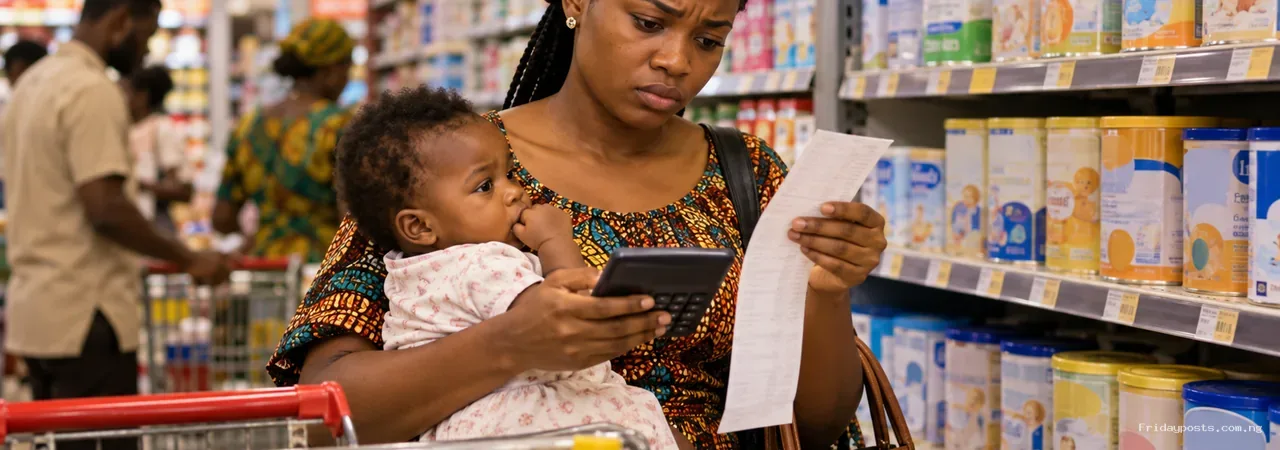
A global comparison published in 2026 placed Nigeria at the bottom of its baby-formula affordability ranking. The study estimated that a year's supply of formula would cost about $1,040 in Nigeria and equal 131.1 per cent of the average annual wage figure used for the country.
Read quickly, that can sound as though Nigeria has the most expensive baby formula in the world. That is not what the research establishes.
The ranking measures affordability, not simply shelf price. A product can cost fewer dollars in Nigeria than in a richer country and still be far less affordable because the average worker earns much less. The finding therefore says as much about incomes as it does about baby products.
How the study calculated the result
Remitly collected prices for a basket of baby essentials from local baby stores, supermarkets and online pharmacies across more than 90 countries. It selected relatively affordable options and estimated the quantities needed during a baby's first year.
For formula, the study used an estimated annual quantity and converted local prices into US dollars using exchange rates from 18 June 2026. It then compared the annual cost with average-wage data from the International Labour Organization.
That methodology is useful for international comparison, but it has limitations. Remitly itself notes that the quantities are based on US norms and that local customs, personal needs and individual choices differ. The ranking should therefore be treated as an affordability signal rather than a precise budget for every Nigerian family.
The wider basket makes the household burden clearer
Formula was not the only category in which Nigeria ranked poorly. The study estimated that a year's supply of nappies, wipes and rash cream equalled 123.6 per cent of the average wage used. First-year baby clothing was estimated at $899, while an infant car seat and stroller together were priced at about $311.
Across the study's wider basket of baby essentials, the Nigeria estimate came to roughly $3,500 for the first year.
Again, not every household buys the exact same basket. Some families reuse items, receive gifts, choose local alternatives or do not use formula. But the comparison captures a familiar Nigerian reality: ordinary family expenditure can consume a very large share of income before housing, transport, healthcare and other bills are considered.
Why imported and foreign-currency-linked goods become painful
Many baby products sold in Nigeria are imported or contain imported inputs. That exposes retail prices to exchange rates, freight, duties and international manufacturing costs.
When the naira weakens, an importer needs more naira to replace the same dollar-denominated stock. Retailers then pass part of that increase to customers. Even locally produced alternatives can face foreign-currency costs through packaging, machinery, raw materials or logistics.
A stronger and more stable naira can reduce one source of pressure, but exchange-rate improvement alone does not guarantee cheap baby products. Distribution costs, energy, taxes, margins and domestic inflation still matter.
Low wages magnify every price shock
The most important denominator in the ranking is income. A household can cope with expensive essentials more easily when earnings rise with productivity and inflation.
Nigeria's affordability problem therefore cannot be solved by focusing only on the price of one tin of formula. The deeper challenge is that many workers' earnings remain small relative to the cost of formal retail goods.
This is why an item that looks moderately priced in dollar terms can feel extremely expensive to a Nigerian family. Affordability is the relationship between price and purchasing power. Both sides matter.
Parents also face hidden costs that rankings do not capture
The first year of a child's life creates expenses beyond the products measured in the study. Families may pay for delivery, postnatal care, medicines, childcare, transport, lost work time, larger housing needs and support for caregivers.
Some costs are also unpredictable. A medical complication or sudden change in childcare arrangements can transform a manageable budget into a difficult one.
For policy purposes, this means the cost of raising children should not be reduced to a consumer-goods problem. It connects to healthcare, transport, wages, childcare services and social protection.
The ranking should not be turned into feeding advice
Baby-formula affordability is an economic question, not a recommendation about how an individual child should be fed. Feeding decisions can depend on the health of the baby and mother, work circumstances, milk supply, medical advice and other personal factors.
The useful policy lesson is simpler: when families need formula or other baby essentials, those products should not become financially inaccessible because of weak incomes and avoidable market costs.
Public discussion should therefore avoid using an affordability ranking to shame parents for their choices. The issue is whether households have realistic access to safe products and reliable health guidance.
What would improve affordability over time?
There is no single policy that will cut the cost of raising a baby. The strongest gains would come from several directions at once: lower and more stable inflation, stronger household incomes, more competitive local production where feasible, efficient import and distribution systems and dependable healthcare services.
Government should also improve household-cost data. A regularly updated Nigerian family-cost index covering childcare, maternal health, infant feeding, transport and education could provide a clearer basis for policy than occasional international rankings.
The 2026 result is useful because it turns an everyday pressure into a measurable comparison. Its most important message is not that Nigerian parents buy the world's most expensive baby products. It is that the gap between basic family costs and ordinary earnings is still too wide.










Reader conversation
0 approved comments