

Walk through almost any Nigerian market and women are impossible to miss.
They sell food, clothing, household goods, cosmetics and agricultural produce.
Women run schools, salons, pharmacies, restaurants, online stores, professional firms and small factories.
They are visible across the entrepreneurial economy.
Yet when Nigeria’s largest companies, biggest government contractors or most heavily funded growth businesses are listed, women-owned firms become less visible.
This creates an important question.
If Nigerian women start so many businesses, why do relatively few build companies with hundreds or thousands of employees?
The answer is not that women lack ambition.
The more useful explanation is that starting a business and scaling a business require different resources.
Nigeria has millions of women entrepreneurs.
The challenge is helping more of them cross the gap from survival enterprise to scalable company.
Starting small is often a response to limited options
Not every business begins because the founder identified a large market opportunity.
Many begin because a household needs income.
A woman may start trading from home because formal employment is unavailable or inflexible.
She may sell food because the entry cost is lower.
She may build a small service business around skills she already has.
This is entrepreneurship, but it is often necessity entrepreneurship.
A business created for immediate household income may not begin with the systems required for scale.
There may be no formal accounts.
No separate business bank account.
No growth plan.
No registered intellectual property.
No management team.
That does not mean the business cannot grow.
It means the starting point is different.
Finance is the most obvious barrier
Growth requires money.
A small trader can operate from daily cash flow.
A company opening a second location, buying machinery or employing a sales team needs larger and longer-term capital.
Women entrepreneurs often face collateral constraints.
Property may be registered in a husband’s or family member’s name.
Land ownership patterns can disadvantage women.
Banks prefer assets they can secure.
A profitable business with weak collateral may therefore struggle to obtain a meaningful loan.
This is why credit-guarantee programmes matter.
The Bank of Industry and National Credit Guarantee Company have created a ₦10 billion guarantee partnership for women-led businesses under the GLOW programme.
The principle is important: reduce part of the lender’s risk so commercially viable firms can access finance.
But money alone does not create scale
A business can receive a loan and still fail to grow.
Scaling requires management.
The founder has to move from doing everything personally to building systems.
Inventory must be controlled.
Accounts must be reliable.
Staff need roles.
Customer acquisition becomes structured.
Quality must be consistent.
Taxes and regulation become more complex.
Many small businesses plateau because the founder becomes the bottleneck.
Support programmes should therefore combine finance with management capacity.
Capital without capability can become debt.
Sector concentration limits upside
Women-owned businesses are often concentrated in sectors with relatively low barriers to entry.
Retail trade.
Food.
Fashion.
Beauty.
Small services.
These sectors are important and can produce large companies.
But many individual businesses operate in highly competitive markets with thin margins.
Fewer women are represented in capital-intensive sectors such as industrial manufacturing, energy, infrastructure, logistics and large-scale technology.
This affects average business size.
One policy goal should therefore be to widen the sectors in which women can participate.
That begins with education, procurement and access to technical networks.
Childcare is an economic infrastructure issue
Women often carry a disproportionate share of childcare and household responsibilities.
This has direct business consequences.
A founder who must personally manage childcare may have less flexibility to travel, attend late meetings, visit factories or spend long hours building a company.
This is not a private issue with no economic relevance.
Childcare is part of productive infrastructure.
Affordable childcare can increase women’s labour-force participation and entrepreneurial capacity.
Large employers understand this increasingly.
Business-support policy should understand it too.
Networks determine which opportunities founders hear about
Business growth is shaped by relationships.
Who tells you about a procurement opportunity?
Who introduces you to an investor?
Who recommends a reliable lawyer?
Who connects you to a distributor?
Who invites you into an industry association?
Networks can be as important as money.
Historically male-dominated sectors often have male-dominated networks.
A woman entering construction, energy or industrial supply may be technically capable but less connected to the informal relationships through which opportunities move.
Professional networks, accelerators and trade associations can help close this gap.
But they must connect entrepreneurs to real deals, not only conferences.
Government procurement can become a scale engine
Government is one of Nigeria’s largest buyers.
It buys uniforms, furniture, food, healthcare products, consulting services, technology, construction and logistics.
Public procurement can help women-owned businesses grow if access is transparent.
Some countries use supplier-diversity targets.
Nigeria can explore similar mechanisms.
The objective should not be to award contracts to weak firms because they are women-owned.
It should be to make sure capable women-owned firms are not excluded from opportunity by opaque networks.
Procurement reform can become business-development policy.
Informality creates a ceiling
Many women-owned businesses remain informal because registration, tax compliance and accounting appear burdensome.
Informality can reduce immediate costs.
It also creates limits.
Banks hesitate.
Large companies cannot onboard the supplier.
Government contracts become inaccessible.
Investors lack reliable information.
The business remains dependent on the founder.
Formalisation should therefore be made easier and more useful.
A business should see clear benefits from registration: access to finance, procurement, insurance, training and dispute resolution.
Formalisation should not feel like paying more money for no additional value.
Digital payments create a new opportunity
One of the most important changes in Nigerian commerce is digital payment.
A small business that receives payments electronically creates a financial history.
That history can help demonstrate revenue.
Fintech lenders and banks can analyse transaction patterns.
This reduces dependence on traditional collateral.
Women entrepreneurs who previously operated entirely in cash may therefore gain new financing options.
But digital finance also creates risks.
High-cost loans can become another trap.
Data privacy matters.
Financial literacy matters.
The objective is not simply more credit.
It is better credit.
Investors need to broaden what they consider scalable
Venture capital has historically concentrated on technology startups.
That model has produced important companies.
But there are scalable women-owned businesses in food processing, healthcare, education, fashion, logistics and consumer products that may not look like software companies.
Growth capital needs multiple forms.
Equity.
Revenue-based finance.
Working-capital facilities.
Equipment leasing.
Private credit.
The right capital should match the business model.
A company should not be forced into a venture-capital structure simply because that is the most visible form of growth finance.
Mentorship works best when it is operational
Women entrepreneurship programmes often include mentorship.
The quality varies.
A motivational speech is not mentorship.
Operational mentorship helps a founder solve specific problems.
How should pricing change?
How do we hire a finance manager?
How do we negotiate with a distributor?
How do we prepare for a bank credit committee?
How do we enter another state?
This kind of support is especially useful during transition from small to medium scale.
The mentor should understand the sector and stage of business.
Family finance can both help and limit
Many small businesses begin with money from spouses, relatives or savings groups.
This can be valuable because formal credit may be unavailable.
But family financing often lacks clear terms.
Ownership becomes blurred.
Relatives expect withdrawals.
The founder may have little room to reinvest profits.
A scaling company needs separation between household money and business capital.
This is one of the most important transitions a founder can make.
The business should be able to retain earnings even when family needs are real.
Women need stronger access to industrial property
A factory, warehouse or processing centre requires land and facilities.
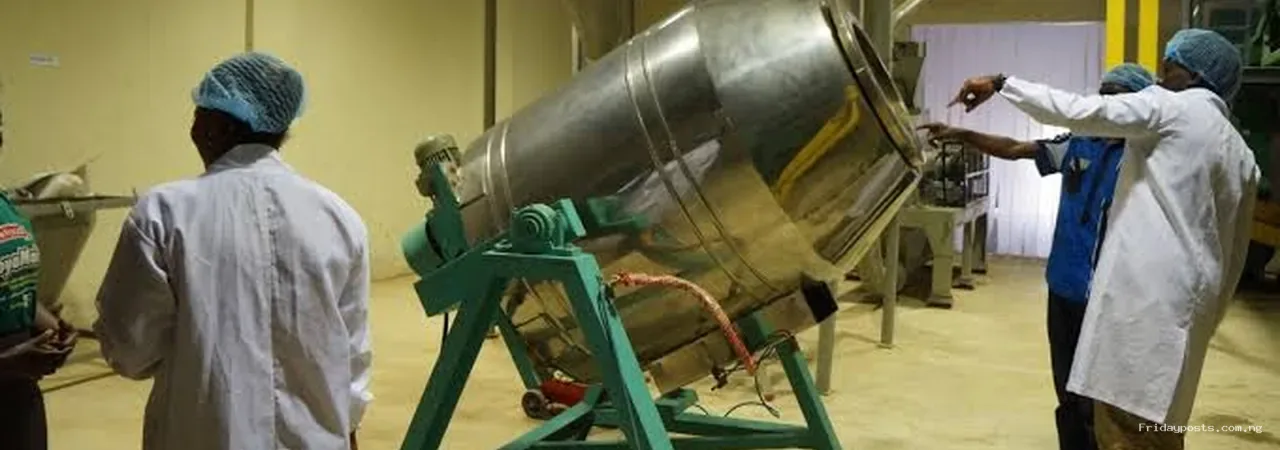
Access to serviced industrial property can therefore shape who enters manufacturing.
States developing industrial parks should include transparent pathways for women-owned firms.
This does not mean giving away land.
It means removing informal gatekeeping and providing clear lease terms, infrastructure and financing options.
Industrialisation will remain male-dominated if the entry assets remain difficult for women to access.
Export support can change the growth ceiling
A small Nigerian consumer market niche may not support very large scale.
Exports can.
Fashion, food, beauty, services and creative products all have diaspora and regional demand.
Women-owned firms need help with standards, packaging, logistics, customs, trade finance and market intelligence.
AfCFTA should become practical for these businesses.
A founder should be able to understand what is required to sell into Ghana, Kenya or South Africa.
Export readiness is a capability, not a slogan.
Successful women-led firms should be studied, not only celebrated
Nigeria has women who have built significant companies in banking, fashion, media, food, technology and professional services.
The usual response is to celebrate them as inspirational exceptions.
A better response is to study the pathway.
How did they finance growth?
What networks mattered?
When did they hire professional managers?
What barriers did they face?
What markets did they enter?
Case studies can turn exceptional success into repeatable learning.
Public policy should distinguish microenterprise from scale-up
A woman selling goods with ₦200,000 in working capital does not need the same support as a company with 50 employees preparing to build a factory.
Yet programmes often group all women entrepreneurs together.
Policy should segment.
Microenterprises may need savings, small credit and bookkeeping.
Growth firms may need millions in equipment finance, export support and professional governance.
High-growth companies may need equity or large debt facilities.
The support should match the stage.
Banks should measure performance of women-focused products
Many financial institutions now promote women banking programmes.
The marketing is visible.
The outcomes should be equally visible.
How many women-owned businesses received loans?
What was the average loan size?
How many moved from micro to SME status?
What sectors received funding?
What was the repayment performance?
Did the businesses create jobs?
Publishing this data would help distinguish serious programmes from branding.
Nigeria’s economy loses when women-owned firms remain small
The scale gap is not only a women’s issue.
It is a productivity issue.
If half the population faces barriers to building larger businesses, the country leaves capital and talent underused.
Larger women-owned firms can create jobs, widen the tax base, improve household incomes and create new role models.
The objective should not be a separate female economy.
It should be an economy in which gender does not determine how far a good business can grow.
The next policy question is scale
Nigeria has spent years promoting women’s empowerment and entrepreneurship.
That work should continue.
But the next conversation needs to be more demanding.
How many women-owned businesses cross ₦100 million in annual revenue?
How many cross ₦1 billion?
How many employ more than 100 people?
How many export?
How many win major corporate or public procurement contracts?
These are scale questions.
They force policy to move beyond counting how many women received training.
Nigeria already has millions of women in business.
The next challenge is to help far more of them build companies that are impossible to ignore.
Sources and further reading
- Voice of Nigeria, 5 October 2026: VP Shettima calls for conducive environment for women
- Bank of Industry, January 2026: ₦10bn GLOW credit-guarantee partnership
- BOI GLOW programme

A. Joshua Adedeji
A. Joshua Adedeji is a leadership strategist, organisational development consultant, author, teacher and values-driven transformation leader. He writes on leadership, strategy, governance, organisational effectiveness, business, personal development and Nigeria’s social and economic transformation, connecting ideas and current realities to practical implications for leaders, institutions, entrepreneurs and citizens. His work is shaped by a commitment to clear thinking, responsible leadership, stronger institutions and the development of people and systems capable of producing lasting impact.










Reader conversation
0 approved comments