

A Nigerian graduate may know how to research, write reports, analyse information, teach, organise projects or solve technical problems and still have no clear way to earn from those abilities. The knowledge is there. The missing connection is between what the graduate can do and what a customer is willing to pay for.
This is a common obstacle because school rewards completing assignments, while the market rewards solving problems. A lecturer may ask you to write a report to demonstrate understanding. A small business owner may pay for a report only if it helps manage inventory, reach customers, improve decisions or save time. The skill may be similar, but the purpose is different.
You do not need to invent a large company to begin. You need a narrow service, evidence that you can deliver it, a credible price and a way to reach people who need it. Here is a practical method for moving from academic knowledge to your first paying customer.
Step 1: List tasks you can already perform
Start with a skills inventory rather than a business-name search. Write down ten tasks you completed during school, NYSC, internships, volunteering or personal projects. Focus on actions, not certificates.
Examples include preparing presentations, tutoring difficult topics, collecting field data, designing a questionnaire, editing documents, maintaining a spreadsheet, taking product photos, writing a short report, organising an event or creating a simple website.
Next, mark each task according to three tests: Can I do it to an acceptable standard now? Can someone verify the result? Would it save a customer time, reduce a problem or help produce income? Select two or three tasks that pass these tests. You can expand later after gaining experience.
Step 2: Translate a skill into a customer problem
People rarely buy “knowledge of Microsoft Excel”. They pay for a weekly stock report, a clean sales register or a spreadsheet that reduces mistakes. They rarely buy “excellent writing skills” without context. They may pay for carefully edited business profiles, website text or clear training materials.
Use this sentence: “I help [specific customer] achieve [specific result] by delivering [clear service].”
For example, “I help small provision shops organise their sales and expenses with a simple weekly spreadsheet.” Another possible offer is, “I help final-year students improve the formatting and clarity of their own research documents.” The second offer should be limited to legitimate editing or coaching, never writing assignments dishonestly on someone else's behalf.
A good offer names the customer and the output. “I do anything online” is too broad. “I create a one-page website for local service businesses” is easier to understand and buy.
Step 3: Choose a realistic first customer
Trying to serve every Nigerian business from the beginning makes sales difficult. Choose a customer you understand and can reach without substantial advertising costs. That might be a lesson centre, a local food vendor, a fashion business, a church office, a neighbourhood pharmacy for non-clinical administrative tasks, or a small events company.
Ask five potential customers how they currently handle the problem. What takes too much time? What errors happen repeatedly? What have they tried? Who makes the spending decision? Your goal is to listen, not deliver a long pitch.
If a shop owner says that daily sales are written in different notebooks and the owner struggles to know which products are profitable, that suggests a bookkeeping-support or reporting opportunity. It does not yet prove the owner will pay. The next step is to propose a small, low-risk deliverable.
Step 4: Package one service with clear boundaries
Define what the buyer receives, how long it takes, what materials they must provide and how revisions work. Packages help avoid disagreements.
Consider an illustrative sales-record setup service:
• Initial discussion: understand the products and current record system.
• Delivery: one sales-and-expense spreadsheet with a short instruction guide.
• Handover: a 30-minute walkthrough and one round of corrections.
• Timeline: three business days after the customer provides the necessary information.
• Exclusions: tax filing, statutory audit, bank reconciliation and legal compliance opinions.
This offer is specific enough to price and explain. Do not use the title “accountant” or promise professional accounting services if you lack the qualifications or authorisations required for such work. Administrative spreadsheet setup is different from regulated professional advice.
A similar package could cover CV formatting, product catalogue creation, survey data cleaning or beginner-level tutoring in a subject you know well.
Step 5: Create a sample before asking people to pay
Your first customer may reasonably ask, “Have you done this before?” You can answer by creating a demonstration project, clearly labelled as a sample.
For a data service, use invented sales figures and show a clean summary dashboard. For website copy, write a homepage example for a fictional laundry business. For tutoring, create a lesson outline and a short explanation video. For digital design, prepare three sample product cards using assets you have permission to use.
Keep the sample focused on the result. Explain the situation, show the deliverable and point out the practical value. Never invent customer testimonials, revenue growth figures or past contracts. Clear evidence of skill is enough to begin a conversation.
Step 6: Set a price that covers your work
Do not choose a price solely because another person posted it on social media. Estimate your time, direct expenses, revision burden and the value of the deliverable. Then check whether your target customers can reasonably afford it.
Suppose a sample project takes six hours, transport and data cost ₦4,000, and you set a working-time target of ₦3,000 per hour. The illustrative minimum before other overhead is (6 × ₦3,000) + ₦4,000 = ₦22,000. That is not an official market rate or a recommendation that everyone charge ₦22,000. It demonstrates how a service can be priced systematically.
Also account for electricity, internet, software, payment charges, customer support, revisions and taxes where applicable. If the price is too high for your intended customer, reduce the scope rather than promising extensive work at an unsustainable fee.
Where appropriate, request an agreed deposit and issue a simple written statement of work. Make the payment terms and refund or cancellation conditions clear. Trust grows when expectations are visible.
Step 7: Find your first customers without spamming
Start with people who can verify your reliability, but do not assume friends and family must buy. Send a short and relevant message: “I am helping local businesses organise sales and expense records. I have a simple sample sheet and can explain it in ten minutes. Would that be useful for your shop?”
The difference between useful outreach and spam is relevance, consent and respect. If a person declines, do not keep pushing. Ask past colleagues or supervisors to introduce you where appropriate. Attend relevant local business meetings, and publish your samples where prospective customers can inspect them.
A simple prospect tracker can record the contact, problem, date of conversation, proposed service, next action and outcome. It prevents you from depending on memory and helps you learn which services attract interest.
Step 8: Deliver professionally, even if the assignment is small
Confirm the scope in writing. Agree on the deadline and preferred communication channel. Send a short progress update if the assignment spans several days. Check your work before delivery and make a copy of the finished files where the customer has agreed.
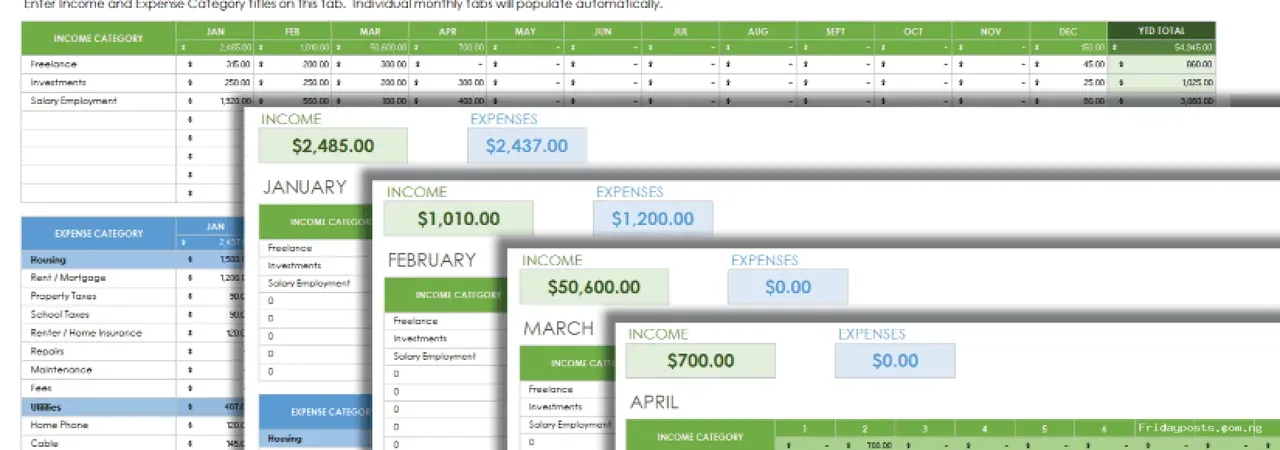
For example, if you are creating a sales tracker, test the formulas with sample entries, make the input fields easy to identify and demonstrate how totals change when a new record is added. A visually attractive sheet that calculates incorrectly will damage confidence.
After delivery, ask: Did the service solve the problem? What was confusing? What should improve? Request permission before using any customer material or testimonial in your portfolio. Customer names, purchase data and financial figures should not be published casually.
Step 9: Turn a one-off job into recurring income
An initial assignment may reveal regular needs. Someone who buys a basic product catalogue may need monthly updates. A shop using a new spreadsheet may need a weekly summary. A training centre may need periodic learning materials.
Offer recurring work only when there is genuine value. For example, distinguish a one-time setup from a monthly reporting service with defined deliverables. Do not charge an automatic subscription without clear agreement. Recurring income is built on dependable service, not on making cancellation difficult.
Track three simple numbers: prospects contacted, paid projects completed and customers who make a second purchase. If you talk to 20 relevant prospects, receive five serious enquiries and complete two paid jobs, you have a small but useful baseline. It is an example of how to measure progress, not a prediction of success.
Step 10: Handle registration and compliance at the right stage
If you decide to operate as an ongoing business, review the legal and regulatory requirements that apply to your activity. Nigeria's Corporate Affairs Commission explains that an individual can register a business name through its official online portal without necessarily engaging a professional intermediary. Registration does not automatically authorise regulated services, and it does not replace applicable tax, data-protection or sector requirements.
Keep records of quotes, invoices, money received and business expenses from the beginning. Separate personal spending from business payments as much as your circumstances allow. If you collect customer information, use it only for legitimate purposes and store it responsibly.
The NYSC Skills Acquisition and Entrepreneurship Development programme provides an official example of Nigeria's effort to help graduates build practical capabilities and entrepreneurial self-reliance. Training can help, but it becomes commercially useful when you translate it into work customers genuinely need.
A 30-day action plan for your first service
Week 1: Discover. List your skills, choose one customer type and interview at least five people about a recurring problem. Select one deliverable you can complete reliably.
Week 2: Demonstrate. Create a sample, calculate your cost, write a clear service description and prepare a one-page proposal or price sheet.
Week 3: Offer. Contact ten to fifteen relevant prospects individually, ask for feedback, and provide a professional quotation to genuinely interested buyers.
Week 4: Deliver and improve. Complete any secured assignment, document feedback, request permission for a testimonial and review what the customer actually valued.
If no one pays during the first month, the exercise can still produce valuable information. Find out whether the problem is weak demand, the wrong audience, an unclear offer, poor outreach or insufficient proof. Change one thing at a time.
Mistakes to avoid when monetising your knowledge
Avoid launching five unrelated services at once. Avoid buying expensive software before you have a real customer requirement. Avoid describing an experiment as an established company. Do not claim results you cannot demonstrate. Do not copy other people's designs, text, datasets or confidential documents without permission.
Be especially careful with services that affect health, legal rights, personal finances, security or other regulated matters. Skills learnt at school may equip you to support a professional team, but they do not necessarily entitle you to provide licensed professional services independently.
Above all, do not confuse being busy with making progress. Your first meaningful milestone is a satisfied customer who paid for a defined result.
Frequently asked questions
Can I start offering services without a registered company?
The requirements depend on the activity, scale and applicable law. Some individuals test freelance services before formalising operations, but check the relevant registration, tax and sector rules. The CAC provides official business-name registration guidance.
What can an Arts or Humanities graduate sell?
Possible services include editing, research assistance, tutoring, communications support, event coordination and content organisation, provided the graduate can demonstrate competence and work ethically.
How do I find customers if I have no social-media followers?
Begin with relevant local businesses, referrals and direct professional conversations. Show a sample and explain a specific result. An audience helps, but it is not a prerequisite for the first small service.
Should I work for free to get testimonials?
A small free demonstration can sometimes be worthwhile, but be selective. Agree on a defined scope and avoid indefinite unpaid work. Do not invent testimonials if none exist.
How much should a beginner charge in Nigeria?
There is no single correct price. Estimate direct costs, required time, revisions and the value of the work; then test your offer with the intended customer group. Never treat a sample calculation as a nationwide market rate.
Is a certificate enough to attract clients?
A credible qualification can help, but buyers also need trust and evidence that you can deliver. Demonstration projects, clear agreements, accurate work and honest communication matter.
The first sale starts with a real problem
You do not need to monetise everything you know. Identify one task you can do well, one group of people who need it and one deliverable you can complete professionally. Then listen, price carefully, deliver and learn. That is how school knowledge begins to acquire commercial value.
Sources and further reading
• NYSC: Skills Acquisition and Entrepreneurship Development
• Corporate Affairs Commission: Business-name registration steps
• Corporate Affairs Commission official registration portal

A. Joshua Adedeji
A. Joshua Adedeji is a leadership strategist, organisational development consultant, author, teacher and values-driven transformation leader. He writes on leadership, strategy, governance, organisational effectiveness, business, personal development and Nigeria’s social and economic transformation, connecting ideas and current realities to practical implications for leaders, institutions, entrepreneurs and citizens. His work is shaped by a commitment to clear thinking, responsible leadership, stronger institutions and the development of people and systems capable of producing lasting impact.











Reader conversation
0 approved comments