
Nigeria's ambition to establish three lithium-processing factories in Nasarawa, Kaduna and Abuja reflects a policy idea that is difficult to argue against: a country rich in strategic minerals should capture more value than it earns from shipping raw material abroad.
Vice-President Kashim Shettima, represented at an economic conference by presidential adviser Tope Fasua, framed the proposal as part of a wider shift from extraction toward industrial production. The argument is familiar in Nigeria. The country exports crude oil and has historically imported large quantities of refined products. It exports agricultural commodities and imports higher-value foods and consumer products. Lithium creates an opportunity to avoid repeating that pattern in a newer industry.
The challenge is that "lithium processing" can mean several very different things. A plant that crushes and concentrates ore is not the same as a facility that produces battery-grade lithium carbonate or lithium hydroxide. Those chemical products are not the same as cathode materials. Cathode materials are not battery cells. Battery cells are not assembled battery packs.
Nigeria needs to be clear about where the proposed factories sit in that chain.
Processing is progress, but not the final destination
Moving from raw ore export to local concentration or refining is economically meaningful. It can create industrial jobs, reduce the volume of low-value exports and improve local knowledge. But the value curve rises as the chain becomes more technologically sophisticated.
At the lower end is mining. Then comes concentration. Then chemical refining. Then cathode or anode materials. Then cell manufacturing. Then battery-pack assembly, software and energy-management systems. Recycling creates another layer.
Nigeria does not need to master every stage immediately. It does need a strategy showing how one stage leads to the next.
Without that roadmap, the country could become a more sophisticated supplier of processed raw material while still importing finished batteries at high prices.
The Nasarawa announcement needs to be reconciled with existing investment
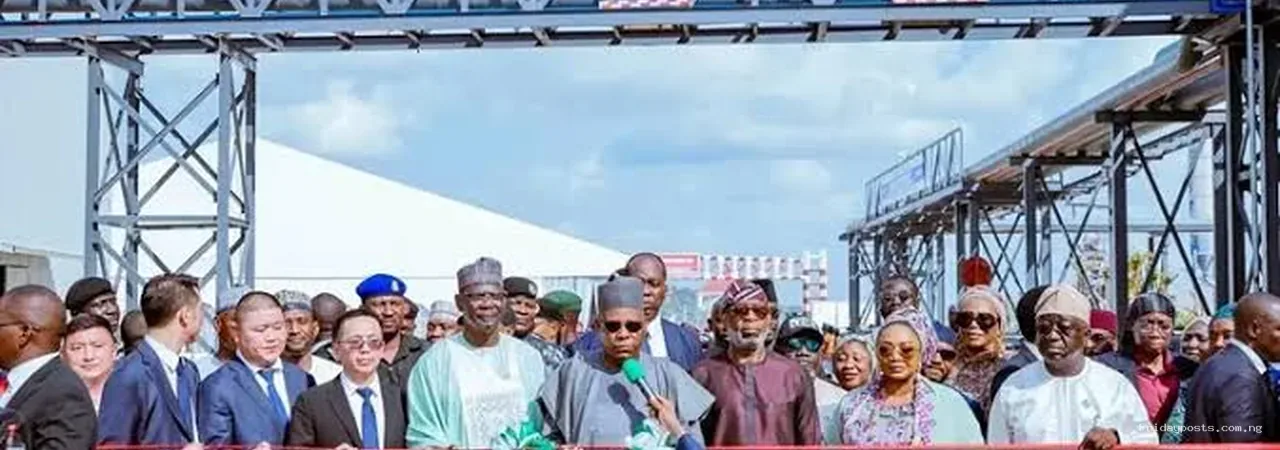
A major lithium-processing facility was already commissioned in Nasarawa in July 2026, with the Federal Government describing it as a large-scale plant. The new announcement again lists Nasarawa among three proposed locations.
That creates an obvious accountability question. Is the new Nasarawa facility a separate project, an expansion of the existing plant or a reference to the same investment presented under a broader policy announcement?
Government should clarify this before the public begins counting proposed factories as though all are new.
Industrial policy needs precise project accounting. A facility should have a name, promoter, ownership structure, investment value, production capacity, project stage and expected commissioning date.
Nigeria needs to define the product
The phrase "lithium processing factory" is too broad for serious industrial analysis. The government should state what each plant will produce.
Will it process spodumene or another lithium-bearing ore?
Will it produce concentrate?
Will it convert concentrate into battery-grade chemicals?
Will it manufacture cathode material?
Will any facility produce cells?
Will battery packs be assembled locally?
These are not technical details for specialists alone. They determine jobs, technology, export value and the type of infrastructure required.
Power will decide whether the factories are competitive
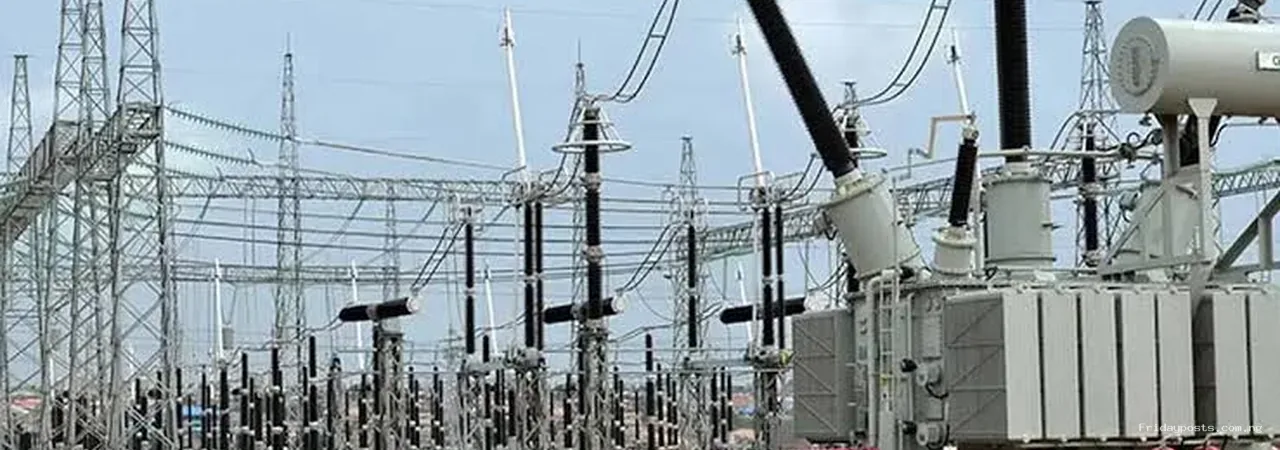
Mineral processing is energy intensive. Chemical refining and advanced manufacturing require reliable electricity, water and industrial utilities.
If factories must depend heavily on diesel generators, Nigeria can lose the cost advantage created by local mineral resources.
The location of each facility should therefore be connected to a credible power strategy. Embedded generation, gas, grid upgrades, renewables or a combination may be needed.
Industrial policy that ignores electricity usually produces expensive factories.
Transport matters because ore and chemicals are heavy
Lithium ore has to move from mines to processors. Processed products have to reach manufacturers or ports. Roads, rail and logistics costs can determine whether a project is competitive.
Nigeria should map the mines, processing locations, ports and potential manufacturing clusters as one network.
A plant located for political balance rather than logistics can become permanently expensive.
Water and environmental management are essential
Lithium processing can create environmental risks depending on the ore type and processing method. Chemical reagents, waste rock, tailings and water use require professional management.
Government should not treat environmental regulation as an obstacle to industrialisation. Poor environmental performance can create community conflict, legal liability and international market problems.
Export buyers increasingly care about responsible sourcing.
Nigeria should build credible environmental monitoring into the industry from the start.
Local communities need a visible economic benefit
Mining communities often experience dust, land disruption, traffic and pressure on local infrastructure. If residents see minerals leaving while local roads remain poor and jobs go mainly to outsiders, resentment grows.
Processing facilities should therefore have transparent community-development arrangements. Local employment should be realistic rather than symbolic. Skills programmes should prepare nearby residents for technical jobs rather than limiting them to security and casual labour.
Community trust is part of project sustainability.
Skills may be a bigger constraint than mineral availability
Nigeria has geologists, engineers and scientists, but a large battery-material industry requires specialised capability in mineral processing, metallurgy, chemistry, quality control, automation, environmental management and industrial maintenance.
Universities and technical institutes should be linked directly to the new projects.
Scholarships and apprenticeships can be tied to plant commissioning.
Foreign technical partners should be required or encouraged to build local competence.
Technology transfer should be measured by what Nigerian engineers can do independently after several years.
Financing needs to match the industrial stage
Mining and processing projects require large capital expenditure and long payback periods. Commercial bank loans with short tenors and high interest rates may be unsuitable.
Nigeria will need development finance, private equity, strategic investors, export-credit support and possibly capital-market instruments.
Government should avoid becoming the sole financier.
The strongest model is one in which public policy reduces risk and private capital carries commercial discipline.
The battery market is global and competitive
Nigeria is not the only country trying to move up the lithium value chain. Major producers and manufacturing hubs already have established supply chains, technology and scale.
Nigeria's advantage cannot be based on mineral deposits alone.
It needs competitive power, logistics, predictable regulation and access to markets.
The African Continental Free Trade Area could support regional battery and energy-storage demand, but trade agreements do not automatically create buyers.
Manufacturers need price and quality.
Domestic demand can help create scale
Nigeria already has potential demand for batteries in telecommunications, solar systems, electric mobility, data centres, consumer electronics and backup power.
A domestic battery industry could serve these markets before competing globally at larger scale.
But standards matter.
Low-quality local batteries would damage confidence.
Regulators should develop testing and certification systems alongside manufacturing incentives.
Nigeria should decide which part of the battery chain it can win
A realistic strategy does not require producing everything domestically. Nigeria may be especially competitive in mining, chemical processing, pack assembly, recycling or certain components.
The government should commission a value-chain competitiveness study.
Where is Nigeria's cost advantage?
Where are the skills?
Which inputs must be imported?
Which markets are accessible?
Which technologies can be licensed?
Industrial strategy should be built around evidence, not aspiration.
Recycling should be planned now, not later
Battery recycling will become increasingly important as energy storage and electric mobility expand. Used batteries contain valuable materials and can create environmental risks if discarded carelessly.
Nigeria has a chance to design collection and recycling systems early.
A future battery industry should include recycling standards, producer responsibility and formal recycling capacity.
This could reduce future raw-material dependence.
Governance of mining titles remains critical
New factories need reliable feedstock. That makes mining governance important.
Who holds lithium licences?
Are production volumes reported accurately?
Are royalties paid?
Are beneficial owners disclosed?
Is illegal mining feeding formal processors?
A factory can be modern while its raw material comes from a poorly governed supply chain.
Nigeria should link processing incentives to traceable, lawful feedstock.
The factories should be tracked publicly from announcement to operation
FridayPosts would recommend a Critical Minerals Industrialisation Tracker. For each project, it would record location, promoter, ownership, investment value, product, capacity, financing, environmental approval, construction status, commissioning date, jobs and local-content commitments.
This is especially important because Nigeria has a history of industrial announcements that take years to materialise.
The public should be able to distinguish a policy announcement from a factory under construction and a factory under construction from one actually producing at commercial scale.
Industrial policy should reward value, not ceremonial commissioning
A factory should not be judged by the size of the opening ceremony. It should be judged by capacity utilisation, product quality, exports, jobs, local sourcing and technology development.
If a plant is designed for thousands of tonnes but operates at a small fraction of capacity, the headline capacity is misleading.
Government support should be linked to performance.
Can Nigeria reach battery manufacturing?
Yes, but not automatically.
Lithium deposits create an opportunity. Processing plants create a platform. Neither guarantees a competitive battery industry.
The transition requires reliable power, finance, chemistry expertise, industrial standards, logistics, environmental discipline, market access and a deliberate technology strategy.
Nigeria should resist the temptation to declare success at the processing stage. The real prize is not simply exporting lithium in a more refined form.
It is building an industrial ecosystem in which Nigerian companies and workers participate in the higher-value technologies that the mineral makes possible.
Sources and further reading
- BusinessDay, 9 November 2026: FG announces three lithium-processing factories
- Federal Ministry of Information: Tinubu commissions lithium processing plant in Nasarawa








Reader conversation
0 approved comments